Archive for the ‘Uncategorized’ Category
the citadel
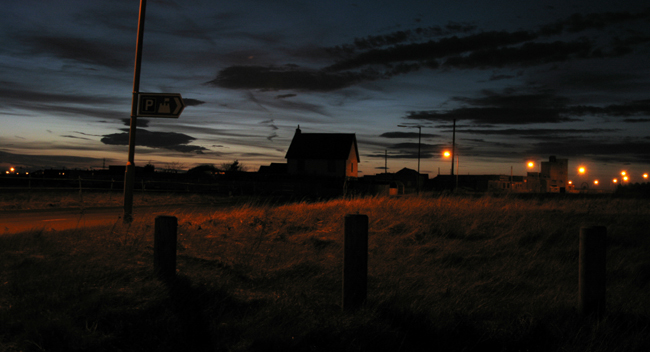
They’re building a Citadel in the fields behind our house. Actually it isn’t really a citadel, it’s a new school. Margaret is part of a group known as Citizens Against the Citadel, CAC, or The Citizens, as they call themselves. They are loosely knit alliance of the disgruntled and discounted whose motivations are probably complex and varied but who are united in their feeling that the Citadel is an abomination and that building must stop now. They are right that the building will be gruesome and that it is already ruinous to the quality of life around here, and that it is an imposition and something about which ordinary people were never given any real say. It’s true that the consultation was a sham. It’s true that the Citadel Construction and Development Company – led by the Tyneside businessman Sir Toby Griffiths (‘Griff’, to the Citizens) – misled local residents about the scale and impact of the project. But the Citizens are almost certainly wrong in believing there’s anything very much they can do about it now. They won’t even get an apology from Griff on this one.
The phone rang about eight thirty. It was Geraldine. She lives across the road. She doesn’t work now, but her husband, Mick, is a council officer of some sort. Geraldine, who has been a leading light in CAC and for whom Margaret really doesn’t care very much, was ringing to tell her that Griff’s men were working and they shouldn’t be, because it was Saturday. Griff had said that Saturday working would not happen. This is the latest in a string of broken promises. Margaret’s response was predictable and instantaneous.
‘They’re bloody kidding!’ she said. ‘Let’s get everyone together and get around there and stop it. Let’s get Griff over here NOW!’ And so on.
The general strategy of the Citizens is to rant among themselves by telephone or over coffee and chocolate digestives in one another’s front rooms and then, one after another, by telephone, to bombard Griff, his minions, local politicians and council staff with unbridled disgust and indignation and, if the moment calls for it, a serving of personal abuse. Needless to say construction of the Citadel hasn’t been delayed one rivet as a consequence of this strategy. Water and ducks’ backs come to mind. Nevertheless the fight must go on.
Margaret rang a couple more Citizens and began to make ready for the incursion into the Citadel building site. Her battle dress was a pair on Marks and Spencers jeans, her old but little worn Timberland boots, a grey sweater, her old red fleece and black gloves. It was a cool morning and it was drizzling; hypothermia on the Citadel battlefield was a real danger. I lay in bed, De Kooning at my side, pretending to take no notice of all this activity.
‘Have you heard that bloody racket?’ she said.
‘Er, yes,’ I mumbled, as if still slumbering. ‘I thought I’d heard something. Is it Fletch?’
‘No, it isn’t bloody Fletch – it’s the Citadel men. They’re now working on a Saturday! Can you believe that?! They’ve got a bloody nerve. Well, they’re not bloody well getting away with it this time, I can tell you!’ And so on, again.
I ignored her and pretended I might be unconscious again. She left to meet Geraldine and the other Citizens to go into battle. The Citizens, curiously enough, are more or less all women, an Amazon legion. With the exception of Big Trevor, of course, who doesn’t work and likes to insinuate his booming and bellowing into any context where it might make what is essentially always only a textural contribution. But almost everyone agrees completely with the Citizens’ complaints, even if they never join the battle. Hugo might be the exception here: so far as I can tell he hasn’t even have noticed that the Citadel is being built. If he has he must regard it as just another extraneous object that’s fallen from heaven. The right attitude will be to accept it with equanimity and to leave it exactly where it is. Haphazardist politics tend to be marked by a passive acceptance which at times can look very like complicity or collusion.
I didn’t expect Griff’s men to stop working before lunchtime. I did think however that it might be a good idea to get up and go out for a while. De Kooning looked at me: he agreed.
It’s not that I too don’t agree with the Citizens and think their cause isn’t a good one. It’s just that the battles are futile if the war is already lost. They are no more than quixotic gestures, and while I know this sort of comic-tragic futility is what makes us human, sometimes you can have just a little too much futility in your life. It’s not always good to bang your head against every brick wall you find. Modernity is a steamroller and it will flatten us all. We will all become one dimensional people, as Marcuse said long ago. The future is a Citadel: massive, inhuman, noisy, computer generated, absurdly geometrical, obsessively orderly, built by robots to accommodate the robots we will all become. It will be lifeless and it will not belong to us. Gordon, Griff and their like are at the wheel and the whole planet is their building site. Start saying goodbye to the things you love, Maureen, because this is the way the world really ends.
I left Margaret a note stuck to the top of her laptop.
Dear Margaret, modernity is a steamroller and it will flatten us all. The Citadel Men are unstoppable. I’ve gone shopping as there are some things I need. Please feed the cat when he comes in.
I went to see my dad this afternoon. He was watching an old film version of The Importance of Being Earnest on TV when I got there. I told him that they were knocking down bits of Park Farm in Newsham. He was born and grew up there so I thought he’d be interested.
‘Where is it?’ he asked.
I described its whereabouts and he told me this place was always called Thompson’s Farm when he was a kid. He used to play around there sometimes. I told him I’d taken some photographs of it just in case it was demolished. He went on to tell me about all the other buildings there used to be at South Newsham – the pit, the winding house, the rows of houses, the school and the Star Foundry. They’re all gone now, of course.
I asked him what pubs there were near where the shipyard used to be. He said they included The Sun, The Ship, the Fox and Hounds, and the Blagdon. They’re all demolished now too. He told me that a boxer called Seaman Tommy Watson had been the manager of the Blagdon for a long time. It seems Seaman was a good fighter and had fought Kid Chocolate for his world title at Madison Square Garden. He lost on points but some say he would have got the decision had the fight taken place over here.
When I got home I asked Margaret how the visit to the Citadel site this morning had gone.
‘I was a complete and utter waste of time,’ she said. ‘Geraldine just took over.’
De Kooning was in the conservatory. He sat with me as I read the newspaper. In an interview Cherie Blair says Tony is a socialist. I laughed out loud and, for a moment, De Kooning stopped cleaning his jet black face.
Margaret had gone in the bath. She was going to a poetry evening at Brenda’s house this evening. In two days time it will be exactly seventy five years since Seaman Tommy Watson lost to the little Cuban in New York.
minimalism and the black death
‘Thank the Lord!’ Margaret exclaimed this morning. ‘Miracles do happen. Next door have cleared the rubbish out of their front garden.’
‘Someone stole Fletcher’s blue swing,’ I explained.
‘Why would anyone steal something like that?’ Margaret said, as if astonished. ‘It wouldn’t be worth anything.’
I shrugged. It was far too early in the day to get into the sources of value in our lives and I knew in any case that Margaret wasn’t going to agree with whatever I had to say on this question. I could already hear myself becoming an apologist for the whole suburban junkyard movement, for Hugo and Haphazardist cosmology.
When I arrived at work Mandy Potts and Apple were in the reception area.
‘Morning, Mandy,’ I said. ‘Does Debs know you’re here?’
‘Yes, they’ve told her.’
‘And how are you?’ I enquired. ‘How’s Mr Zee?’
‘Oh, he’s still in bed,’ Mandy said, rolling her eyes. ‘He’s not one for getting up early.’
I smiled and I imagined Mr Zorro snoozing peacefully in his little brown pyjamas. In my imagination he keeps his mask on while he sleeps, although I suspect that this may not be true. I didn’t check it out with Mandy.
Debs told me that she thought Mandy was having benefit problems as she was now claiming jointly with Mr Zorro and this had caused some delay with the claim, as it inevitably would. It’s not every day the benefits agency gets a Zorr through their door.
‘Who’s Mandy with?’ Debs asked.
‘Just Apple,’ I replied. ‘Mr Zee’s still getting some zeds.’
Yes, I know; Debs groaned too.
Most of the morning I sat up in my office checking reports and replying to emails. Around lunchtime I heard some sort of commotion in the office car park. It was Billy Charlton – Boz, as he’s known – screaming profanities at the building. It seems he’d just been told that his children wouldn’t be allowed to spend the weekend with him and his new partner in their caravan at Sandy Bay. Boz seemed to blame his mobile phone for this turn of events and suddenly, mid rage, took it out of his jeans pocket and began waving it at the downstairs windows, as if it was a ju ju charm or some other fetish object. He then flung it down at the concrete with all his might and, because it didn’t instantaneously explode, began stamping on it furiously. This action seemed to almost magically satisfy or exhaust his anger. He stood for a second staring at the ruins of his Nokia, and then seemed suddenly released. He lit a cigarette, took a drag, and walked off as if nothing had happened. I’ve known Boz for quite a long time. His anger management course is currently paid for out of my budget.
Tonight Margaret told me that she and Brenda had finally ordered some slippers and would be opening their new eBay shop as soon as they arrived. They have also decided to hold slipper parties, the first of which she informed me will take place here on a date in June yet to be agreed. The slipper party is an event aimed primarily at women. In any case Margaret did not think it was the kind of thing I was likely to enjoy. She suggested I could go for one of my little walks that night.
‘So what are you calling your slipper shop?’ I asked.
‘The Slipper Shop,’ she replied.
‘That’s clever.’ I said. ‘Modern, minimal, vaguely ironic. Whose idea was it, yours or Brenda’s?’
‘It was a sort of joint effort. Actually Tristan chipped in too.’
‘Yes,’ I said, ‘I thought I detected a Marxian element in there somewhere.’
Margaret rolled her eyes and gave me the slipper supplier’s catalogue to peruse. I meandered through to the conservatory, put the catalogue on the table and turned on the radio. In Our Time. Melvyn Bragg was talking to his guests about the library at Ninevah. It was a repeat of this morning’s programme. Next week it’s the Black Death. I’m looking forward to that.
the blue swing and the pipistrelles
When I left the house for work this morning I saw Hugo on his garden path, motionless as a plastic replica, arms at his side, legs set apart, gazing fiercely towards the gate.
‘Morning, Fletch,’ I shouted.
This brought him back to reality.
‘Here, you,’ he said, in his usual slightly rough-edged way, ‘someone’s nicked the swing I had there.’ He pointed to the spot near the gate where since time began the blue child’s swing with a broken rope had lingered.
‘Oh, yeah,’ I said. ‘Who would do a thing like that?’
‘I don’t know what this bloody country’s coming to,’ he said. ‘The sooner we get rid of this government the better, if you ask me.’
It sounded as if Hugo was blaming Gordon for the felony. Gordon has children, it’s true, but stealing tatt from Hugo’s landfill, while perhaps not beneath his dignity, is unlikely to be necessary on his salary.
‘So who do you think it was?’ I asked.
‘It’ll be bloody kids, that’s who,’ he replied. ‘Little bastards. They’d steal your granny if she wasn’t screwed down.’ Hugo’s ideas of normal family relations are clearly a little different to those of most other people.
‘Yeah,’ I said. ‘Hey, but kids will be kids, eh?’
Hugo resumed his fixed gazing into the site of his lost swing. Loss can often take a little time to work itself out. Hugo was a figure of abject impotence, like Thor without his hammer. And yet how much, I wondered, could depend upon this blue swing standing at his gate (and not even a white chicken in sight)? Surely it hadn’t been the centre piece or linchpin of some grand design that he was just about to embark upon. How desperately unfortunate it would be if the swing that had rested there since time began had been stolen at the very moment at which its destiny and purpose were about to be realised. Hugo looked bereft, crestfallen, downtrodden, defeated. The swing had clearly been more important than it looked.
As I drove off to work it struck me that Hugo might be a man who knows the whereabouts of every object in the randomly cluttered universe of his property, and that perhaps he monitors the status of each object with perfect diligence. The truth is I would never have noticed the absence of the swing for days if he hadn’t drawn my attention to it. I also sensed that for him the order of things had been almost catastrophically disturbed by the thoughtless mischief of some passing kid. It needs to be said that in all probability the swing now lies on its side on some piece of wasteland in Newsham, its seat finally released and jacked up on some bricks as a jump for BMXers. The lesson here seems to be that no matter how accidental the order is it can come to make sense to someone and be an order to which any one of us might become attached. If such an order is disturbed a sense of anomie or existential dislocation may inevitably follow.
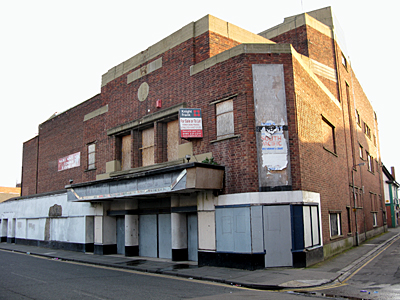
As I went through Newsham I looked around for traces of the stolen blue swing, but without success. I did notice however that the old picture house is no longer Kingdom Hall, but is now the New Hope Community Church. I thought at first that perhaps this was a re-branding exercise, but later discovered that this is a different Pentecostal organisation. They are very active in the Third World, it seems, a territory that in their minds may well encompass Newsham too. New hope is a curious concept. Hope is the expectation or wish that something is going to happen, the return of Christ, for example, or the apocalypse. I guess hope that grows old becomes no hope at all, or lost hope, or even hopelessness. To that extent hope is perhaps always new and the adjective redundant. Hope is always evanescent, which is why it needs to spring eternal, I suppose. For a moment I imagined Hugo sitting by his gurgling pond hoping for the return of his stolen blue swing, gazing with his heron at the pale carp gliding by. I fear their hope is in vain.
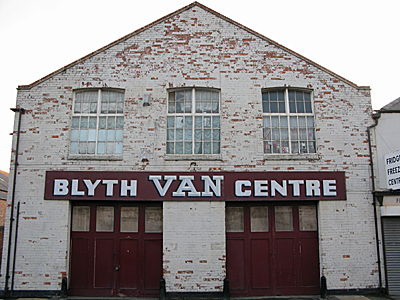
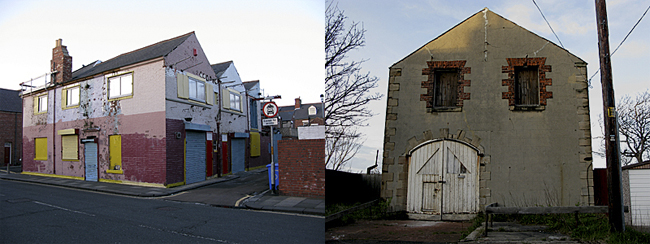
When I was driving back into the town tonight I noticed that there was a digger at Park Farm. Some of the out-buildings have already been demolished. When I see a building disappearing I always feel a deep sense of regret if I’ve never photographed it. Some old buildings on the quayside have recently been knocked down and I wish I’d photographed them. I wish I’d photographed the Traveller’s Rest, the Wellesley School and Mermaid Cafe. Photographs don’t stop time, of course. In fact they remind us that time cannot be stopped, that the world has already moved on. This is why they are so poignant. And a photograph is not the truth. You cannot, except in your memory, walk around a photograph, touch the substances in it, smell the air there. You cannot feel the breeze in a photograph as it blows into your coat. Photographs remind you that there is so much more to the world than the visible, and that those things too have gone.
When I got home I discovered that Hugo had removed every extraneous object from his front garden – the pink table, the wheel barrow, the pile of bricks, the rusty toolbox, everything except the green Mercedes, the Alligator with the broken tail. This new austerity is the concrete embodiment of the pain of Hugo’s loss. Rather than risk suffering again the profound trauma of dispossession he is prepared to foresake the kaleidoscopic diversity of the junkyard in favour of barren beds of graded pebbles and a couple of dwarf conifers in terracotta pots. It may be that this garden centre minimalism has more kerbside appeal, as Phil and Kirsty might say, but it is a look without depth, bland and superficial at every level.
After tea I went for a walk through South Beach estate, along Wensleydale Terrace and down Ridley Avenue. I walked back up Waterloo Road and along Renwick Road. When I got home Margaret was on her way out. She was wearing a new green jacket. It’s more leaf green than emerald, fashionably faded. As I drank my cappucinno I heard Hugo banging away at the Alligator’s tail for a while. He didn’t do it for long though. Maybe it was the greyness of the evening. Maybe his heart wasn’t in it.
At nightfall I walked out into the garden. I picked up De Kooning and together we peeked over into Hugo’s world at twilight gleaming on the moose and the henge. At about nine thirty two bats appeared over his pond, flying without rest in apparently erratic trajectories.
‘What sort do you think they are?’ I said. ‘Pipistrelles? And what do you think of the thesis that modernity and existential alienation are inseparable? Do you think we’ve lost forever a world we could call home?’
We watched the bats and the solar lights shone in the gloom.
while the blacksmiths were making butterflies
Yesterday, it being Sunday again, Margaret went over to Brenda’s to plan the great internet slipper caper and perhaps also to discuss new age mullarkey and the permanent revolution. It was cooler and misty in the morning. I biked up the coast to Lynemouth. There was a surprisingly brisk northerly wind. At QE II park in Ashington I stopped to look at all the swans and the windsurfers. A passing man from Bristol began telling me that his wife had two horses and one had an incurable hoof complaint and was now only going to be kept by her as a companion. He was flying back down this afternoon. He told me he had a mountain bike at home and took his two chocolate labradors out for a walk with him in the fields where he lived.
When I got home the sun was out. I made myself a cappucinno and went out into the back garden with the newspapers. I sat in the sun on a green plastic chair, listening to the gurgling trickle of Hugo’s waterfall. A red admiral came over the fence and clipped its way across the lawn. The wind occasionally swished and whispered through the whitebeam and the climbing rose. Pigeons cooed while starlings and other small birds chirrupped and cheeped incessantly, their music now and again punctuated by a squawk or the shriek of a passing gull. In the distance a motorbike rasped as it accelerated away, and soon afterwards I could hear the faint bleating of a lorry’s reversing warning. De Kooning wandered out like a surly delinquent and wrapped his tail briefly around the leg on my chair before wandering over to the shadow of the box bush and flopping down. Behind him the big flowery hearts of the pale rhododendron blooms swayed and teetered in the breeze.
Hugo was out and the station was peaceful and deserted. It was probably at its best this way, and maybe this was the way Hugo conceived it should be. But I knew that later he would return and as if possessed by some hyperactive industrial poltergeist find himself with a hammer or a saw or a cordless drill in his hand. Perhaps this is the paradox of Hugo’s garden, that at the moment he enters its accidental ramshackle perfection it is ruined by the very presence it was meant to accommodate, that of Hugo, its creator. But for now at least all was quiet.
Yesterday the newspapers all agreed that things are looking bleak for Gordon and that now is the fag end of New Labour.
the masked man at the gate
About mid morning one of Debs’ favourite clients, Mandy Potts, called at the office. She had in tow her two young children, Apple, who’s almost three, and her half-sibling Sparky. He’s six or so. Debs went out to see her, assuming she’d be seeking financial help, as usual.
‘Can I have a word?’ Debs said, when she came back along a few minutes later.
‘Sure,’ I said. ‘How much does she want?’
‘It’s not money she wants,’ Debs replied. ‘She’s got a new partner and wants to know if it’s okay with us if he moves in – which means he has already, of course.’
I expressed some surprise at this as it is not three weeks since Mandy told the review meeting of her enduring love for Tommy Flintoff – Flinty, as he’s called – and asked us to give them the chance to play happy families together again as soon as he is released from Durham Prison in July. Flinty is currently serving five years for drug dealing and for offences of violence, one of these being a serious assault on Mandy during which he tried to cut off her ears with secateurs. Fortunately he was so off his face on crack cocaine at the time that his coordination rather let him down and he amputated one of his own fingers instead, an error which brought the assault to a rather abrupt end and led to his arrest later at Wansbeck A & E. Sparky, who had been present throughout most of Flinty’s onslaught, had the presence of mind to pick up the severed digit and put it in a Kinder Egg shell. Mandy took it to the hospital. The surgeons were able to re-attach it, although full functionality will probably never return. At the review Mandy said Flinty had grown up while he was in prison (he was sentenced on what was only his thirty-eighth birthday), and that the kids really loved him and he had really changed. The review felt her analysis was perhaps a little optimistic.
‘So who’s the new man?’ I enquired.
‘He calls himself Mr Zorro,’ Debs said.
‘Mr Zorro?’
‘Yes. And he doesn’t see any reason why he should tell us his previous name.’
‘His previous name being his real name, I suppose?’
Debs nodded. ‘He knows about Mandy’s circumstances,’ she said, ‘and he accepts that we should know he’s become part of the children’s lives. I said we would need to do police checks, but he says that in his case it shouldn’t be necessary as he doesn’t have any criminal record.’
‘No, and I’m sure that’s exactly what the police will say too if they run “Mr Zorro” through their computer. You need to tell him and Mandy that without his real name we’re going to have a big problem with this arrangement.’
‘There’s something else,’ Debs said. ‘He’s a wee bit of an oddball.’
‘Odder than Flinty?’
‘Maybe not. But he’s not really Mandy’s usual type.’ Debs looked a little perplexed. She was like De Kooning: her muteness was eloquent.
‘You want me to have a word with him?’
‘Yes, I think so.’
Mandy was in the interview room, biting down the nails on her right hand. Apple and Sparky were behind her playing with the toys, and beside her stood Mr Zorro. He extended his hand and I shook it.
‘Mr Zorro, I presume,’ I said.
‘The very same,’ he replied.
‘I see now why you changed your name,’ I said.
Mr Zorro was as tall as me – about 6’2″ – and dressed in a dark brown Zorro outfit: dark brown tight trousers and knee-high Cuban-heeled cowboy boots, dark brown shirt fastened at the collar, dark brown waistcoat, dark brown flat-brimmed Spanish hat, broad brown leather belt with a silver buckle. And a dark brown cape. The only real interruption to his brown as cocoa theme was his black as soot mask.
‘So have you actually moved in with Mandy?’ I asked him, looking to Mandy for the correct answer.
‘Yes, I have,’ he replied, after a short pause. ‘Mandy and I hope to marry one day.’
Mandy nodded her assent to Mr Zorro’s proposal.
‘And I assume Mr Zorro knows about your past, Mandy, and why we are involved with you?’
‘Yes, I’ve told him everything.’
‘Including Flinty?’
‘Yes, I know all about him too,’ Mr Zorro interjected. ‘I think we can safely say now that so far as Mandy is concerned Flinty is well and truly history.’
Mandy smiled a little nervously but again nodded her assent to Mr Zorro’s assertion.
‘How long have you known one another?’ I asked ‘Where did you meet?’
‘We met about a month ago at The Gate in Newcastle,’ Mandy explained. ‘I was there with the girls on a night out.’ She and Zorro glanced at one another in a way that lovers the world over do.
‘Where are you from, Mr Zorro?’ I asked, hardly believing that these were sentences I would ever have occasion to utter.
‘Does it matter?’ he asked.
‘I’m afraid it does,’ I said. ‘We have a statutory responsibility to ensure the safety of Apple and Sparky, a duty we can only fulfil properly if we know what we need to about the people who are involved in their lives. You are now one of those people, and we need to know about you if we are to give permission for your cohabitation to continue.’
He looked at Mandy. Her eyes seemed to say: ‘I told you so; we don’t have any choice; do it for our love.’
‘All right,’ he said, ‘I’ll let you in on my past. But only if you assure me that my personal details will remain strictly confidential and that I will be referred to by my current name in all face to face transactions with you, your staff and other professionals.’
I glanced at Debs. She shrugged and nodded to tell me this was okay by her.
‘We are bound by the Data Protection Act, the Human Rights Act and the common law regarding confidentiality,’ I said. ‘We need your name and date of birth, and we’ll need to run a police check on you. Are you okay with that?’
‘My name is Malcolm Ross. My date of birth is 23rd March 1980. I was born Scremerston, near Berwick, but for the past 4 years I have been living in High Heaton. You’ll find I have no criminal record.’
Debs wrote his details down as he gave them.
‘Thanks, Malcolm – sorry, I mean, Mr Zorro. That’s very helpful. We’ll get you checked out by the police. Debs will need to do a visit within the next couple of days to see how things are and she’ll need to do an updated assessment to see how things are now that you’re part of the family.’
‘That’s fine,’ Mr Zorro said. Mandy smiled.
‘Mammy, does that mean Mr Zee is going to be our new daddy,’ Sparky asked, excitedly.
‘It might, Sparky,’ Mandy said. ‘You’ll just have to wait and see.’ Sparky was briefly seized by a rigid tremble of delight and then gave Apple a big hug. For children like these waiting to find out who your new daddy is going to be must be a bit like waiting for your Christmas present, I thought: all you know is that you get a different one every year.
‘Thanks, Zee,’ Mandy said, touching him on one of his folded arms. Mr Zorro, browner than peat, legs astride and black velvet mask across his nose, nodded silently, in the way that heroes often do.
‘It’s nice to meet you,’ I said. ‘Debs will need to sort out her visit with you. I’ll leave you to it. Just one last thing: why do you dress like Zorro?’
‘Mr Zee’s a Zorr,’ Sparky chipped in. ‘Zorrs are cool!’
Mr Zorro smiled.
‘Oh, you’re a Zorr,’ I said, as if this was a lifestyle choice I was familiar already with. ‘Now I understand. Like a Goth or an EMO or a chav, eh? Like a New Romantic or a punk? Oh, I see.’
Debs glanced at me for a nanosecond and then began talking to Apple about her lovely new brown dress with the little white daisies all down the bib.
‘Zorr’s are new around these parts,’ I said. ‘We’re not as cutting edge as the folks in High Heaton. Any way, thanks again. I hope things work out for you both.’
I went back to my office and left Debs to it. Mr Zorro seemed like a decent enough guy. He’ll certainly need all the heroic qualities he can muster to deal with Mandy and her meanderings. I wondered what the philosophy of the Zorrs was. Judging by the one example I’d met, I’d say their core values – the crucial elements in the Zorr self-construct – were perhaps a sense of duty, earnestness and the noble defence of the needy, although I accept that there is not as yet a robust evidence base for this assessment.
Debs came back into the office, laughing out loud.
‘So what do you make of Mr Zorro?!’ she said. ‘Is he a nutter? Is he a risk to the kids? What should we do about him?!’
‘If someone wants to be a Zorr, I guess he has every right to do so. To discriminate against him for doing so would be a breach of his human rights under Article 8 of the Act, I suspect. Zorrs might be new to us, Debs, but is being one any more evidence of mental health problems than being a Goth or a Jehovah’s Witness? And there are lots of both of those around these days.’
I suggested we had no evidence to justify an intervention at this stage. ‘But I’m really looking forward to reading your assessment, of course,’ I added. ‘And God knows what we’re going to do when Flinty gets out.’
When I got home Margaret told me Brenda had just received a late birthday present from a man who lives in America with whom she corresponds by email, a man she has never met. He sent her a pair of leather cowgirl western boots.
‘They’re exactly what she wanted,’ Margaret said, from which I assumed that the American must be a clairvoyant.
‘What does Tristan think about her getting a present from a strange man she’s met on the internet?’ I asked.
‘He won’t know. She’s just going to tell him she bought them for herself.’
Sometimes I think, despite the evidence of Mr Zee, that people never change.
I ate my tea in sun in the conservatory and listened to the Radio 4 news. In the evening it became grey and cooler. I went out for a walk down Plessey Road, along Coomassie Road, through the town centre and along Regent Street to Cowpen Quay. I saw no Zorrs, although it wasn’t for the want of looking. However, I did see innumerable clumps of chavs, straggled and strewn around corners and bus shelters and backstreets, a hundred and more shiny polyester suitlets. A couple of years ago I had a dream that the world came to an end and that the only survivors were me and a tribe of faceless chavs in polyester suitlets, stripes down every arm and leg. I woke up in sweat. Perhaps tonight I’ll dream an apocalypse of brown Zorros.
When I got home De Kooning was in the front garden rummaging around in the catmint. I scooped him up and took him inside. Hugo was staring at the alligator’s tail, preparing himself to do whatever it is he is doing. I laid a blank two foot square canvas on the table. I squeezed a glob of acrylic vermillion out on to a paper palette. I stared at the white canvas for a while and then loaded my number 14 filbert. I made the mark with three swift strokes as De Kooning cleaned his face.
dialectics in doggerlands
I walked out in the garden with De Kooning this morning. It was mild and no longer raining. There wasn’t much wind.
‘A good day for cycling,’ I said.
We looked into Hugo’s world. The plastic moose stood exactly where we had first sighted it, steadfast, implacable, and totemic. The heron still tilted at the gurgling pool. The henge was tranquil. We wondered if Maureen and the gangling boy had been given the opportunity to survey all this and to ask Hugo the question about Intelligent Design. The station clock said it was almost ten o’clock.
When we went back into the house Margaret was wrapping some things in a sheet of lilac and pink Paisley patterned paper. She told me it was Brenda’s birthday.
‘Ah,’ I said, knowingly, ‘the fifth day of May. What have you got for her this year?’ I would also have liked to have asked how old Brenda is now, but I knew I wouldn’t have been told.
‘A antique silk Liberty scarf, a Chakra pendant and a bottle of a really good Chateauneuf du Pape.’
Now to me a birthday is just another day. Whatever interest I had in celebrating it dwindled to almost zero when I became an adult. If there is to be a yearly ritual marking aging perhaps it ought to be a wake of sorts, or at least a sombre stocktaking exercise to look at what you’ve done in the last twelve months and what there’s left for you to do before the reaper makes his inevitable and perhaps quite unexpected appearance. Momento mori would be a good focus for a birthday. A birthday party that denies death is to me a wasted opportunity.
But this isn’t a philosophy Brenda Blenkinsopp subscribes to. Brenda is a girl who expects her friends to recognise how special she is in the only way that a true friend can – with a debit card. Being a life coach and steeped in new age anti-materialism, she does not of course say that the price and quality of the gifts she gets matters one jot. Not at all. In fact Brenda will say she subscribes to the proverbial position that it’s the thought that matters. However, experience has clearly suggested that the thought that doesn’t elicit the right kind of gift will not be counted as a thought at all, or at least not one of the kind that matters. A detailed analysis of Brenda’s responses to the gift objects she has received over the years suggests that a gift generated by a thought that matters will be one that makes a clear and accurate statement to the world about her very particular qualities. The gift will confirm that Brenda has class, that she is creative and cultured, and that she is a beautiful, remarkable person. To date no cheap gift has managed to make this statement properly. It is therefore a reasonable hypothesis that expenditure is a reliable indicator of the quality of the thought that matters to Brenda. Further evidence of this hypothesis lies in the fact that a few years ago Margaret was away on business in Chipping Norton and wasn’t able to get Brenda a present. Margaret rang Brenda from the hotel on the morning of her birthday to explain and to say that she hoped she had a marvellous day. It was almost seven months before Brenda spoke to her again. Ever since then Margaret has expressed her thoughts with much greater care.
‘Have you put my name on the card?’ I asked.
‘Of course.’
I took my bike up to Cresswell and rode the Castles and Coast route up along Druridge Bay through Amble and into Warkworth. Vague wraiths of mist were drifting up from the beach as the sun broke through. The sea was calm and steel blue. As I sat eating an apple at Low Hauxley I saw group a sand martins flickering and flirting around the edge of the dunes. Most years martins and swallows arrive before the end of April and always before I hear a cuckoo, but this group is the first I’ve seen this year even though I heard my first cuckoo more than a week ago now. It felt like summer really had arrived today. Ice cream vans and t-shirts, old men with slow dogs, little girls on pink scooters.
When I got back I sat in the garden for a while and watched De Kooning playing tennis with the bumblebees. The lawn already needs mowing again and is now host to a gaudy crowd of invading dandelions. I might do it after work tomorrow.
Margaret arrived home at about eight. I was watching a Time Team special about archeological remains found beneath the sea, evidence of human activity at a time thousands of years ago when Britain was still connected by a land bridge to mainland Europe. A Dutch investigator had some bones and stone axes from Neanderthal times. The bone was found beneath the North Sea and is about eighteen thousand years old.
‘Did Brenda like her presents?’ I asked.
‘She loved them,’ Margaret replied. ‘We had a really nice time. Her friend Jennifer was there. You remember her, don’t you? Tall willowy blond, works in financial services?’
I shrugged.
‘Oh, you do know her. Oh, and I met Tristan too. He’s a really nice guy. You’d like him too. He’s a Marxist.’
‘Really? That is interesting. So what does a Marxist plumber get for his lady friend on her birthday?’ I asked.
‘Oh, he got her this fabulous blouse and some very, very expensive earrings. Dark sapphires in platinum. He’s also booked them in for a romantic break at a five star hotel in Florence later this month.’
‘I wonder if he isn’t a Trotskyist,’ I said. ‘How are your teeth, by the way?’
‘Actually they’re fine now. I’d forgotten all about them.’
Eighteen thousand years ago there were woolly mammoths, bears and rhinos roaming vast plains in the space where the calm steely North Sea now swills. Archeologists have given this now submerged world the name of Doggerlands. When I googled it I was asked if I meant “diggerlands”. Margaret went off to have a bath. I asked De Kooning if he had ever heard of Che Guevara.
geology, the whelp, and the disembodied heart
Yesterday it was a soft slightly grey morning. I was browsing Amazon, looking at Remembering by Edward Casey. I was also listening to Radio 4. A panel were discussing Boris and his victory in the election. Someone who knows him well was saying he’s a kind of genius, by which he appeared to mean that he’s unique in a uniquely unique sort of way. Boris is clearly not to be regarded as any ordinary man. His acquaintance thought he’d make a good mayor. The door bell rang.
At the door were two Jehovah’s Witnesses. The lead was taken by a very small woman with white hair, large spectacles and a wrinkly puckered mouth. She introduced herself as Maureen. She was wearing a knee length woollen coat of an appropriately ecclesiastical blue. Her colleague was a tall gangling whelp of a boy. Perhaps in his early twenties, he wore black, carried a document case, and had the kind of face that I’ve sometimes seen painted on a peg. He had a pale round face and a little round mouth. He maintained a supercilious expression at all times, part choir boy, part police informant.
‘We’ve come to see if you’re interested in the latest copy of our little magazine,’ Maureen said. ‘You may have seen it before’
I nodded.
She informed me that this latest edition asks the question “Should you fear the future?” and she handed me my copy of Awake! . I smiled. The pitch here is prophesy. They want me to acknowledge the imminent apocalypse and to be afraid, to be very afraid. They want me to buy my ticket to the only safe bunker in town, Kingdom Hall, which last time I looked was a refurbished pebble-dashed pre-war cinema in Newsham.
‘Thanks,’ I said. ‘I’ll give it a read.’
‘It’s terrible what they’ve done to the world, isn’t it?’ Maureen said, and went on to press the predictable buttons of global warming, the environment, the decline of family life, war and the ruination of paradise. I wondered who she thought “they” were, and why she thought “He” had let things go this far. Maybe it’s the past that should scare us most. If God had to put himself up for re-election what could He say He’d achieved so far? The tousled headed cherub-fiend Boris would make holy mincemeat of Him.
She paused. She could see I wasn’t taking the bait. The gangling whelp looked vaguely mesmerised.
‘Do you have a bible?’ she enquired. I said I did. I thought perhaps she wanted to give me one of those too. ‘Well,’ she went on, pointing, ‘ you’ll see I’ve put a scriptural reference at the top right hand corner there. Can you see it?’
I squinted at the magazine. She’d written “PS 37:10,11”.
I smiled again and quietly disclosed to her that I don’t believe in God. She seemed surprised. It was impossible to tell what the gangling whelp’s response to this news was. He just stared at me, like the heron looking into Hugo’s pool.
‘Oh, why not?’ she asked, as if both curious and concerned. I could see no point in getting into a futile argument. I told her I simply never had.
‘Oh, but you don’t believe in evolution, do you?’ she said. Her tone now was a mixture of pity, incredulity and shock, as if she was asking me if I had been molested as a child. Maureen was aghast.
‘Yes, I do,’ I said, whereupon she told me there was no evidence for it and that ‘they’ say it’s been proved to be all wrong. The gangling boy stood as still as a peg, as silent as an undertaker’s apprentice. There isn’t going to be much space in the bunker, I thought to myself. Suppose I got the seat next to him? Meanwhile Maureen was busy suggesting to me that the world as it was couldn’t possibly be the result of chance, that there must have been a designer. I just knew we’d wind up here. I glanced over into Hugo’s junkyard and wondered what she’d say about that. Would she see it as an example of Intelligent Design? But where would that debate take us?
‘You don’t believe in geology, do you?’ I asked. I thought this was a smart move. Maureen was probably imagining me surrendering my reason to the marvellous intricacies of a thousand clockwork finches. Mud and clay on the other hand rarely enter the ID debate as examples of the world’s inexplicable complexity. ‘The world’s been around for millions of years and the evidence is in the ground you’re standing on. As I understand your group’s view, you believe we’ve only been here for a few thousand years. How can that make any sense?’ Yes, I know: ‘group’ was wickedly secular.
At this point Maureen found a way to mention Noah. She then said that the world had been around for a very long time before God created man.
‘Yes, it was about six days, wasn’t it?’ I said.
‘Oh, but you know, the bible doesn’t necessarily mean literally six days.’
She was now a fundamentalist sitting duck. The gangling boy seemed oblivious of the fact that I already had my fowling gun at the ready.
‘If that’s not literally true, then maybe the whole story isn’t literally true either,’ I said. ‘Not Adam and Eve, nor The Flood, nor Christ’s death and resurrection, not the walking on the water or the loaves and fishes, and not even the Apocalypse either.’
Maureen now told me she wasn’t an expert in these things, but that she believed in God and that He had the power save us all. I told her I respected her beliefs but I didn’t share them. The gangling whelp maintained his studious silence. They walked off together down my garden path, feathers still sticking to their coats. Their next stop was Hugo’s world.
I went back into the living room. Margaret had turned off the radio and was watching a cooking programme on TV. I looked at the Napoleon on the mantelpiece. My spirit was less uplifted than I thought it should be.
De Kooning and I sat in the conservatory. I had a cappuccino and he watched the blackbirds coming and going with their beaks full of worms.
* * * * * * *
Earlier today I drove up the Rothbury to go for a walk. It’s a place I used to go a lot, but hadn’t been for a year or two. I took the usual road in, west along the Coquet through Pauperhaugh, below Cragside, on past the Thrum. At the edge of the town I discovered a new road junction has been built and that what was the major road has now become the minor road. I stopped at the junction and on the hillside ahead of me saw some large new houses. Ancient green fields have become a building site and are already well on their way to becoming a substantial new housing estate.
Much of Northumberland is being spoilt this way. This is particularly ironic for a county that markets itself as ‘unspoilt’, an epithet which ceased to be true some years ago now. Towns that once had a distinctive character and a quiet beauty are becoming bland, counterfeit and indistinguishable from one another. And bigger towns need bigger roads and the roads fill up with traffic. Houses fill with people and the people need shops and services, and where there are shops and services yet more new houses are built and more roads to bring more visitors to town. Street lights appear for miles around and night and day the noise of the traffic nags into every dene and over every fell. If you want to see the future go and look at North Tyneside.
Not one of the people I know who lives in one of the many villages and country towns being spoiled this way tells me they want all these new houses. Most say they don’t. But that’s not how our modern democracy works, of course. We no longer cast our votes to decide on the shape of the world we want to live in. We are given the new world first and then vote on whether we like it or not. But by then it’s too late, the green fields have already gone.
The eschatology of the creeping apocalypse obviously doesn’t involve horsemen and dragons. Strategic planning, NGO’s, budget controls, ring fencing, penalties and incentives, planning regulations, planning gain, sham consultations, performance indicators and targets, PFI, exclusivity agreements, the unitary authority, the city mayor . . . these are among the beasts which signal we are in the final days. Little by little ordinary people are disempowered and lose the things that made the world feel like home. The future has already been sold to a private equity company. Some day soon every place will look the same. Most of us will survive, but our lives will be devoid of all happiness.
Margaret’s dream was wrong: the economy is not God’s little clock. The economy is a time bomb. But Field Marshall Gordon doesn’t know it. Night after night he sits nursing what he thinks is the cherished clock of the economy, like a robot holding his own disembodied heart, winding it up over and over again, wishing it would sometimes just tick a little more quickly. It’s a bomb, Gordon – it’s a bloody time bomb! It’s no good, I know: Gordon couldn’t defuse it even if he wanted to. And nor, I suspect, could Major Boris, genius or not.
I walked up on to the carriage drive and looked down on the new housing estates from the crags of Addyheugh. I wondered where Tesco would be putting their supermarket. I wondered where they’d put their filling station. This is how the world ends, Gordon. Bang! Bang! Bang!
A flurry of feathers blows across dark, deserted acres of block paving. The security light flicks on. There’s no-one there.
A minute later the light goes out.
the dilemma of a disillusioned bystander
This morning I could see that Margaret still had unfinished business with me. As I sat watching the early morning TV news she came and sat opposite me. It is the day of the local government elections and I was wanting to see how Boris and Ken were shaping up
‘So what would you do with my clocks?’ Margaret said. ‘What time would you set them at?’
I shrugged. ‘I would have just left them where they were when you got them.’
‘Why?’
‘Why not?’
‘Do you think how they were when they came had some special significance?’
‘No, I think whatever time they tell is meaningless.’
‘So what would be the problem with putting them at different times?’
I could see this was leading me into a contradiction. It was looking as if I was saying that the completely chance combination of times that these clocks constituted after their piecemeal arrival had a particularly meaningful sort of meaninglessness.
‘There is no problem in doing that,’ I said. ‘None at all.’
‘Okay, so what times would you set them at then?’
‘I wouldn’t have moved them from where they were. That would have as much meaning as anything else.’
‘Oh, come on, that’s a cop out. Come on, dip your toe into the universe and play God.’
This was a tight spot for me. We both knew I was playing God already. In this my universe where all the clocks have stopped at random I was refusing to acknowledge my responsibility for the new temporal order. I was a disenchanted, non-interventionist God, a surly deity pretending I wasn’t there at all. I was elevating chance to a transcendental process. I had caught myself off guard. I was momentarily flirting with mystery.
‘I’d remove the hands from every clock,’ I said, ‘Unburden the clocks of their paradox, return them to timelessness.’
Margaret smirked. She put her cup in the sink and went off to work.
I have been in Morpeth all day on a training course. This morning and around midday there were some heavy hail showers, but in the afternoon it became quite warm and bright. It feels like the first day of summer.
When I got home from work I went to cast my vote. Afterwards I went for a walk and reflected on the squabble I’d had with Margaret over her clocks. I could see that the dispute revealed some fundamental differences in our personalities. Later I devised a self-assessment tool, an instrument I have provisionally called The Stopped Clocks Test. The instructions are simple. Imagine you have twenty three clocks, all broken beyond repair, and you have decided to keep them as ornaments in your house. From the following list, choose two options – the first being the one you are mostly likely to follow, and the second the one you are least likely to adopt.
- Remove their hands
- Set them all to midnight
- Never move them from the time at which they stopped
- Set them all at six o’clock
- Set them all at ten to two
- Set them all at twenty past eight
- Set them individually at regularly spaced times throughout the twelve hours
- Set each at a time at which some special event happened to you
- In absolute darkness reset each one randomly
- Set them all at the time at which you were born
- Set them all at the time at which you believe you will die
- Turn all their faces to the wall
There is no time limit for the completion of this test. It is important that it is not completed casually or impulsively. The test can be used simply for self assessment purposes or, where appropriate, for the assessment of the compatibility of individuals within partnerships.
I asked Margaret how her teeth were tonight.
‘How do you think they are?’ she replied.
There are some questions it’s best not to answer.
twenty three clocks that will never chime
I came in from work tonight at about quarter to six. Margaret wasn’t in. I wandered through the house looking for De Kooning.
We have twenty three stopped clocks dispersed throughout the house, the legacy of the demise of The Ticktock Two. Viennas, Black Forest Cuckoos, Napoleon and Westminster chimes, a Louis XVI mantel, eight day Carriages, a Lantern, a Banjo, an American Steeple . . . They arrived one after another, not one of them ever to tick or chime again, not even once. In time, if that expression can be properly used here, each of them found a place on a shelf, a mantel, a wall or a table, and there they have remained, dumb witnesses to Zeno’s negligence.
It wasn’t until after the fall of The Ticktock Two that Margaret began to take an interest in the time that each clock told. Until then each clock had just shown whatever time it happened to be stopped at. But one day this struck Margaret as a grievous and unbearable disorder. Clocks are either right or wrong, she said, and since they are all to be wrong most of the time it was best that when they are right they are all right together. She set all twenty three clocks to read twenty past seven, because she said this was her very favourite time. She felt this unanimity also promoted an enhanced sense of well being in the house, by nullifying the subliminal experience of being forever adrift in a chaotic arcade of colliding hours. She had read somewhere that this kind of dislocation was particularly harmful to the soul.
After about three months or so Margaret came in one evening and reset all the clocks to six o’clock. She said she did this for aesthetic reasons as she had come to see that the dynamic imbalance of the hands at twenty past seven would never allow the mind to rest. The pure verticals of the hour of six, on the other hand, had a serene and grounding effect.
About four weeks ago Margaret grew tired of both serenity and unanimity. She reset the clocks to represent the inevitable temporal succession, deciding upon a strict regularity in the cyclical pattern of change. She set one single clock in the house either at the hour or at half past the hour for each of the hours from twelve o’clock to eleven thirty. This way two clocks would be sure to be right in every single hour of the day. Except, that is, between three and four. Margaret decided that no clock should be set at three thirty, not only because she would have needed one more clock to achieve full continuity, but also because she had always particularly disliked the hour between three and four. She believes it is the most unlucky part of the day.
When I came in tonight I noticed there had been another change: every single clock is now set at ten to two. I found De Kooning curled up on the bed. He got up and stretched and we went back down to the kitchen.
I had a tin of carrot and butter bean soup followed by honey yoghurt. I went out for a walk through the streets. I made my way down to the South Harbour and came back up Newsham Road and through the Isabella. It was dull and drizzling and there was almost no-one round. When I got back Margaret was in. She had been to Brenda’s. She’d had tea there. They had agreed on some initial stock for their new enterprise together. For a moment the spectre of arriving home one night to find eternally immovable deployments of tartan or fluffy pink slippers in every room crossed my mind.
‘I’ve changed the clocks,’ she said.
‘Have you?’ I replied. ‘Oh, yes, I see: it’s ten past ten.’
She rolled her eyes. ‘It’s ten to two, actually.’
‘Is it because you like the ambiguity?’ I asked.
‘No, of course not. No, it’s because Brenda has advised me that ten to two is a very powerful and propitious time to have on a clock face. Look at it: it’s uplifting and empowering. See how the hands remind you of arms uplifted to the sky. Ten to two is the time of openness, readiness and hope. It is a very spiritual time.’
I went into the conservatory. The light was grey and flat. I thought I might begin a new painting. I thought I might use vermillion, burnt sienna and Prussian blue. I thought I might use a broad flat brush on a dark ground.
miracles and the rain
It was a long weekend. Sudden, unpredictable rain plagued every walk I made. Most days I wound up drenched and dripping and as glossy as an eel. This weather also had the unfortunate side effect of confining me to the house more than I really wanted, an experience made doubly difficult because Margaret had an attack of grumpy teeth. This condition afflicts her intermittently, rather than cyclically, and I have hypothesised that it is caused by work-related stress. It almost invariably occurs within a month of her beginning a new job, as it has on this occasion. It is in fact, at least superficially, a reliable indicator of her happiness at work, and where it has persisted for a protracted period she has in both cases given up the job. It happened at Sasha’s Pampered Pets; it happened at Underwater World.
Of course, this is a small sample, and you will no doubt argue that these could be mere coincidences, that I am asserting a causal connection where none in reality exists. That may be true. Or it may indeed be that a causal connection does exist, but that it runs in a different direction i.e. that Margaret cannot tolerate working at all when she has grumpy teeth and that if the condition persists it is therefore inevitable that after a certain time she will abandon any job she has at that time. That, of course, would still leave undetermined the cause of the grumpy teeth.
De Kooning and I have often debated the meaning of Margaret’s grumpy teeth. It is true that no biological or dental cause has ever been established, but it is surely also true that ultimately some physiological process must inform her condition, even if it is one triggered by events of a more psychic nature. Grumpy teeth must, in common with all other events that we observe and encounter in our day to day lives, have a cause. It cannot belong to a special class of event outside that natural order, it cannot in effect be a sub-species of the miraculous. And even if it were, miracles too have a meaning, a special significance within their transcendental frame; they are surprising events of remarkable import at the mysterious interface between the natural and the supernatural worlds. If you believe in that kind of thing, of course, which I don’t.
Personally, I find the assertion that grumpy teeth may be a miracle to be faintly absurd. What on earth could be the point of such a trivial and troublesome miracle? What kind of bored or capricious deity would commission such an act? If God, for whatever mysterious reason, had taken it upon himself to discharge Margaret from Pampered Pets, would he have done so by investing in such a patently baroque miracle as grumpy teeth? Probably not. A simple infestation of fleas would have been kinder and far less conspicuous – and if there is a God, one of the more obvious facts about Him is that he doesn’t want anyone to know he’s around.
Margaret has taken her grumpy teeth problem to Brenda, of course, although on what basis I am not yet sure. I am assuming acupuncture, but for all I know grumpy teeth may be a problem that can be approached from any number of tracks on the New Age route planner. It may be that, as De Kooning has suggested, it is from a Life Coaching perspective that the problem is being tackled.
De Kooning and I were sitting in conservatory late on Sunday afternoon. The sky was charcoal grey and silvery rain slithered quietly down the windows. I was drinking a cappuccino and reading an article in The Observer claiming that many are coming to see Gordon as a liability. Margaret was in the kitchen cooking turnips and beans. She came through to open the windows because they were steaming up.
‘How are your teeth?’ I asked.
‘Dreadful,’ she replied.
I resisted the temptation to see this as a potential key to their true significance. The idea of dreadful teeth was almost too hellish for a Sunday afternoon. At that point a blackbird flew into the window. De Kooning and I sprang up. I opened the door and we both ran out into the rain. The blackbird had already recovered and flown off. I looked over the fence. Hugo had acquired a life-size plastic moose. It stood beneath the station clock, alone in the seemingly perpetual rain; glazed, awesome, and somehow vaguely terrifying.
 yammering