Archive for the ‘Uncategorized’ Category
how to plumb the apocalypse
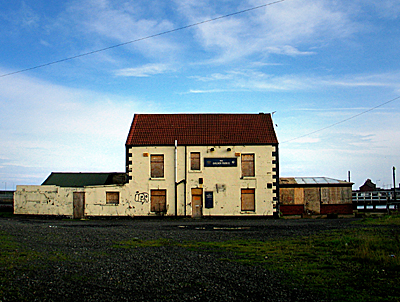
I spent most of the day sitting at an inquest. Driving home I noticed it had become much warmer. I went out on my bike and rode down the coast.
Later Margaret told me that she and Brenda were thinking of setting up another internet business. I asked her if it was acupuncture. She said it wasn’t. It was slippers.
‘So how is Brenda?’ I asked.
‘She’s great,’ Margaret replied. ‘She’s got a new man in her life. She’s blooming.’
‘Who’s the man? Is he an acupuncturist too?’
‘No, he’s a plumber. Well, actually he isn’t. He a TV repair man. But he’s a plumber now. He’s called Tristan.’
‘Tristan the plumber? I think I might know him. What’s he like?’
‘You don’t know him. And I haven’t met him. He was out on a job when I was there.’
‘Tristan plumbs on the sabbath?’
‘Not everyone is afraid of hard work, you know. Brenda is expanding her business into other areas too – reiki, massage, and life coaching.’
Margaret then gave me a sheet of paper headed Brenda Blenkinsopp, Life Coach: “Finding the key to the life you really want”.
Below that was what was described as “a simple questionaire that will help us together to find out where you really want to be in you life and what the main obstacles are preventing you from getting there”. The instructions were to choose from the following list in rank order the three items which best describe your attitude to your body. Here is the list:
My body is
- a temple
- a barn
- a cheap hotel
- a sub-post office
- a warehouse
- a waste disposal amenity
- a peel tower
- a lock up garage
- a lighthouse
- a Wendy house
- a caravan
- a detention centre
- a winding house
- a signal box
- an all-night cinema
- a spire
‘How does she interpret the answers?’ I asked.
‘Do it and you’ll find out,’ Margaret said, like an excited schoolgirl.
I looked at the list. It was utterly opaque. I went and let De Kooning out. It was an apocalyptic sunset, orange and billowing out of the west. The solar lights around the lawn were coming on, blue and ghostly. There wasn’t a breath of wind. The boy died of an accidental overdose of benzodiazepine. The verdict was misadventure.
over the fence to hugo’s world
Before we went to work this morning I asked Margaret if she’d noticed Hugo’s clock.
‘Oh, that thing,’ she said. ‘It’s an imitation. They’re as cheap as chips on the internet.’
Oddly enough I hadn’t taken it for an antique. And in a sense the whole idea of Hugo’s world is imitation. Or maybe not, but at least imitation would be as valid there as anything genuine. I wonder if the operating principle of Hugo’s world works is the hopeful pursuit of serendipity. He doesn’t know what sense any of this might make, but he picks up anything the wind blows his way and drops it into the pot, as if some magic might one day throw up a combination that finally makes sense. A junkyard epiphany. One of the thus far unresolved contradictions in the Haphazardist metaphysics behind this approach is the legitimacy of the intervention of will. Purists argue that things must remain where they fall – like dice thrown in a game – and that any tampering with them will produce only spurious meanings. The Pragmatic school of Haphazardists on the other hand argue that this position is not only deeply impractical, but also based upon a fundamental misunderstanding of human intentions, which are in themselves profoundly random and subject to the same laws of improbability as objects falling out of the sky. Thus the glimpse that shapes Hugo’s intervention in his world – be it the thought of a trawlerman dumping the contents of his net on the deck, the memory of a prehistoric landscape, the flashback to an old film he saw on Sky Digital one night, a dream, Disneyland, White Fang, or any one of a hundred other scenes – is in itself as accidental as any other event and will not result in any more or any less meaning than would otherwise arise. The laws of serendipity say that if it’s going to happen it will anyway. The more I thought about it, the more I was coming to see Hugo as the model of post-modern man. But it was late, and I had to go to work.
In the car I heard John Prescott on Radio 4, talking about his bulimia secret. ‘Here we go again,’ I thought, ‘ Another weird coincidence. Prescott is about the same build as Hugo and he is also a seafarer. What’s the chance of that?’ And then I remembered my conversation with Gordon and how I’d wanted to tell him the only jigsaw was the jigsaw in his head. I flicked over to the CD player, not knowing what was in there. It was Rum, Sodomy and the Lash by the Pogues! Okay, I said to myself, okay – but let’s not get carried away here.
After tea I decided to look again at Hugo’s work. I went out into the back garden and loitered on the lawn in the evening sun, pretending I wasn’t looking. Over the fence was Hugo’s World, and for some reason it now felt as if I should be paying to look, as if overnight it had become a theme park rather than simply a neighbour’s garden. Hugo’s World was now a different kind of space, a place apart, a heterotopia. The outsider can only look in and imagine what life in such a place might be like. Hugo’s garden had become like Bede’s World or the Beamish Museum or the Crannogs on Loch Tay. We can look in, but we can never know what it must be like to look out from such a place, how life looks in Hugo’s World. We can never know the phenomenology of being a junkyard frontiersman, a rag and bone man in a throw away culture.
I looked at the station platform and the clock, the henge and the shelters. And I looked at the big rubber pond encased in wood and aerated by a little pump driven waterfall that glittered cheerfully in the golden evening sun. A silver plastic heron gazes unflinchingly into the dark water where plump orange and white carp slide silently by. A little further along the parapet two plastic mallards sit, beady black eyes never blinking in their emerald green heads. I saw the bird table I hadn’t noticed yesterday, tucked away in a corner near one of the huts, and the pair of wrought iron gates behind it. On the rust red preservative of the lattice fence a couple of gaudy plastic butterflies on wire wands have settled. There’s a blue Hula Hoop against the fence too, and all around the garden solar lights on skinny silver stems wait for the light to fail. It was like looking at the Queen’s gilded carriage from behind a red silk rope, or at the mysteriously protected furniture at Alnwick Castle or Cragside, at things so rare you can’t even photograph them because to do so might bring about their decay. I was holding my breath as if I was an an intruder. This is how Jack must have felt when he first climbed up the beanstalk and entered the Giant’s loft.
I went out for a walk through the streets. It’s a little warmer tonight and the wind has dropped. The trees are full of the chatter and chirp of garden birds and the buds are beginning to burst. It almost feels like summer is finally coming. When I got back it was almost dusk. Margaret was on the phone.
‘Brenda says hi,’ she said.
‘Hi Brenda,’ I replied. De Kooning ran past me to the back door. He wanted to be out.
‘Okay,’ I said. ‘ Okay. But don’t go out of the garden, do you hear?’
look at that big hand move along
Our next door neighbour is known to everyone as Fletcher. His other name might be Hugo. He moved in towards the end of last year. He’s a sort of jack of all trades, it seems. He also appears to have an insatiable mania for junk, if his front garden is anything to go by. A wheel barrow full of sacks has recently joined the child’s swing with one rope broken, the rusty toolbox, the things hidden under white plastic sheets, the pile of bricks, and the pink garden table lying on its side. Many are the things that arrive, but few if any have yet to depart.
When I left for my walk along the coast this morning Fletcher was standing gazing at the caved in rear end of the old green Mercedes that has lain on his drive since Christmas, sprawled there like a dead alligator. Fletcher is a big man and he has the air of a trawlerman about him. For his personal style he has forsaken the careless eclecticism of his garden in favour of conformity to an almost comic book stereotype. I nodded as I passed; he nodded back. I knew that later he’d be taking a five pound hammer to the alligator’s crumpled tail, as he does every Sunday, and banging away with ferocious indifference well into the twilight. I don’t really know Fletcher at all, but he strikes me as in some ways a man on the lam. I want to declare to you that his life is a vacuum, sucking in the messy flotsam of cast aside things as the denial of an emptiness within. But that of course would be pure speculation, much too pyschological for my liking, and rest upon very little evidence indeed, especially if we discount the landfill amassed at his gate. But Hugo Fletcher the Magpie is an idea with some promise, and one we should come back to again.
When I got back the sun was shining. Margaret had gone to Whitley Bay to see her old friend Brenda. Brenda is an acupuncturist. Whitley Bay is an acupuncturist sort of place. Together with Brenda, Margaret once had a eBay shop selling clocks. They called it Tina and Tabitha’s Tasty Ticktocks. Yes, I know, I know. People like to pretend that this sort of mistake is post-modern irony. But the truth is we all really still like bubblegum. It’s a comfort food.
The clock business went okay for a while (yes, just like clockwork, I hear you quip!). But The Ticktock Two began to get ambitious. They began to acquire the worn out, tickless carcases of classic old timepieces, convinced that they could restore each one and make a handsome return on their investments. The only obstacle would be the difficulty getting spares for these ancient instruments. The Greek came up with a supplier for them, a man who could get them every cog, every spring, every mechanism for every timepiece ever made. The Greek assured them nothing could go wrong. His supplier was the Famous Zeno. Margaret and Brenda bought up broken clocks as if there was no tomorrow. And there wasn’t, because not one of the parts they ordered ever arrived; all were indefinitely delayed. The business folded.
I sat in the conservatory drinking cappuccino. Do Kooning was making his way across the lawn like a small black lion in the long grass of the savannah. I decided it was time to give the lawn its first mow of the year. I went to the bottom of the garden to get the lawn mower from the hut, where I’d put it in the autumn. It was then I looked across to Hugo’s garden.
All winter long we’d heard him banging and sawing and drilling out there, sometimes at all hours, even in the dark in the middle of a stormy night. From our window we could see him erecting huts and shelters of various kinds and then, finally, a conservatory; a double-glazed weather boarded extension the roof of which is heavy duty corrugated Perspex. It juts out about a metre or so, creating an awning over the decking below. And the whole thing is surrounded by tall wooden posts the purpose of which is not clear, but may perhaps be both ornamental and practical. A sort of DIY henge. There was also the whiff of a medieval village in all this.
Now I don’t believe in signs, and I don’t believe in synchronicity. But there at the far end of Hugo’s porch, hanging from the corner of the perspex awning I saw a clock – a large white-faced clock with classic black numbers and hands. It said it was quarter to four. I checked my watch, and it was right. The clock was real. I picked up De Kooning and showed it to him. At first a country station came to our minds, as if The Magpie wanted to evoke a rustic idyll. But this was quickly displaced by the echoes of High Noon. Hugo is a man waiting for whatever fate might await him.
‘What do you think of that idea?’ I said to De Kooning. ‘Or do you think this is all accidental?’ I could tell from his expression that he too was struggling a bit to see Hugo as Gary Cooper. He was right. Hugo is more like a prospector. His station is somewhere in the Yukon.
I mowed the lawn and cut back the brambles. I wondered why Margaret hadn’t told me about Hugo’s station and the white-faced clock.
while margaret cooks the onions
When I went into the kitchen Margaret was cooking some onions. ‘I had a dream last night,’ she said. ‘I dreamt that the economy was God’s little clock.’ I decided to go out for a walk.
Margaret has got a new job. It’s something I need to tell you about. The truth is I liked it better when she worked at the florist. It wasn’t as close to the cashpoint, and without it I’d never have known about the scented pelargonium. On the other hand we would never have had our infamous tiff about the relative merits of the blue versus the white gladioli. She’s never let me forget that I said she had the aesthetic intelligence of an insect. The positive connotations of such observations rarely tolerate much repetition, do they?
When I got back Margaret was in the garden looking for the cat. ‘De Kooning, De Kooning,’ she cried. ‘Dinner, De Kooning, dinner.’ I put the kettle on and emptied a sachet of instant cappuccino into a mug. I sat in the conservatory in the afternoon sun. De Kooning ran in and squeaked at me. I said hello to him and he went off in search of his dinner. Margaret came in in and asked me if I’d seen anyone during my walk. I told her I hadn’t. I never do. You could be forgiven for thinking I was a stranger in this town. The onions smelled good.
Tonight I was sitting at the window looking at the messy mottlings on the full moon when my mobile rang. It was The Greek. He said it had come to his notice that I was in need of some new scissors and he could supply me with the orginal and the best – or at least the best this side of the Pyramids, he was certain – at an unbeatable price.
‘Why would I need new scissors?’ I asked. ‘The ones I’ve got aren’t broken. It seems you may have been misled.’
‘Well, haven’t you lost or mislaid them?’
‘No, I don’t believe I have.’
We talked for a while about the government and then I went back to studying the patterns on the moon. De Kooning came in and joined me. Margaret flicked on the light and asked me if it was The Greek who had rung me. I confirmed that it was.
‘What kind of clock was it?’ I asked. ‘A longcase?’
‘Yes,’ she replied. ‘It was a grandfather.’
whose jigsaw is this anyway?
So what have we got today? Globalising Gordon bestrides the world like a culled ostrich. His jowls are flaccid, but oh how they deceive. His gestures are pure Henry Ford. When he speaks his hands puncture and rivet, pummel and fix the stubborn Presbysterian substance of his project. Gordon’s man is a machine within the big machine of the world. Choreographed by robots, for robots. Will is nothing more than a particular case of the general doctrine of association of ideas, and therefore a perfectly mechanical thing. Would you call this life ordinary, Gordon?
Ordinary people have holes in their socks. That’s the usual definition, isn’t it? Ordinary people only smile when they’re happy. Ordinary people aren’t like Galileo. A Stephen Hawking voice in my head says to me that we only need to find the missing pieces. The world is a jigsaw. But it looks like what we’ve got here are the pieces from any number of jigsaws. The trick would be to get rid of some pieces, eh, Gordon? (When did you last do a jigsaw, Gordon?) The Jigsaw Theory tells you the world makes complete sense – if you’ve got a big enough table and infinite patience. I want to tell Gordon that there’s only one jigsaw and that’s the jigsaw in his head.
But this theory too falls to pieces. The question becomes: who cut up reality like this? And more to the point, who supplied the scissors? Gordon has left the room. The ordinary people mend their socks and go for walks by the sea. Gordon says that God made the jigsaw. So why didn’t he leave us the box lid, Gordon? Because he doesn’t know what the picture is either?
Margaret calls me. There’s a rainbow over the sea.
 yammering