Posts Tagged ‘adam smith’
at the mansion of the halloween lolitas

This photograph shows Adam Smith’s bust in the Kelvingrove Art Gallery and Museum in Glasgow. I took it on Friday. It shows Smith and his ghost looking at one another. I wondered if perhaps it could stand as a metaphorical comment on our current economic woes.
I went to Glasgow a couple of days ago, mixing business and pleasure. I went via the A69 to Carlisle and then up the M74 to Glasgow. The soft slow blaze of autumn smouldered up the Tyne Valley and over into Cumbria and all the way over the Galloway hills. It is Samhain, the time of the end and beginning of the Celtic year, the time of the festival of the dead and bone-fires, the time of apples, nuts, egg-whites and crows. The time of the final harvest and the beginning of the dark half of the year.
Kelvingrove is a beautiful place, the most impressive and enthralling gallery and museum I have ever been in. It contains and somehow or in some way integrates many diverse aspects of the cultural and natural worlds (although I might want to argue that once something enters a museum it can only be culture, and not nature, and not only for the obvious reason that there are no stuffed animals in nature!). Because of the design of this huge old mansion – all stone staircases and long balconies which look over its large lower spaces – it is a place which throws at the visitor an astonishing succession of quite unforeseen and often surely quite accidental combinations of items. These idiosyncratic juxtapositions, depending as they do very much on the eye and interest of the individual observer, make the experience open-ended and potentially unique for each visitor. Kelvingrove offers the imagination an endless feast, a chance to make chaos out of order and a new order out of chaos. It’s a magnificent junkyard rather than a marvellous jigsaw. Hugo would love it. Go there. You won’t see what I’ve seen, but what you do see might amuse you.
Kelvingrove is a metaphor for the city itself in the way it brings together disparate objects and experiences. Kelvingrove is also a metaphor for the attractive but ultimately misleading façade offered to us in the self-(mis)representation of modern cities by their marketing and PR people. Don’t get me wrong, Kelvingrove is a fantastic, enchanting place and I’d happily spend a whole week there; but it doesn’t show the whole of life and it doesn’t show the whole of Glasgow life. Glasgow has higher child poverty levels than anywhere else in Britain. In some parts of the city forty-nine out of every fifty children are living on or below the poverty line. In Kelvingrove poverty simply vanishes up the sleeve of social history. Kelvingrove does its job incredibly well, but it’s just not its job to tell the whole truth.
I went to Kelvingrove on Friday to look again at the paintings of the Glasgow Boys, which I’d previously looked at while they were temporarily housed in the McLellan Gallery on Sauchiehall Street while Kelvingrove was being restored. In Kelvingrove the paintings are exhibited in the ‘Scottish Art’ room, along with paintings by the Scottish Colourists, whose work I also like a great deal. I used to like Fergusson the most, but looking on Friday on Friday at the Kelvingrove selection – which I think is relatively weak in terms of Fergusson stuff – I began the think that in some ways Peploe and Cadell were at least his equal and in some ways his superior. On the strength of the Kelvingrove, Fergusson’s work looks less original than theirs and his handling of paint far less subtle and skillful. I’ve never yet been much impressed by Leslie Hunter’s stuff and Friday didn’t change my mind much on that question.
The Glasgow Boys’ paintings astonished me, as they always do, in their perception of light and their rendering of this in paint. On Friday I especially noticed George Henry’s paintings. His A Galloway Landscape is in the far corner of the Scottish Art room. I had mistakenly thought it was in the Scottish National Gallery in Edinburgh when I last saw it, but clearly it must have been in the McLellan gallery at the time. I love this painting, but always wonder how it looked when it was first painted. I wonder if the obscurity of the cattle isn’t the result of the whites becoming dirty and dull – although this hasn’t happened to the clouds – and whether Henry really wanted them to be so murky, although of course the murkiness may well be one of the reasons for the painting’s success now in engaging some viewers. Things sometimes mean more to us when we’ve got to decide for ourselves what they are.
I had intended to go and see the ‘Impressionism and Scotland’ exhibition, which had just opened that day. But I spent too long in the other parts of the gallery it was late afternoon before I got there. I decided to leave it till another day. I bought three postcards instead – one of Henry’s Galloway Landscape, and another of Cadell’s Interior – the orange blind. The third is James Guthrie’s strangely haunting portrait Old Willie – the village worthy.
It was already dusk as I walked back up to Kelvinhall subway station and caught the underground back into the city centre. I wandered through the crowds of shoppers on Buchanan Street and back down to my hotel. Later I came back out and went looking for an Italian restaurant that might serve a good vegetarian meal.
Glasgow is a big city and seems to throng at all times of the day and night. By comparison, Newcastle looks hardly more than a small town. On Halloween Glasgow was full of weird and wonderful characters of all kinds. Of course, we all know that until recently Halloween was a humble folky sort of date on the calendar, but that like many other minor annual occasions it has been hijacked by business looking to make money wherever it can. The colours of this enterprise are orange and black, its sacred vegetable is the pumpkin.
On Friday night in Glasgow there was many a ghoul and ghoostie, some fine Draculas and Frankensteins, many a witch and crone. There were zombies and the undead, droves of unquiet corpses wandering the city with blackened eyes and theatrical blood on their anaemic chops. This is no more than you might expect.
But was there something else going on that night?
Maybe it was just me, but on Halloween in Glasgow it began to seem that nobody was who they seemed to be. The city seemed to be virtually inhabited by people in fancy dress, and I really don’t know yet if this was to do with Halloween or about something else entirely. What I do know, of course, is that on this occasion it was nothing to do with Flinty.
As I was crossing the huge space of the Central Station I noticed there were lots of young girls dressed as bumblebees and angels and fairies. Batman then passed me, arm in arm with Catwoman. When I got outside there was a whole queue of strange characters at the bus stop opposite. Interspersed with the usual vampires and ghouls I spotted Minnie Mouse and Scooby Doo, nurses, French maids, police women, Eskimos, Red Indian braves, Superman, The Grim Reaper, and, to my amusement, an Arab. It was beginning to feel like home.
Around the next corner I encountered my second batman, this time accompanied by a very short and tubby female Robin. Next up was Wonderwoman, and then a male superhero who was clad completely in a banana yellow skinsuit except for black trunks. I lack the knowledge to identify him for you with certainty. I called him Banana Man. He shook my hand firmly and reassured me that the city tonight was safe in his hands. He had a heavy Glaswegian accent. I then encountered Rob Roy, Snow White, a tramp, a Roman centurion, and two ghosts in kilts playing the bagpipes. It was as this point I realised I could now no longer differentiate with any confidence between the real and the make-believe.
On Nelson Mandela Place I came across the three wise men talking to a female Dominatrix and my third Batman of the night. Inexplicably, Mandela himself wasn’t around, but of course the night was still young.
At the restaurant I played safe. I had garlic bread followed by the special for that night, pumpkin ravioli in tomato sauce. I had vanilla ice cream for dessert. Later, when I stepped back outside, I encountered a character who I think was Tintin’s dog, Snowy, who appeared to have had a little too much to drink. He was trying to catch up with a rather lean but stylish scarecrow, inspired, I felt, by the one in Wizard of Oz. As I headed back towards the river I met Robocop, Cinderella, and a black cat, along with the regular tribe of ghosts and hags and girls in leopard skin boots and bikinis.
I made my way back down past the Station towards my hotel. Outside the Solid Rock Café at the bottom of Hope Street there were a lively crowd of truly strange characters, some of them in fancy dress and some of them characters I hadn’t yet seen that night. There was a cool-looking gunslinger dressed all in black and – a particularly rare find, I thought – a Super Mario! In my head I was already working on my “I-Spy Weird People in Glasgow at Halloween” book. Super Mario will score you 25 points. Snowy and Nelson Mandela will each score 15. A normal ghoul or hag will score 2 points, a man in a kilt 5 points, 6 if he’s playing bagpipes.
I crossed the road to the hotel and made for my room. The Scots will know better than I do what to expect of Samhain. But what I’d just experienced seemed to me to be taking guising to a whole other level. If Tristan had been there he’d no doubt have explained the whole things in terms of commodity fetishism, or some such aberration. I put the kettle on. I wondered if I should drink my instant cappuccino by candlelight.
The next day I had a look around the shops and listened to the street entertainers and buskers on Buchanan Street. The world had regained its previous shape. I went to the Glasgow Museum of Modern Art and looked at the show of Jo Spence’s photographs, some of which were those she took of herself while she was dying of breast cancer. It’s a harrowing and somewhat dark exhibition, although ultimately her bravery and creative courage can only be seen as uplifting.
After nightfall I was out again, and for while at about eight or so, stood near Pizza Hut on the corner of Jamaica Street and Argyle Street. I was exploring my thesis that at nights Glasgow is always full of weirdoes and that what I’d seen the previous night wasn’t really a grotesque late Capitalist version of an ancient Pagan festival at all. I quickly spotted Scooby Do and two guys who were dressed a bit like turkeys. Then Batman crossed the road at the traffic lights. This was reassuring.
And then I noticed a stream of young teenage girls trickling out of the Cathouse, which I took to be a nightclub and which is situated below the Station. There were dozens of them, all aged between about twelve – and in some cases less – up to about fifteen, dressed as what I took to be fairies or angels or characters from children’s stories. They teetered from the Cathouse in high heels and stumbled over the road to KFC, often taking their shoes off half way across and walking on in their stocking feet. They wore socks that were knee high or just above the knee, often striped, sometimes white, sometimes with bows at the top. They were all wearing very short skirts, which were often bright pink and full and frilly and looked like tutus. The girls all had bare thighs. Some of them wore tiaras or antennae or red devil’s horns. Quite a few wore white or pink angels wings. It was obvious that their dress encoded a blatant combination of childish innocence and precocious sexuality. They were Alice in Wonderland crossed with Fifi the French Maid. The street was awash with Glaswegian Lolitas of some kind.
Did there bloody mothers know they were all out like this, I wondered. Where the hell were their dads? Was this a one-off dispensation for Halloween, which in Glasgow goes on for several days? As I waited I watched the gauche, self-conscious young girls stumbling in twos and threes across the road and along the path and on past Poundland and Subway towards the east end of the city. Occasionally a stretch Limo would pass and sometimes toot at them. The police passed in a Panda, but they didn’t give them a second look.
I later researched these Halloween Lolitas on Google. It seems that Gothic-Lolita is quite a hot style for young teenage girls at present, and that the style owes some of its popularity to the Japanese harajuka girls and a look promoted by Gwen Stefani. These Glasgow girls display many of the key features of the style. In fact all that was really missing were the parasols. So it isn’t just a Halloween thing. And nor is it just a Glasgow thing. It seems pretty clear that girls like this will be appearing on a street corner near you any day now. It struck me that some of the girls we deal with at the office probably dress this way when they go out. I wondered if this was something we should care about.
When I got back home this afternoon, the house was filled with the sweet smell of onions and pastry. In the hall there were several large boxes of slippers. Christmas is on its way. I went into the kitchen. There were five onion pies on the bench cooling. De Kooning came scampering in to see me. He rubbed his head against my shin.
‘Hey, I didn’t see you in Glasgow the other night, did I?’ I said.
I picked him up and ruffled his fur. He began to purr.
‘Come on, then,’ I said. ‘You can help me unpack. I’ve got some new postcards to show you. The Glasgow boys and girls are something else. You just won’t believe the wonders I’ve seen this time.’
.
le rêve de l’horloger
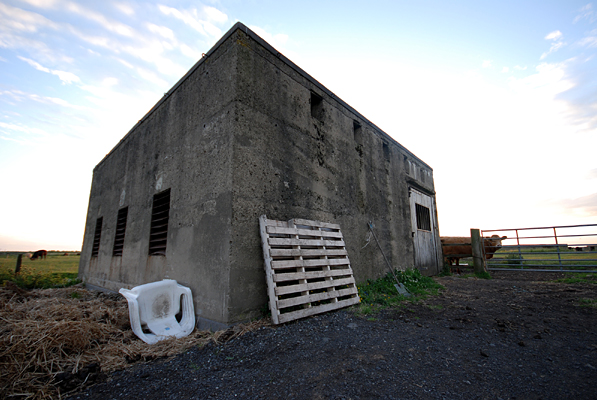
The bomb exploded, as we always knew it would. The pieces scattered everywhere, from Throgmorton Street to Canary Wharf, or maybe from Wall Street to Cannery Row. And Gordon seems surprisingly chuffed, because it can be made to look like someone else’s fault. Now he can bustle smugly around Old Blighty or Gay Paris playing the part of the only real clocksmith on the block. We all know that Dave and Nick couldn’t change a plug. Pass the man his eyeglass and bring him the springs and cogs. This is no time for a novice.
Surprisingly deft neo-liberal leger de main from the Kirkaldy Clutz, you might think. A real touch of vintage Blairism, turning a crisis into an opportunity, making the past disappear up the sleeve of mere misfortune. Hey, look guys, it doesn’t matter now who lit the fuse, what matters now is who can put the thing back together again, right? Not all of Dave’s horses or all of Nick’s men, that’s for sure. So Gordon now takes centre stage in a restoration fairy tale written by New Labour PR men. It may look to you like he gave away the family cow for a handful of unregulated globalised magic beans – although, no, in fact it was stolen from him by rustlers, demons, Icelandic trolls, house devils from the Mid-West, short trading sprites, nasty hobgoblins of every stripe – but let’s not talk about that in any case. Let’s talk now about how the doughty Gordon will defeat the giant in heaven and bring us back wealth beyond our wildest dreams. Only Gordon can repair this mess and bring order back to the world. This is his destiny, the mantle only he can wear, to be the man who mends the broken clock of prosperity. It would be churlish to deny him his chance of a redemption narrative. (It flashed into my mind just now that Gordon belongs in a Conrad novel. Tony on the other hand is a lot more P. G. Wodehouse, I think.)
So this is Gordon’s Churchill moment. The Credit Crunch to him is what the Falklands War was to Thatcher. But in the real world ordinary people just look bewildered and afraid. It would be a mistake now for Gordon if he tried to tell us things aren’t as bad as they seem. It helps now if ordinary people imagine a vast catastrophe. Time for our dark robot to tell them what’s happened is exactly that. Time to tell them it will take no less than a miracle now to ever make things work again. And time to tell them their luck’s in, a saviour walks among them. St Gordon of the Bail Out, no less.
I couldn’t sleep last night. I dreamt I was in Fort William. I was riding The Jacobite to Mallaig. I was with Alice McTavish and we were nibbling on celery sticks, dipping them into houmous and gaucamole, chatting quietly about W. G. Gillies, the Glasgow Boys and Adam Smith, and watching the wild places slipping by. Somewhere between Glenfinnan and Mallaig the train was derailed by bandits, a gang of hermit crabs. One by one they took everyone on the train captive and carried us all back to their giant shell where we were made to work until the end of time making shortbread for export to China.
It’s just as Gordon says, we are living in extraordinary times.
.
and now the wheels of heaven stop
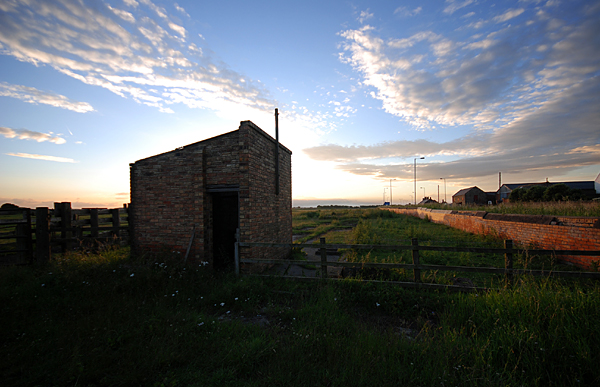
It’s been a relatively uneventful week at work, other than the two day strike, which wasn’t that well supported. People live in relative affluence these days and are neck deep in lifestyle instalments. Globalisation is the only game in town. There’s no longer a vital sustaining vision of an alternative society. The working class doesn’t seem to know it exists. The masses have been unmassed. Work is fragmented. Nowadays most people work for firms rather than in industries; they have a different identity. The cultural context of unionism has radically changed, the political dimension is attenuated. Even the low paid explain that they don’t believe in strikes and turn up for work. What they really mean is that striking is an expensive luxury that they don’t see the point in buying.
There have continued to be regular sightings of the Arab in the white Mercedes, along with a smattering of Batmen, Rastafarians and Michael Jacksons. There was a further isolated sighting of Robin Hood, by Cheryl Armstrong again. But intriguingly a new, previously unseen visitor was spotted independently on a couple of occasions by two fairly reliable witnesses: The Man With No Name, complete with poncho, spurs and a stetson. On both occasions he was driving a yellow Fiat with steel wheels, and on both occasions he parked near Mandy’s and got out to roll and smoke a spindly cigarette. As always, caution must be exercised when jumping to conclusions about these things, but it may be of significance here that Flinty’s favourite film is The Good, The Bad and The Ugly.
By the end of the week Lily and Debs had drawn up a book of the most likely new characters to be spotted during the next seven days. They’ve put it on flip chart paper and pinned it on the notice board in the team room. Odds are currently being offered on the following:
Shrek 5-1 Spiderman 11-4 Biggles 10-1 Godzilla Evens Nelson Mandela 6-1 Dr Who 25-1 A Dalek 9-2 Elvis Presley 2-1 Moses 4-1 Lord Lucan 33-1 Winnie the Pooh 10-1 The Angel Gabriel 5-4Betting has been brisk. If Dr Who appears one of the admin workers, Jesse Upton, stands to win over £100. For that sum she might dress up like him herself. Lily says Debs has already ordered a gorilla suit, just in case. Shrewdly, Jesse has made an each way bet.
On Wednesday I went to Edinburgh for the Leonard Cohen concert at the castle. Edinburgh and I go back a long way and it holds many memories for me. I drove up during the day, stopping off at North Berwick for a coffee at the Westgate Gallery and a walk down to the seabird centre. It was very windy and the light over the choppy waters of the Forth and Bass Rock was dramatic and – dare I say it? – sublime.
In Edinburgh I left my things at the hotel and walked down through Princes Street Park and across to the National Gallery, where I mused over Raeburn’s portraits for a while before making my way up into the crowds on the street. There was the usual rich mix of nationalities there, among them a lot of young Italians. As I was walking east near BHS a young guy in skinny black jeans, white training shoes and a black jerkin bounced up beside me and asked me a question I didn’t catch. I looked at him over my sunglasses and asked him if he was street entertainer.
‘No,’ he replied. ‘I’m a monk.’ He had an English accent from somewhere south of Lincoln.
‘Ah,’ I said.
‘We have a monastery here in Scotland,’ he said, with an enthusiasm that suggested the news had just come to him in a vision.
‘Okay,’ I said. ‘So what’s your pitch?’
He told me he was with the Hare Krishna movement. I wondered when they decided to give up the saffron robes, but I didn’t ask. He asked me where I was from and I told him. He told me his group had a place in Newcastle and I said I knew and that I’d often bantered with his lot around there. He asked me if I was interested in meditation. I told him I’d tried it, yes. He acted a little surprised, but I felt he wasn’t really that interested. He then appeared to veer off dramatically.
‘We’ve got a band,’ he said, again as if he was channelling someone and this statement was as much news to him as it was to me. ‘We play monk rock!’
‘Monk rock?’ I said, nodding and pulling a daft face. ‘That’s very clever.’
‘No, no, we do,’ the enthusiastic monk boy said, and putting his hand into his bag pulled out a CD. He gave it to me to inspect. It had a rather amateurish looking deep blue and yellow cover. It was by The Gouranga Powered Band and appeared to have the title Mosher 6.
‘Do you know what a mantra is?’ he said. I told him I did.
‘And do you know Led Zeppelin and Black Sabbath?’
Again I answered in the affirmative.
‘Well, our band does mantras sort of in the style of those groups. Lots of people think meditation is about relaxation – and it is – but it’s also about something else!’
‘So this is a hard rock meditation record?’ I said. ‘Isn’t that a paradoxical sort of thing?’
‘It is, yes!’ he replied. I wondered why he was so excited. I was beginning to feel I must be selling him something and he liked my product. I looked down the track listing. The opening track is Gouranga Hey! The other five appear to have a common element:
Dance & Mosh
Sing & Mosh
Hear & Mosh
Krishna Mosh
See Ya Mosh
‘They don’t do Bangers & Mosh, do they?’ I asked. He didn’t hear me and I didn’t repeat myself. I know Hare Krishnas are vegetarians in any case.
‘So what language do they sing in?’ I asked. ‘English?’
‘Sanskrit,’ he replied. ‘They’re traditional mantras.’
‘Sanskrit, eh? These are hard rock Sanskrit mantras?’ I nodded and read the song titles again. ‘Okay, so how much do you want for it?’ I asked.
‘We are asking for nothing,’ he said. ‘You can give whatever you wish to from the goodness of your heart.’
I put my hand in my pocket and found some change. I pulled it out and told him he could have it all. There was about £1.83. I poured in into his bag.
‘We usually get a little more than that,’ he said. I wondered whether he’d lost his script for a moment or if his earpiece had fallen out.
‘Oh,’ I said. I found two pound coins in another pocket and gave him them too. He must then have remembered his anti-materialist principles and offered to throw in a free book. I declined the offer. I said I’d read some of their stuff before.
I wove my way east through the tourists, passed the pipers and the Big Issue sellers and the occasional homeless person in a doorway with his sleeping bag, woolly hat and black and white mongrel dog on a piece of string. I crossed the street at some traffic lights and sat on a park bench under the trees near the Scott monument for a while. I was thinking it was going to rain. I made my way up Cockburn Street, stopping off at the Stills Gallery on the way to look at some photographs by Nicky Bird. I decided to eat and went into Bella Italia on the corner of the Royal Mile and North Bridge. I had garlic bread, a Caprese pizza and a cappuccino.
When she brought me the bill the waitress asked me where I was from and how long I was staying in Edinburgh. I said I was only here for one night, to see Leonard Cohen.
‘He was in here earlier in the week,’ she said. ‘He was with his wife and daughter.’
‘Really?’ I said. ‘Leonard Cohen? Did you speak to him?’
‘Yeah,’ she said. ‘I said “Hey, you’re Leonard Cohen!”‘ She told me he was wearing a suit and hat and he looked kind of frail. She said he gave some free tickets to the guys who worked there.
‘What did he eat?’ I asked.
‘I can’t remember,’ she replied. ‘But he kept asking for more cheese, I remember that!’
It was a nice enough evening as I strolled up the Royal Mile with the crowd, past the cafes and the bars and the shops of tartan and fluttering Saltires and shortbread packed along the sandstone ravine of blackened old buildings. I made my way to the castle and to my seat way up in the North Stand, high above the stage. I could see out beyond the castle and across city and out to the Lammermuirs. It was cool and breezy, but dry. Cohen came on stage to a great cheer. He was small and frail looking, wearing a well cut suit, a shirt and tie and a black trilby. From the moment he started singing the audience was in his thrall.
Cohen is a serious artist; he’s no mere pop singer. It’s claimed he’s touring because he lost five million dollars to a dodgy business partner and needs to recoup some of this. I’m not convinced. How interested can a man be in money when he’s spent much of the last ten years of his life in a Zen monastery? Cohen is in his seventies now. He is gracious with his audience, genuinely solicitous in a sardonic sort of way. At some point he thanks us not only for turning up tonight but for showing “an interest” in his songs over the years. An artist’s work is his bid to transcend mortality, and the coming silence for him (as for us all) is one of the dominant motifs tonight. Late on in the show he speaks the first verse of If It Be Thy Will, explaining before he does so that the Webb Twins (two of his backing singers) will then unfold the song for us. In other words the song will go on when the singer has gone. And the song itself is about ceasing to speak, and the context tonight makes the cause of that looming muteness all too clear: death itself. The set list was laced through with newly contextualised valedictions. Hey, this is one way to say goodbye. If this is a swan song, Cohen is singing for posterity. He wants his work to be remembered when he is gone.
Cohen’s work – like his life, perhaps – is marked by the tension between retreat to the inner world of the self and activism, concern about and engagement with the outer world. Tonight’s performance is heavily weighted with the late political songs from albums like “I’m Your Man” and “The Future”. To my mind these songs have a maturity, depth and scope that history may value more highly than the narrower “love songs” he is perhaps still best known for – Suzanne, Bird on the Wire, Hey That’s No Way to Say Goodbye, So Long Marianne, etc – all of which he also sang in the show. The most powerful moments for me were tied up with those mature songs.
Cohen reminds his audience that in the “chaos and darkness” of most of the world it is a “privilege” to share these moments of “luxury”. Cohen is a social pessimist. I have seen the future/and it is murder, he says. Everybody knows the fight was fixed/The poor stay poor, the rich get rich . . . And everybody knows that the plague is coming/Everybody knows that its moving fast. However, he sees a space for joy and hope. Joy arises in a broken world where not that many bells now ring. Indeed joy can arise almost because things are broken, Anthem seems to suggest: There’s a crack in everything/That’s how the light gets in. He sings of “the holy or the broken hallelujah”. The space for hope is an inner space, a solution which is private and individual, but there is a sense that for him this may not be really enough. One particular realm he compulsively explores is love. Love – like its sister, beauty – holds a crucial but difficult place in Cohen’s cosmology. Every heart to love will come, he says, but like a refugee. And, in another song, love’s the only engine of survival. Chaos and darkness are the necessary conditions of Cohen’s poetry; love is a necessary but somehow not quite adequate refuge. The heart for Cohen is prone to being a cold and lonely place. Cohen’s universe is somewhat Manichean. The sacred arises amid the profane. Love is among the sacred things, but such things are less resilient than things profane, less solid. Sacred things are always fragile and fleeting.
Perhaps inevitably given that Cohen is a Jew born in the 1930’s, the model for the catastrophe humanity faces is the holocaust. The failure is humankind is a failure of the heart, a failure to see humanity wherever it is and to always be fully human. Cohen sees the heart as a source of hope and survival, as a refuge from the world’s darkness. He seems less confident about the heart’s capacity to overcome or dispel that darkness. He sees real hope in social and political change – in Democracy. He sings that democracy is coming to the USA (implying that it isn’t there yet) and says that the reason why it is most likely to succeed there (however it may truly look) is because America has the spiritual thirst. But change will require something enormous – the heart, he says, has got to open in a fundamental way. The failure of the human heart can perhaps only be guarded against by social and political change, but this will itself in turn require an inner change in individuals. Perhaps this will arise from culture rather than nature, although the dynamic here is obscure and seems to slide close to a hopeless circularity. But for Cohen hope is fragile. The very culture he sees as having the potential to achieve change is the same one whose moral bankruptcy he lays bare in songs like The Future and First We Take Manhattan.
His performance was spellbinding and absolutely focussed. Cohen is a modernist. He deals in hope and despair, in desire and the collapse of desire. He is looking to find order and value among the chaos and darkness of the world. And he is disciplined: there is not one thing about his performance that is ramshackle or casual. He is the model of composure and poise. He only very occasionally picks up the guitar. Most of the time he is clutching the microphone and delivering his songs with a word perfect intensity. His medium is language and he is exact: he places every word exactly where he wants it, exactly how he wants it. He is precise. The microphone sucks the poetry from his lungs as if it is an eternal ribbon of incontrovertible truth and wraps it around his audience, binds them to him and to one another and, by invoking the absent millions, to the whole of humanity. He conjures solidarity out of the darkness. Perhaps this is his paradigm for the heart opening in a fundamental way. His songs humanise us, at least for the time we spend in his company. We may care for one another a little more from here on in. But solidarity is fickle and all too likely to melt into the air.
Cohen stalks the stage like a Godfather or a hoodlum. He has always been a poet of the city. His persona encodes power, knowledge and urbanity. He crouches at times as if there is an invisible weight on his shoulders, like Christ’s invisible cross. Sometimes he looks like an outcast or a plague victim or a figure from a Tarot card, thin and angular. Sometimes he resembles a refugee, sometimes a prisoner of war. Sometimes his body almost makes the shape of a swastika. Sometimes he falls on one knee and beseeches or pleads. He always sings with the hat on, but at the end of each song doffs it to the audience and makes a small bow. He also occasionally takes it off and bows to a musician in his band after they have played a solo. He introduced his band members several times over during the show. As the waitress said, Leonard likes cheese.
The audience sat reverently. When I found myself singing along I realised I was usually doing so alone. Cohen has an authority and authenticity that seems almost anachronistic nowadays. But let us not be fooled: this is a performance, albeit a consummate one, and a persona is a persona, even if it is a persona he carries with him into his secret and ordinary life.
Towards the end of the show it began to rain. It was almost eleven o’clock and almost dark. The torches around the castle were burning wildly. Cohen ended with another valediction – the danse macabre of Closing Time. I walked back down the Royal Mile in the rain beneath a small umbrella. The lights from the shops of the Old Town glistened on the cobblestones. The crown spire of St Giles Cathedral glowed against the dark sky. I passed the new statue of Adam Smith gazing imperiously down Canongate towards the dark waters of the Forth. This statue was unveiled just a couple of weeks ago. One newspaper commented that it was a sign of how far society had moved on that this monument to one of Scotland’s greatest sons had been built in such a prominent site. A few years ago, they said, this would have been seen as a political act. The project was proposed by the Adam Smith Institute. Margaret Thatcher gave it her support. Nothing at all political there, then.
As I returned to the hotel I sang The Future to myself:
Things are going to slide, slide in all directions Won’t be nothing Nothing you can measure anymore The blizzard of the world has crossed the threshold and it has overturned the order of the soul .On Thursday morning I opened the hotel window and leaned on the sill. It was a grey morning over Salisbury Crags and Arthur’s Seat. One or two black-backed gulls sat on the tenement chimneys, which are often pretty much the same colour as their legs. The chimneys stand like rows of soldiers or tins stacked on a supermarket shelf, often ten or twelve in a line, on top of the great tenement stacks. Bare cactus-like shared TV aerials share the skyline with them. Buddleia has found a foothold on many of the high ledges and is blooming now in straggly lilac sprays. I drove south again, taking the old roads where I could and stopping off at Coldingham and St Abb’s to look at some galleries and take in the views over the sea. It was raining most of the way home. When I got back Margaret was at work. The house was full of the smell of onions. The men were working on the Citadel. I walked through the house and opened a window in the conservatory and made myself a cappuccino.
‘So do you want to hear about Leonard Cohen?’ I said to De Kooning. He jumped up beside me and rubbed his head against my shoulder. ‘Or do you want to listen to some monk rock?’ I showed him the CD the Hare Krishna monk boy had sold me.
We sat watching the men on the scaffold and listening to the incessant rumble of their machines. The smell of diesel fumes floated in through the open window and on through the house.
On Friday I returned to work. I spent most of the day in my room, writing reports and replying to emails from those who’d been at work during the strike. At lunchtime I caught Lily and put a fiver on The Angel Gabriel. I was betting with my head. My heart would have gone with the Dalek.
.
 yammering