Posts Tagged ‘marxism’
an infantile disorder
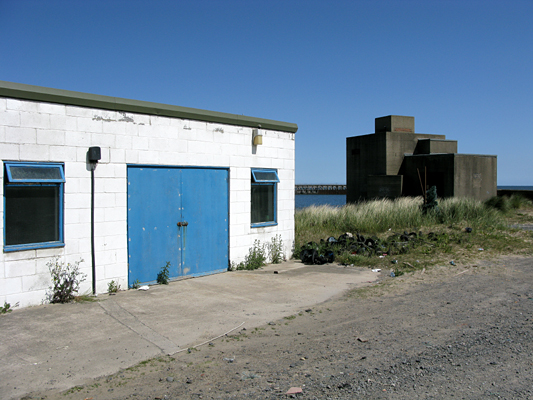
The trespass went badly to all reports. Afterwards Margaret was particularly taciturn and disgruntled. ‘Just don’t ask,’ she replied when I asked her about how it had gone. It was obvious that the red girders of the Winter Palace had probably not been stormed.
As the week went on I gleaned a little more about the event. It seems there were probably a number of factors that contributed to its failure. Some were presumably more important than others, although the Citizens have not yet formally met to analyse it. Provisionally, the following elements appear to have been played some part:
Only seven people turned up for the mass trespass;
Geraldine ‘took over again’ and dominated the confrontation with the site manager;
The site manager, Bob, was a nice guy and sympathised with them. Bob said he had a family to feed, he was only doing his job, and in any case there wasn’t anything he personally could do to change things even if he wanted to;
The site workers either lined up along the girders ‘like bloody canaries’ and waved at the trespassers, or they ignored them and got on with their work, thereby making a great deal of noise. Either way they distracted the Citizens and made rational argument difficult.
Geraldine was overdressed. She wore a long black coat, a black silk headscarf, and high heeled black boots. ‘All she lacked was a troika,’ Margaret let slip at one point. Unfortunately Geraldine also broke a heel. This forced her to remove the broken boot and carry it around with her. She had to lean on Big Trevor’s arm as they left the site;
Big Trevor ‘lacked discipline’ and kept interrupting the exchanges, which consequently began to revolve around the issues of his glass chandelier and the poor television reception some people have been experiencing.
Vanguard putschism has apparently failed again. There appears to have been a clear failure to mobilise the masses to the extent originally hoped for and there are some signs of leadership issues. The outcome of the formal post-mortem will be interesting. In the meantime I think we can anticipate little change of strategy from Czar Griffiths. The same water-off-a-duck’s-back-ist approach as before will continue, marked by acts of mollification so insignificant and trivial that they will only further humiliate the Citizens and underline their impotence. Having your face rubbed in defeat is not a good place for any serious group of activists to be. No doubt strategy and leadership are issues that will vex them greatly in the coming weeks as they dissect the event forensically over many a pot of Earl Grey and many a fresh Jaffa cake.
Yesterday my dad asked me about the building of the Citadel. He’d heard it was massive and people were having problems with all the lorries coming and going. I confirmed that it wasn’t a project that many people in its immediate vicinity regarded positively in any way. I told him about the attempted mass trespass and how it had turned out to be a somewhat ineffectual gesture. He shook his head and said this was always the way. ‘They just do what they want,’ he said. ‘They always have as long as I can remember.’
We then got into a conversation about the failure of the Left to effectively empower people and achieve social justice. He repeated the tale I’ve heard many times about the General Strike in 1926 and my grandad being blacklisted because of his role in it. Heroic failure is a sustaining myth for the Left. Sometimes it seems to be the only thing that keeps us on our feet. My dad’s conversation veered efortlessly from politics into ballroom dancing. He’s always loved dancing. Before long he was telling me how many dance halls there were in the town from the nineteen thirties onwards. The Roxy was the main one, he said, and The Tudor – where he’d seen Seaman Watson refereeing boxing matches – was just along from it, but there were dances in various church halls and other places on various nights of the week. ‘Everyone went’, according to my dad, because it was the main source of entertainment in those days. It was before the days of television and there were almost no cars around. Everyone walked everywhere, he said. That world is almost gone now, of course.
It rained quite heavily last night. By this morning it was drier but it had become very windy. The Slipper Shop Launch was scheduled to begin shortly after lunchtime and I spent the morning tidying away my books and paints in accordance with Margaret’s order that the house must not look like a pig’s sty when we have guests. Margaret was laying out the slippers in their various places according to a vision that escaped me but appeared to perhaps be governed by the principal of diversity. She washed and dried the wine glasses and bottles of Sainsbury’s Organic wines duly emerged. Pino Grigio and Cabernet Sauvignon, I suppose.
At about twelve thirty my rucksack was packed and I had my boots on. I was about to go when Brenda arrived. She’d been driven over by Tristan, who she brought in to meet me. He obviously didn’t always plumb on the Sabbath. Brenda gave me a kiss on the cheek, a new addition to her social repertoire, I guessed. Otherwise she hadn’t changed much. Her hair is still as black as a guillemot, shiny and straight. Around her neck she wore a chunky black crucifix on a leather lanyard. A golden moon and silver stars hung from each of her ears. Her shirt was washed-out cotton, wrinkly and vaguely Indian. Brenda thinks of herself as eclectic, and would say this hotch-potch of pagan, Christian and exotic elements is evidence of this open-mindedness.
Tristan turns out to be a thick-set man of maybe forty five or so. He’s not very tall, but has a boyish wide-eyed appeal about him. He has dark curly hair and a fashionably unshaven face. He reminded me of Diego Rivera, strangely enough, although not of Trotsky himself.
‘Nice to meet you, Tristan,’ I said. ‘I’ve heard a lot about you.’
‘I’ve heard a lot about you too,’ he replied. ‘From Bwenda and Margawet.’
Tristan, I now discovered, has a speech impediment. He cannot pronounce his r’s. We had a brief chat during which I discovered that he does indeed see himself as a Marxist and has in fact been one for all of his adult life. His father was Rupert McLoud, who he told me was a notable left wing activist in the Manchester area thirty years ago. I smiled when Tristan told me this, not because I’d ever heard of his father but because calling a Marxist activist “Wupert” seemed so cute. I can see what Brenda sees in him, I thought. He’s a likeable and accidentally quite amusing man.
Brenda interrupted our conversation by saying she’d brought some nibbles and they’d have to get everything ready. I put my rucksack on and went off on my walk. As I walked I passed the time in conversation with Mr Twistan Twotsky, my new imaginary walking companion.
‘Is the game finally up for the Left, Twistan?’ I asked.
‘No, my fwiend, it is not. Histowical matewialism is alive and well. This is not the end of the woad. No, this is only the beginning’
‘But the world is in terminal crisis, is it not?’
‘The cwisis facing mankind, is a cwisis of leadership, my fwiend.’
‘But does not Gordon nurse a ticking bomb as if it were a baby? Time is against us, Twistan. Barbarism is the best we can hope for, I fear.’
‘The woad is long. We must make our own histowy. Think positively, comwade, and tell me, come the wevolution who will be first against the wall?’ he said.
For a moment I hesitated. But an answer was waiting for us both.
‘Gwiff!’ we cried together. ‘Gwiff! Gwiff! Gwiff!’
And we walked on together, whistling The Wed Flag as we went.
My route today took me north through Bebside and down the hairpin bends into the Ha’penny Woods at the Furnace Bridge. I followed the river up to Attlee Park and then on to Humford Mill. I sat for a while at the weir listening to the wind rushing through the trees, watching the river and wondering if it was going to rain. I turned back soon after that because the path was increasingly muddy. Back at Humford I crossed the stepping stones and made my way up to the Horton Road. Out of the trees the wind was gusty and boisterous. I went back down to Bebside and then through Cowpen down to the river, before returning home at about six thirty.
When I got back the party was over but a few stragglers were still there – Geraldine, Brenda and Brenda’s friend Jennifer, the one in financial services.
‘Hi, Geraldine,’ I said. ‘How’s the boots?!’
She laughed. ‘Well, the boots might be gone but we certainly showed them we meant business, didn’t we, Margaret?’ she replied.
Margaret laughed. ‘You remember Jennifer, don’t you?’ she said to me. I didn’t, but nodded as if I did. Jennifer was indeed a willowy blond, about fifty, tall with a long thin nose.
‘I love your paintings,’ Jennifer said to me. ‘Your work reminds me of Kandinsky.’
‘Kandinsky?’ I said. ‘Really. That’s interesting.’ I looked at the painting above the Napoleon clock. It was as much like Kandinsky as it was like El Greco. Jennifer proceeded to waffle on about a diverse and disparate assortment of painters as if she was a female Matthew Collings. And all the while she flirted with me blatantly, laughing merrily and repeatedly laying her hand on mine. She was tedious to talk to but I’ll admit she did smell beautiful.
Later when everyone had left I asked Margaret how it had gone. It turns out that it was a tremendous success. No less than thirty three of the thirty five people invited had turned up, including fourteen Citizens – twice as many as turned up for the trespass – a local councillor and Mrs Fletcher, who ordered a pair of blue mules for herself and a traditional brown leather slipper for her husband. All in all orders for thirty seven pairs of slippers were taken. Margaret was thrilled. Maybe Brenda was right after all and there is a right time for everything (in the case of a slipper shop launch party that time being quarter to three, of course).
‘So what did you think of Tristan?’ she asked me later.
‘I liked him,’ I replied. ‘He seems like a really nice guy.’
‘Really?’ Margaret said. ‘You really like him?’
‘Of course,’ I said. ‘Yes, I think he and I could become very good friends. Brenda’s done well for herself for once.’
I tidied away the wine glasses and bottles from the conservatory and cooked myself a pizza. I sat for a while and read the Sunday papers. De Kooning came in and jumped up beside me. I stroked him and he began to purr.
‘So what do you think, Twistan?’ I said. ‘If they can give you thirty three good comrades can you give them the Citadel?’
‘It’s a mistake to believe in miwacles,’ Twistan replied. ‘But when the time is wight tywants will twemble, walls will tumble, and the future will belong to an army of women in wed slippers!’
I nodded sagely. You can’t say fairer than that, I thought.
dialectics in doggerlands
I walked out in the garden with De Kooning this morning. It was mild and no longer raining. There wasn’t much wind.
‘A good day for cycling,’ I said.
We looked into Hugo’s world. The plastic moose stood exactly where we had first sighted it, steadfast, implacable, and totemic. The heron still tilted at the gurgling pool. The henge was tranquil. We wondered if Maureen and the gangling boy had been given the opportunity to survey all this and to ask Hugo the question about Intelligent Design. The station clock said it was almost ten o’clock.
When we went back into the house Margaret was wrapping some things in a sheet of lilac and pink Paisley patterned paper. She told me it was Brenda’s birthday.
‘Ah,’ I said, knowingly, ‘the fifth day of May. What have you got for her this year?’ I would also have liked to have asked how old Brenda is now, but I knew I wouldn’t have been told.
‘A antique silk Liberty scarf, a Chakra pendant and a bottle of a really good Chateauneuf du Pape.’
Now to me a birthday is just another day. Whatever interest I had in celebrating it dwindled to almost zero when I became an adult. If there is to be a yearly ritual marking aging perhaps it ought to be a wake of sorts, or at least a sombre stocktaking exercise to look at what you’ve done in the last twelve months and what there’s left for you to do before the reaper makes his inevitable and perhaps quite unexpected appearance. Momento mori would be a good focus for a birthday. A birthday party that denies death is to me a wasted opportunity.
But this isn’t a philosophy Brenda Blenkinsopp subscribes to. Brenda is a girl who expects her friends to recognise how special she is in the only way that a true friend can – with a debit card. Being a life coach and steeped in new age anti-materialism, she does not of course say that the price and quality of the gifts she gets matters one jot. Not at all. In fact Brenda will say she subscribes to the proverbial position that it’s the thought that matters. However, experience has clearly suggested that the thought that doesn’t elicit the right kind of gift will not be counted as a thought at all, or at least not one of the kind that matters. A detailed analysis of Brenda’s responses to the gift objects she has received over the years suggests that a gift generated by a thought that matters will be one that makes a clear and accurate statement to the world about her very particular qualities. The gift will confirm that Brenda has class, that she is creative and cultured, and that she is a beautiful, remarkable person. To date no cheap gift has managed to make this statement properly. It is therefore a reasonable hypothesis that expenditure is a reliable indicator of the quality of the thought that matters to Brenda. Further evidence of this hypothesis lies in the fact that a few years ago Margaret was away on business in Chipping Norton and wasn’t able to get Brenda a present. Margaret rang Brenda from the hotel on the morning of her birthday to explain and to say that she hoped she had a marvellous day. It was almost seven months before Brenda spoke to her again. Ever since then Margaret has expressed her thoughts with much greater care.
‘Have you put my name on the card?’ I asked.
‘Of course.’
I took my bike up to Cresswell and rode the Castles and Coast route up along Druridge Bay through Amble and into Warkworth. Vague wraiths of mist were drifting up from the beach as the sun broke through. The sea was calm and steel blue. As I sat eating an apple at Low Hauxley I saw group a sand martins flickering and flirting around the edge of the dunes. Most years martins and swallows arrive before the end of April and always before I hear a cuckoo, but this group is the first I’ve seen this year even though I heard my first cuckoo more than a week ago now. It felt like summer really had arrived today. Ice cream vans and t-shirts, old men with slow dogs, little girls on pink scooters.
When I got back I sat in the garden for a while and watched De Kooning playing tennis with the bumblebees. The lawn already needs mowing again and is now host to a gaudy crowd of invading dandelions. I might do it after work tomorrow.
Margaret arrived home at about eight. I was watching a Time Team special about archeological remains found beneath the sea, evidence of human activity at a time thousands of years ago when Britain was still connected by a land bridge to mainland Europe. A Dutch investigator had some bones and stone axes from Neanderthal times. The bone was found beneath the North Sea and is about eighteen thousand years old.
‘Did Brenda like her presents?’ I asked.
‘She loved them,’ Margaret replied. ‘We had a really nice time. Her friend Jennifer was there. You remember her, don’t you? Tall willowy blond, works in financial services?’
I shrugged.
‘Oh, you do know her. Oh, and I met Tristan too. He’s a really nice guy. You’d like him too. He’s a Marxist.’
‘Really? That is interesting. So what does a Marxist plumber get for his lady friend on her birthday?’ I asked.
‘Oh, he got her this fabulous blouse and some very, very expensive earrings. Dark sapphires in platinum. He’s also booked them in for a romantic break at a five star hotel in Florence later this month.’
‘I wonder if he isn’t a Trotskyist,’ I said. ‘How are your teeth, by the way?’
‘Actually they’re fine now. I’d forgotten all about them.’
Eighteen thousand years ago there were woolly mammoths, bears and rhinos roaming vast plains in the space where the calm steely North Sea now swills. Archeologists have given this now submerged world the name of Doggerlands. When I googled it I was asked if I meant “diggerlands”. Margaret went off to have a bath. I asked De Kooning if he had ever heard of Che Guevara.
 yammering