Posts Tagged ‘robots’
the citadel
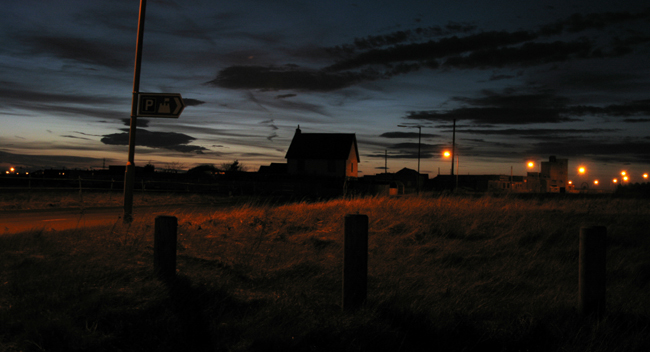
They’re building a Citadel in the fields behind our house. Actually it isn’t really a citadel, it’s a new school. Margaret is part of a group known as Citizens Against the Citadel, CAC, or The Citizens, as they call themselves. They are loosely knit alliance of the disgruntled and discounted whose motivations are probably complex and varied but who are united in their feeling that the Citadel is an abomination and that building must stop now. They are right that the building will be gruesome and that it is already ruinous to the quality of life around here, and that it is an imposition and something about which ordinary people were never given any real say. It’s true that the consultation was a sham. It’s true that the Citadel Construction and Development Company – led by the Tyneside businessman Sir Toby Griffiths (‘Griff’, to the Citizens) – misled local residents about the scale and impact of the project. But the Citizens are almost certainly wrong in believing there’s anything very much they can do about it now. They won’t even get an apology from Griff on this one.
The phone rang about eight thirty. It was Geraldine. She lives across the road. She doesn’t work now, but her husband, Mick, is a council officer of some sort. Geraldine, who has been a leading light in CAC and for whom Margaret really doesn’t care very much, was ringing to tell her that Griff’s men were working and they shouldn’t be, because it was Saturday. Griff had said that Saturday working would not happen. This is the latest in a string of broken promises. Margaret’s response was predictable and instantaneous.
‘They’re bloody kidding!’ she said. ‘Let’s get everyone together and get around there and stop it. Let’s get Griff over here NOW!’ And so on.
The general strategy of the Citizens is to rant among themselves by telephone or over coffee and chocolate digestives in one another’s front rooms and then, one after another, by telephone, to bombard Griff, his minions, local politicians and council staff with unbridled disgust and indignation and, if the moment calls for it, a serving of personal abuse. Needless to say construction of the Citadel hasn’t been delayed one rivet as a consequence of this strategy. Water and ducks’ backs come to mind. Nevertheless the fight must go on.
Margaret rang a couple more Citizens and began to make ready for the incursion into the Citadel building site. Her battle dress was a pair on Marks and Spencers jeans, her old but little worn Timberland boots, a grey sweater, her old red fleece and black gloves. It was a cool morning and it was drizzling; hypothermia on the Citadel battlefield was a real danger. I lay in bed, De Kooning at my side, pretending to take no notice of all this activity.
‘Have you heard that bloody racket?’ she said.
‘Er, yes,’ I mumbled, as if still slumbering. ‘I thought I’d heard something. Is it Fletch?’
‘No, it isn’t bloody Fletch – it’s the Citadel men. They’re now working on a Saturday! Can you believe that?! They’ve got a bloody nerve. Well, they’re not bloody well getting away with it this time, I can tell you!’ And so on, again.
I ignored her and pretended I might be unconscious again. She left to meet Geraldine and the other Citizens to go into battle. The Citizens, curiously enough, are more or less all women, an Amazon legion. With the exception of Big Trevor, of course, who doesn’t work and likes to insinuate his booming and bellowing into any context where it might make what is essentially always only a textural contribution. But almost everyone agrees completely with the Citizens’ complaints, even if they never join the battle. Hugo might be the exception here: so far as I can tell he hasn’t even have noticed that the Citadel is being built. If he has he must regard it as just another extraneous object that’s fallen from heaven. The right attitude will be to accept it with equanimity and to leave it exactly where it is. Haphazardist politics tend to be marked by a passive acceptance which at times can look very like complicity or collusion.
I didn’t expect Griff’s men to stop working before lunchtime. I did think however that it might be a good idea to get up and go out for a while. De Kooning looked at me: he agreed.
It’s not that I too don’t agree with the Citizens and think their cause isn’t a good one. It’s just that the battles are futile if the war is already lost. They are no more than quixotic gestures, and while I know this sort of comic-tragic futility is what makes us human, sometimes you can have just a little too much futility in your life. It’s not always good to bang your head against every brick wall you find. Modernity is a steamroller and it will flatten us all. We will all become one dimensional people, as Marcuse said long ago. The future is a Citadel: massive, inhuman, noisy, computer generated, absurdly geometrical, obsessively orderly, built by robots to accommodate the robots we will all become. It will be lifeless and it will not belong to us. Gordon, Griff and their like are at the wheel and the whole planet is their building site. Start saying goodbye to the things you love, Maureen, because this is the way the world really ends.
I left Margaret a note stuck to the top of her laptop.
Dear Margaret, modernity is a steamroller and it will flatten us all. The Citadel Men are unstoppable. I’ve gone shopping as there are some things I need. Please feed the cat when he comes in.
I went to see my dad this afternoon. He was watching an old film version of The Importance of Being Earnest on TV when I got there. I told him that they were knocking down bits of Park Farm in Newsham. He was born and grew up there so I thought he’d be interested.
‘Where is it?’ he asked.
I described its whereabouts and he told me this place was always called Thompson’s Farm when he was a kid. He used to play around there sometimes. I told him I’d taken some photographs of it just in case it was demolished. He went on to tell me about all the other buildings there used to be at South Newsham – the pit, the winding house, the rows of houses, the school and the Star Foundry. They’re all gone now, of course.
I asked him what pubs there were near where the shipyard used to be. He said they included The Sun, The Ship, the Fox and Hounds, and the Blagdon. They’re all demolished now too. He told me that a boxer called Seaman Tommy Watson had been the manager of the Blagdon for a long time. It seems Seaman was a good fighter and had fought Kid Chocolate for his world title at Madison Square Garden. He lost on points but some say he would have got the decision had the fight taken place over here.
When I got home I asked Margaret how the visit to the Citadel site this morning had gone.
‘I was a complete and utter waste of time,’ she said. ‘Geraldine just took over.’
De Kooning was in the conservatory. He sat with me as I read the newspaper. In an interview Cherie Blair says Tony is a socialist. I laughed out loud and, for a moment, De Kooning stopped cleaning his jet black face.
Margaret had gone in the bath. She was going to a poetry evening at Brenda’s house this evening. In two days time it will be exactly seventy five years since Seaman Tommy Watson lost to the little Cuban in New York.
geology, the whelp, and the disembodied heart
Yesterday it was a soft slightly grey morning. I was browsing Amazon, looking at Remembering by Edward Casey. I was also listening to Radio 4. A panel were discussing Boris and his victory in the election. Someone who knows him well was saying he’s a kind of genius, by which he appeared to mean that he’s unique in a uniquely unique sort of way. Boris is clearly not to be regarded as any ordinary man. His acquaintance thought he’d make a good mayor. The door bell rang.
At the door were two Jehovah’s Witnesses. The lead was taken by a very small woman with white hair, large spectacles and a wrinkly puckered mouth. She introduced herself as Maureen. She was wearing a knee length woollen coat of an appropriately ecclesiastical blue. Her colleague was a tall gangling whelp of a boy. Perhaps in his early twenties, he wore black, carried a document case, and had the kind of face that I’ve sometimes seen painted on a peg. He had a pale round face and a little round mouth. He maintained a supercilious expression at all times, part choir boy, part police informant.
‘We’ve come to see if you’re interested in the latest copy of our little magazine,’ Maureen said. ‘You may have seen it before’
I nodded.
She informed me that this latest edition asks the question “Should you fear the future?” and she handed me my copy of Awake! . I smiled. The pitch here is prophesy. They want me to acknowledge the imminent apocalypse and to be afraid, to be very afraid. They want me to buy my ticket to the only safe bunker in town, Kingdom Hall, which last time I looked was a refurbished pebble-dashed pre-war cinema in Newsham.
‘Thanks,’ I said. ‘I’ll give it a read.’
‘It’s terrible what they’ve done to the world, isn’t it?’ Maureen said, and went on to press the predictable buttons of global warming, the environment, the decline of family life, war and the ruination of paradise. I wondered who she thought “they” were, and why she thought “He” had let things go this far. Maybe it’s the past that should scare us most. If God had to put himself up for re-election what could He say He’d achieved so far? The tousled headed cherub-fiend Boris would make holy mincemeat of Him.
She paused. She could see I wasn’t taking the bait. The gangling whelp looked vaguely mesmerised.
‘Do you have a bible?’ she enquired. I said I did. I thought perhaps she wanted to give me one of those too. ‘Well,’ she went on, pointing, ‘ you’ll see I’ve put a scriptural reference at the top right hand corner there. Can you see it?’
I squinted at the magazine. She’d written “PS 37:10,11”.
I smiled again and quietly disclosed to her that I don’t believe in God. She seemed surprised. It was impossible to tell what the gangling whelp’s response to this news was. He just stared at me, like the heron looking into Hugo’s pool.
‘Oh, why not?’ she asked, as if both curious and concerned. I could see no point in getting into a futile argument. I told her I simply never had.
‘Oh, but you don’t believe in evolution, do you?’ she said. Her tone now was a mixture of pity, incredulity and shock, as if she was asking me if I had been molested as a child. Maureen was aghast.
‘Yes, I do,’ I said, whereupon she told me there was no evidence for it and that ‘they’ say it’s been proved to be all wrong. The gangling boy stood as still as a peg, as silent as an undertaker’s apprentice. There isn’t going to be much space in the bunker, I thought to myself. Suppose I got the seat next to him? Meanwhile Maureen was busy suggesting to me that the world as it was couldn’t possibly be the result of chance, that there must have been a designer. I just knew we’d wind up here. I glanced over into Hugo’s junkyard and wondered what she’d say about that. Would she see it as an example of Intelligent Design? But where would that debate take us?
‘You don’t believe in geology, do you?’ I asked. I thought this was a smart move. Maureen was probably imagining me surrendering my reason to the marvellous intricacies of a thousand clockwork finches. Mud and clay on the other hand rarely enter the ID debate as examples of the world’s inexplicable complexity. ‘The world’s been around for millions of years and the evidence is in the ground you’re standing on. As I understand your group’s view, you believe we’ve only been here for a few thousand years. How can that make any sense?’ Yes, I know: ‘group’ was wickedly secular.
At this point Maureen found a way to mention Noah. She then said that the world had been around for a very long time before God created man.
‘Yes, it was about six days, wasn’t it?’ I said.
‘Oh, but you know, the bible doesn’t necessarily mean literally six days.’
She was now a fundamentalist sitting duck. The gangling boy seemed oblivious of the fact that I already had my fowling gun at the ready.
‘If that’s not literally true, then maybe the whole story isn’t literally true either,’ I said. ‘Not Adam and Eve, nor The Flood, nor Christ’s death and resurrection, not the walking on the water or the loaves and fishes, and not even the Apocalypse either.’
Maureen now told me she wasn’t an expert in these things, but that she believed in God and that He had the power save us all. I told her I respected her beliefs but I didn’t share them. The gangling whelp maintained his studious silence. They walked off together down my garden path, feathers still sticking to their coats. Their next stop was Hugo’s world.
I went back into the living room. Margaret had turned off the radio and was watching a cooking programme on TV. I looked at the Napoleon on the mantelpiece. My spirit was less uplifted than I thought it should be.
De Kooning and I sat in the conservatory. I had a cappuccino and he watched the blackbirds coming and going with their beaks full of worms.
* * * * * * *
Earlier today I drove up the Rothbury to go for a walk. It’s a place I used to go a lot, but hadn’t been for a year or two. I took the usual road in, west along the Coquet through Pauperhaugh, below Cragside, on past the Thrum. At the edge of the town I discovered a new road junction has been built and that what was the major road has now become the minor road. I stopped at the junction and on the hillside ahead of me saw some large new houses. Ancient green fields have become a building site and are already well on their way to becoming a substantial new housing estate.
Much of Northumberland is being spoilt this way. This is particularly ironic for a county that markets itself as ‘unspoilt’, an epithet which ceased to be true some years ago now. Towns that once had a distinctive character and a quiet beauty are becoming bland, counterfeit and indistinguishable from one another. And bigger towns need bigger roads and the roads fill up with traffic. Houses fill with people and the people need shops and services, and where there are shops and services yet more new houses are built and more roads to bring more visitors to town. Street lights appear for miles around and night and day the noise of the traffic nags into every dene and over every fell. If you want to see the future go and look at North Tyneside.
Not one of the people I know who lives in one of the many villages and country towns being spoiled this way tells me they want all these new houses. Most say they don’t. But that’s not how our modern democracy works, of course. We no longer cast our votes to decide on the shape of the world we want to live in. We are given the new world first and then vote on whether we like it or not. But by then it’s too late, the green fields have already gone.
The eschatology of the creeping apocalypse obviously doesn’t involve horsemen and dragons. Strategic planning, NGO’s, budget controls, ring fencing, penalties and incentives, planning regulations, planning gain, sham consultations, performance indicators and targets, PFI, exclusivity agreements, the unitary authority, the city mayor . . . these are among the beasts which signal we are in the final days. Little by little ordinary people are disempowered and lose the things that made the world feel like home. The future has already been sold to a private equity company. Some day soon every place will look the same. Most of us will survive, but our lives will be devoid of all happiness.
Margaret’s dream was wrong: the economy is not God’s little clock. The economy is a time bomb. But Field Marshall Gordon doesn’t know it. Night after night he sits nursing what he thinks is the cherished clock of the economy, like a robot holding his own disembodied heart, winding it up over and over again, wishing it would sometimes just tick a little more quickly. It’s a bomb, Gordon – it’s a bloody time bomb! It’s no good, I know: Gordon couldn’t defuse it even if he wanted to. And nor, I suspect, could Major Boris, genius or not.
I walked up on to the carriage drive and looked down on the new housing estates from the crags of Addyheugh. I wondered where Tesco would be putting their supermarket. I wondered where they’d put their filling station. This is how the world ends, Gordon. Bang! Bang! Bang!
A flurry of feathers blows across dark, deserted acres of block paving. The security light flicks on. There’s no-one there.
A minute later the light goes out.
 yammering