Archive for the ‘margaret’ Category
the owl, the albatross, and the dodo
‘How, aa wuz blaan away by meetin’ ya marra,’ Eric said. ‘Aa towld wor young ‘un and he waadn’t believe it. Ee thowt aa waas just mekkin’ it up! But aa towld him whaat he looked like an’ aall that an’ ‘ee believes iz noo. It waas him, waasn’t it? Ya marra iz the real McCoy, isn’t ‘ee?’
‘Oh yes,’ I said. ‘He is certainly the one and only Owen Vardy, late of the much feted minstrel troop who went by the good name of Proudlute.’
‘Aye, that’s whaat aa telt wor young ‘un,’ Eric said. ‘That ya marra waas definitely the blowk oot of the Proodloot. The lads at the Prymeeaa cannit believe aa’ve met him. Nor can aa. It’s like a miracle for someone who’s been on Top of the Pops to be in Eshinden, yuh knaa whaat aa mean? There’s ownly one thing that waald ‘ave been more amazin’ than meetin’ ya marra. D’yuh knaa whaat that waald o’ been?’
I looked at him and shrugged. I wondered if it wouldn’t have been an audience with George Herbert himself, author of The Country Parson and important early metaphysical poet. I said I didn’t know.
‘To meet that Peter Andre,’ Eric replied, with an implied ‘obviously’. ‘Yuh knaa the one that’s married to hor wi’ the massa bazookas. Ur, yuh knaa, whaat’s aa name – Jordan. D’yuh knaa we aa mean?’
I nodded. ‘Yeah, I know them,’ I said. ‘I mean Peter and Katie – I know Peter and Katie.’
‘Whaat? Yuh knaa them as weell?!’ Eric exclaimed, his celebrityphilia obviously allowing him to get the wrong end of a fairly short verbal ambiguity. ‘Is it through ya marra? Does he knaa them from when ee wuz in the Proodloot?!’
‘No, Eric,’ I said. ‘I don’t know them in that sense. I know who they are, that’s all.’
‘Ur, aa see whaat yuh mean,’ Eric said, palpably crestfallen. For a moment a dream egg beyond his wildest imaginings had been hatching before his very eyes, the possibility of meeting the legendary Peter Andre. For now Eric would have to do with Owen.
‘Here,’ Eric said, abruptly, putting his hooked finger in the air. ‘Ur, aye, whaat was it again? Eh, ur, aye, eh, hing on.’
At that point Eric stopped dead, his pirate pose frozen, like someone playing Statues. His face became expressionless, his eyes stared blankly into an invisible void. It was as if yet again someone had thrown the switch on his neurological systems. He stood as still a gravestone. And then suddenly life re-entered him.
‘Ur, aye,’ he said, as if no time at all had passed, ‘ya marra nivva met that Sam the Sham and the Pharoahs, did ‘ee? Yuh knaa, them whaat did the Woolly Bully an’ that.’
‘No,’ I said. ‘I don’t ever recall Owen mentioning them at all, oddly enough.’
‘That’s a pity,’ Eric said. ‘They were mint.’
For a minute or so Eric again seemed absent, as if ruminating in an unseen life world perhaps. You’ll have realised by now that is something that often happens with Eric. I was about to wander off when he spoke again.
‘Here,’ he said. ‘Hing on, er, whaat waas it again? Ur, aye, the swine flu and aall that. Whaat d’yuh think of that?’
I shrugged. Before I could give an opinion however, Eric decided to give me his.
‘Aa think the telly’s got it aall wrang, divvent ‘ee? Wor young ‘un knaas someone who’s been to Mexico and tha’s nowt the matter wi’ hor. Aa mean, ‘ee says she’s got a caald an’ aall that, but nowt weird. D’yuh knaa whaat aa think? Aa think tha’ mekkin’ it up?’
‘You don’t think swine flu exists?’
‘Nur. Whey, hoo waald a human porson catch a pig disease? Hev yuh ivva hord of a pig sneezin’ or hevvin’ a snotty nose? Aa mean, hoo can a pig hev the flu? The flu’s a human disease. Aa mean, the pig would hev to tek paracetemol and aall that!’ Eric laughed, his face lit up like the man in the moon.
‘So what about bird flu?’ I said. ‘Do you believe in that?’
Eric’s systems briefly shut down again, as if he might be downloading something from an external site.
‘Aye, aa dee,’ he eventually replied. ‘Aye, an’ aa’ll tell yuh whaat, aa think the bord flu is warse than this pig one, d’ye not?’
‘Worse? What do you mean by worse? That it’ll kill more people?’
‘Aye. Aa’ divvent think this pig flu’s ganna kill anybody ower here, d’ye? Aa mean, we’re not like Mexicans, are wuh? Hoo can English folks catch a disease off pigs?’
I nodded. ‘Who knows?’ I said. ‘But sooner or later they’ll be right. Sooner or later nature will bite back. But I think you’re right, swine fever might not the one.’
We live in apocalyptic times. We wait for the hurricane. We wait for the fire. We wait for the plague. But for some of us we’ve already been waiting too long. We’ve got apocalypse fatigue. While most of the world intermittently runs around in blind panic, the prospect of the end of the world bores some of us now. We don’t feel inclined to believe it. Or maybe we just don’t feel inclined to care. And this is more or less exactly how the end will come – and more or less exactly why.
Tristan called along on Thursday night to pick up a box of sunglasses. Margaret was out when he arrived. I invited him in while I looked for the box. De Kooning arrived to give him the once over.
‘What’s your cat called?’ Tristan said.
‘De Kooning.’
‘Hello, De Kooning,’ Tristan said, stroking him beneath the chin. ‘Aren’t you beautiful? My name’s Twistan and I’m vewy pleased to meet you.’
‘So how’s tricks with you and Brenda, Tristan?’ I asked.
‘Oh pwetty good, I think,’ he said. ‘I think we’re getting there.’
‘It’s her birthday next week, isn’t it? Have you got her anything special or have you agreed you’ll just have to tighten your belts his year?’
‘I’ve got her something special,’ Tristan said. ‘But it wasn’t expensive. I think maybe I misjudged her in the past. I think she weally does know it’s the thought that counts.’
‘So what have you got her, then?’
‘An enamel keywing. An owl. It’s weally nice.’
I nodded. ‘An enamel owl keyring, eh? Are you sure Brenda will think this is what she wants? I mean, in what way is it special?’
‘One of Bwenda’s hewoes is the Gweek goddess Athena. Athena’s the goddess of wisdom and I think a kind of wole model for Bwenda. When her business gets bigger and there’s more than one thewapist she’s going to call it Athena Associates. The owl is Athena’s sacwed bird and it’s going to be the symbol of Bwenda’s company. That why this keywing is so special.’
‘Oh, I see. So Brenda sees herself as a sort of wise owl and your gift recognises that wisdom, eh? Clever stuff. You obviously have put a lot of thought into choosing it. ’
‘Yes, I have. I wanted to get her something that said something to her, that has a deep message fwom my heart to hers. You know Bwenda does have a good heart. I know sometimes she seems theatwical and shallow and self-obsessed and pweoccupied with her own needs, but behind that façade there weally is a genuine person. A weal person. I know sometimes she imagines she’s the bloody owacle or something, but maybe she weally does have something to give others that can help them. Do you think?
I shrugged. ‘Maybe. I just like the idea that Brenda can see in the dark and that she somehow resembles an owl. I’d never noticed that before!’
‘I think maybe that’s the idea of Athena’s owl,’ Tristan said. ‘That it’s a voice that can help us to choose the wight diwection in life. Fweedom is a dark dark fowest, my fwiend. We all need a voice like that sometimes to wemind us where we’re going, to guide us along the wight path.’
‘And so you reckon the enamel owl keyring will keep her happy, do you?’
Tristan nodded. ‘Bwenda’s moved on, my fwiend. She weally has. She’ll be thwilled with her pwesent.’
‘I hope you’re right,’ I said. Of course a little bird in my head was telling me he probably wasn’t.
‘I love birds,’ I said. ‘So does De Kooning, of course. For me, freedom rather than wisdom or capriciousness or pestilence is what birds symbolise. Because they can just come and go as they please. They can always fly away. Their presence is always a sort of beautiful gift. Their absence is always a possibility. If you had to choose a bird to represent yourself, Tristan – like Brenda has chosen the owl – what would it be?’
‘I dunno, mate,’ Tristan said. ‘It wouldn’t be an owl, though, that’s for sure. I’m not that wise. Twotsky was intewested in birds, you know. He famously said “The nightingale of poetwy, like that bird of wisdom, the owl, is heard only after the sun is set.” He’s making a wefewence to Hegel’s wemark about the owl of Minerva, of course. But I digwess. So what bird would I see myself as? Maybe it would be a pawwot. Because I weally do need to learn hold my tongue sometimes. I can’t sing, so I couldn’t be a nightingale. I guess it would have to be a bird on a long journey, an albatwoss perhaps. What about you?’
‘I don’t know either,’ I said. ‘A dodo, maybe, or a cuckoo!’
Tristan laughed. I gave him the box of sunglasses and he gave De Kooning’s black fur a final quick ruffle before he went on his way.
‘Good luck with the keyring,’ I said as he walked down the garden path beneath the gently fluttering spring birch leaves.
‘Don’t wowwy, mate,’ he replied. ‘She’ll be over the moon, I pwomise you.’
I sat in the conservatory with De Kooning for a while, drinking a cappuccino and flicking through The Guardian. Gordon’s in deep doo-doo, and it seems to be doo-doo that gets deeper every day. How he must now long for those days when life was simple and all he had to do was try to get his clock to tick more quickly. Tristan had remarked that Gordon better beware of assassins and coups. Tristan reckons the long knives will be out for him now.
When Margaret came in I told her Tristan had been and collected the sunglasses.
‘Good,’ she said. ‘It’s nice to see he can do something right.’ Margaret’s tone told me there was a whole conversation going on that neither I nor Tristan knew anything about. Brenda was nowhere near as happy as Tristan believed, it seemed.
‘Has he got her a birthday present yet?’ Margaret asked.
‘Yes,’ I said. ‘He has. Strangely enough he was just telling me about it.’
‘Good,’ Margaret said, tersely. ‘Let’s just hope it’s something nice. He really does need to make her feel special once in a while. God knows she does enough for him.’
I nodded. ‘Yeah,’ I said. ‘I think Tristan does want her to feel special. I think that’s why he’s got her what he has. He’s obviously put a lot of thought into it.’
‘I don’t want to know what it is,’ Margaret said. ‘So don’t tell me. I just really hope he doesn’t let her down this time.’
I was pleased Margaret didn’t want to know what Tristan had bought Brenda for her birthday. I wasn’t quite sure I wanted to let the enamel owl keyring out of the bag yet.
It was getting dark. Margaret was chopping onions. I was going to go for a walk but for whatever reason I couldn’t be bothered. I made myself another cappuccino and began to think about which part of Blyth I wanted to paint next. I’m torn between concentrating on Newsham and doing a series of old pubs in Blyth. The Kings Arms in Cowpen is the oldest building in the town and I thought maybe I should do that next. Or maybe I should do the Willow Tree and the Black Diamond first. I began wondering how many pubs there still were in Blyth and if I should map them all before I decided which one I should paint next.
On Friday morning I arrived at the office late. On one of the chairs in reception there was a copy of Neruda’s Selected Poems. There was a lad in his late teens with a shaven head and a stud in his upper lip sitting on the chair opposite. He was wearing white nylon track top and pants and big white trainers.
‘Is this yours?’ I said, picking the book up.
‘Nah,’ he said, shaking his head. ‘It belongs to one of them Zorrs. He’s in there talking to one of the social workers.’
‘Thanks,’ I said. I took the book and went through to the team room.
‘Are Mandy and Mr Zee in?’ I said to Lily.
‘Yeah,’ she replied. ‘They’ve been getting funny phone calls again. Debs is in with them.’
I flicked through the book and came across Neruda’s poem Bird. I probably wouldn’t have read this one in particular – or even noticed it – had my week already not been so punctuated by avian references.
It was passed from one bird to another,
the whole gift of the day.
The day went from flute to flute,
went dressed in vegetation,
in flights which opened a tunnel
through the wind would pass
to where birds were breaking open
the dense blue air –
and there, night came in.
When I returned from so many journeys,
I stayed suspended and green
between sun and geography –
I saw how wings worked,
how perfumes are transmitted
by feathery telegraph,
and from above I saw the path,
the springs and the roof tiles,
the fishermen at their trades,
the trousers of the foam;
I saw it all from my green sky.
I had no more alphabet
than the swallows in their courses,
the tiny, shining water
of the small bird on fire
which dances out of the pollen.
When I came down from my office at about lunchtime Owen was in the team room. He was wearing a thin brown cotton jacket, almost like the sort that a store keeper might wear. It hung on his bony frame like a slowly collapsing tent. He had just been in a meeting with Michelle and was passing time until his bus was due. I told him I’d been talking to Eric and that he’d said how blown away he’d been to meet him at last. Owen smiled, suppressing his elation. Celebrities do that sometimes, I think. It’s paradoxical. It makes them look all the more remarkable for seeming all the more normal by being modest.
‘He said there was only one other famous person he’d have wanted to meet more,’ I said.
Owen frowned, curiously. ‘Oh,’ he said. ‘Who? No, no. No, let me guess.’ He gazed at me, narrowing his eyes and giving this issue deep thought. ‘Was it Leonard Cohen?’ he finally said.
‘No, Owen,’ I said, raising an eyebrow. ‘This is Eric we’re talking about here.’
‘Oh yes, Eric, eh? Okay’ He paused again. ‘So was it Neil Young?’
I shook my head slowly, emphatically.
‘No.’
‘James Taylor?’
I continued to shake my head. Owen looked perplexed, non-plussed even.
‘I’ve absolutely no idea, then,’ he said. ‘Give me a clue.’
‘Okay,’ I said. ‘I’ll tell you exactly what Eric said to me when he was trying to remember this person’s name. He said it was the bloke who was married to “hor wi’ the massa bazookas”.’
Owen flinched a little, as if a Jack in the Box had just popped out beneath his nose. He then frowned a distinctly different frown, a frown of disapprobation. For a minute he looked like he was about to suffocate. He shook his head mechanically. It was going to difficult for him to answer now even if he knew. There are some things about a woman a man like Owen can’t admit he’s even noticed.
‘Peter Andre,’ I said. ‘The guy that’s married to Jordan?’
Owen looked vaguely appalled. ‘Peter Andre? Eric would rather have met Peter Andre than me? Really?’
‘No,’ I said. ‘No, I was only joking. He actually said Chubby Brown.’
‘Did he?’ Owen said. ‘Chubby Brown? Oh my God! I’d have preferred Peter Andre!’
‘Well, there you go. So it’s not that bad after all, is it? It was Peter Andre. Chubby was a joke.’
‘Chubby is a joke,’ Owen quipped. A part of him was obviously beginning to feed off the better bits of being second best to Peter Andre. It’s often a consolation in life if when you lose you focus on those people you’ve beaten rather than those who turned out to do better than you. There’s nothing worse than seeing yourself as a swan and being beaten at the bird show by a turkey. There I go again. I seem to have birds on the brain these days.
Owen then began to tell me another story about Jack. It seems Tallulah has recently taken part in an amateur production of Moulin Rouge, and that she’d brought some pictures of the show into the office. One or two of them apparently revealed her in a red silk basque, pink feather boa, black fishnet tights and black stilettoes.
‘You should have seen Jack’s eyes,’ Owen said, leaning forward and looking around as if to be sure no-one was eaves-dropping. ‘They looked like they were going to pop out of his head!’
‘How could you see them?’ I said. ‘He didn’t take his sunglasses off, did he?’
‘He did!’ Owen said, his face for a moment assuming the expression of a monkey that had just bitten into a lemon. ‘Between you and me,’ he went on, ‘I think he is descending into depravity. His lechery was undisguised. Utterly undisguised.’
‘So did you see these pictures too, Owen?’ I asked.
‘Yes, of course,’ he said. ‘Oh they were truly shameless. You could see all of Tallulah’s legs and everything. I will grant Jack this, of course: she should never have brought such pictures in. Never. She’s as much to blame as he is, in that sense. But her mistake was only an error of judgement, albeit a fairly grave one. She certainly isn’t depraved.’
‘Was she embarrassed by you and Jack looking at the pictures?’ I said.
‘Embarrassed? Tallulah? No, I don’t think so. I certainly hope not. Well, to be honest I don’t know. She must have been embarrassed when Jack asked her if he could have an enlargement of one of them for his wall. Any woman would. But Tallulah was very good, very controlled and professional, and didn’t let it show.’
‘Just as well,’ I said. ‘It sounds like she let just about everything else show.’
Owen looked as if he was hovering on the brink of panic. ‘Oh, look at the time,’ he said, as if gripped by a sudden urgency. ‘I must fly. I really must. My bus is almost due.’
I wandered back upstairs. There were a pair of collared doves sitting on the sill outside my window. I sat down carefully and watched them for a while. Eric was right, I thought: how could creatures like these ever have a human disease?
.
elvis, orpheus, and the panopticon
Now the Sirens have a still more fatal weapon than their song, namely their
silence. And though admittedly such a thing has never happened, still it is
conceivable that someone might possibly have escaped from their singing;
but from their silence certainly never.
Franz Kafka
There’s nothing you can’t buy at Al’s Video’s in Ashington. It is a veritable Aladdin’s Cave of a shop, a cornucopia of the mundane and the outlandish, the exotic and the ordinary. It’s a Tardis-like shop that somehow contains more space than it occupies. It stands on North Seaton Road, a little way around the Grand Corner from the town centre. Next to Pal Joey’s and Lintonville Fabrics, the curtain shop. Lily once told me she’d bought four exquisite inflatable golden giraffes there. Pippa swears by it for everything from birthday cards to bubble wrap. It’s the sort of haberdashery where you’d get a harpoon if you needed one, the sort of junkshop where you might find magic butterflies among silver confetti. Debs told me once she got a rainbow-coloured paper suit there, good enough to wear for court. On another occasion she got herself a fine lightweight wheelbarrow made from recycled lemonade cans. Last Thursday I went over to Al’s in search of brightly coloured foam letters and card to make a ‘Do Not Disturb’ sign with, along with some sky blue ribbon to hang it by. I found what I wanted next to some luminous plastic skeletons. As I was making my way back down South View I met up with Owen Vardy, carrier bag in hand.
‘So what’s in the bag this time, Owen?’ I said. ‘More vitamins?’
He chuckled. ‘No, no,’ he said. ‘Just a few things for my holidays. My wife Heidi and I are going over to the Lakes for a week at the weekend. We always rent a lovely little apartment in Portinscale called The Leveret’s Relief. We stay there every year.’
‘Sounds good,’ I said. ‘So what have you got in the bag, energy bars and stuff?’
‘No, I’ve got some fruit for the first few days, just in case local supplies aren’t available. Heidi and I have got to have our antioxidants, you know.’
‘So what have you got, apples and oranges and that sort of thing?’
‘Berries. Berries are the best thing. I’ve got strawberries, raspberries, blackberries, bilberries, blueberries and red grapes. I’ve also got some nuts – walnuts and almonds – along with flax and sunflower seeds. I’ve got a couple of nice pomegranates, some tomatoes, broccoli, kiwi fruit and spinach. I’ve got baby leaf herb salad. Oh, and an avocado and some Brussel’s sprouts. And a beetroot. And some sprouting seeds.’
I looked down at Owen’s carrier bag. Al’s Video Shop suddenly began to seem quite ordinary.
‘That’s quite a shop,’ I said.
‘Well, you can’t take any risks with your health, can you? And as we all know, you are what you eat. You’re a vegetarian too, aren’t you?’ he asked.
‘I am,’ I said. ‘Does it show?’
‘I think if more people knew the dangers of eating meat the whole country would soon be vegetarian,’ he said. ‘Don’t you? As Heidi always says, the sausage and the steak are sure-fire short cuts to an early grave.’ I nodded slowly. Heidi’s phrase had a definite prophetic, even Blakeian ring to it. Owen was wearing a long brown jacket, blue corduroy trousers and an open-necked white linen shirt, all hanging loosely on him, as if they were all a size too big, and all somehow wrinkled and in need of an iron. He seemed to be expecting me to continue the conversation. I took a predictable turn.
‘How’s Jack?’ I asked.
Owen’s expression froze. He leaned close, like a sort of spectral Columbo.
‘To be honest, I despair of that man,’ he replied. His expression was one of studied incredulity. ‘He appears to care so little about his dignity. You’ll know about the motorbike, of course, and that he insists that everyone should now call him Spider. Well, now he’s dyed his hair jet black, blacker than a raven, tarantula black. It’s a terrible thing to say but when I first saw it he reminded me of Ozzie Osbourne. You do know he was born on the same day as me, don’t you?’
‘Who was, Ozzie Osbourne?’
‘No, Jack.’
‘Oh yes, I knew that.’
‘Well, I ask you, is it in any way dignified for a man of his age to dye his hair black like that. Who does he think he is – Elvis Presley, Alice Cooper, Michael Jackson? I ask you, who?’
‘Maybe dignity’s not something that bothers Jack much these days,’ I said.
‘Ah, but it does,’ Owen replied, quick as a flash, putting his hand on my arm like a monkey’s claw. ‘There is not a man alive who doesn’t seek dignity. Believe me, I know. Dignity is truth, and Jack is seeking dignity just as much as you or I, my friend. But he’s taken the wrong road, I fear, and for him there may be no way back.’
I smiled. I was wondering if there was anything in what Owen was saying. I was thinking about how a man might deal with temptation. I was thinking about beeswax and the lyre. If Owen was Ulysses I was wondering if Jack might not be Orpheus.
‘So what’s happening on the Jack and Tallulah front?’ I said. ‘Has she ridden in red leather on his black pillion yet?’
Owen shook his head, as if the very thought of it in some way ruffled the soft white feathers of his soul. ‘No,’ he said, gravely. ‘Not yet. And we can only pray that she never does.’ He paused. Again he looked troubled, like a heron in a storm.
‘What are you saying?’ I asked, ‘that she might be up for it?’
He looked me straight in the eye, as a priest might look at a heathen. ‘Women are strange creatures,’ he said. ‘Let me tell you that. And Tallulah is a woman.’
I sort of already knew he’d noticed that, of course, although I still wasn’t absolutely sure how much attention his all too human flesh was allowed to pay to this fact. I could now hear our leather-clad siren singing to him. I could see him sailing by, lashed to the mast, his ears stuffed with dignity
‘I don’t really want to talk about it,’ he said, suddenly almost composed. ‘I can’t. It’s wrong in any case. But Jack’s life is his own, Tallulah’s too. That’s something we must all accept.’
I nodded. ‘So you’re off to the Lakes, eh? Lucky man. Hey, have you ever heard the story of Florence Nelson from Bowness? She was known as The Steamroller Murderess, it seems.’
‘Florence Nelson?’ Owen said, looking up quickly. ‘No. No, I’ve never heard of her. When did all this happen?’
‘Oh it was probably about fifty years ago now,’ I said. ‘In the sixties, I think. Any way, listen, if you do get into a conversation with any of the locals while you’re over there, ask them about it, will you? I only know bits of the story and I’m sort of intrigued to find out the rest.’
‘Yes, I will do that,’ Owen said. ‘I’d like to know about it myself. Anyhow, time marches on, I really must fly or I’ll miss my bus.’
‘Yes, of course,’ I said. ‘Just one more thing – you and Heidi don’t have any children, do you?’
‘No, we don’t. We were never blessed that way. Why do you ask?’
‘I just wondered. Does Jack have any kids?’
‘Not officially, no. However the story does go round that he has a son who he has never seen since he was a baby. They say that the mother might be someone quite famous, a singer. My own guess is that he doesn’t have a son at all and it’s just something he made up to make himself more interesting. If he does have a son my guess is that the mother will probably have been a groupie or some other woman he hardly knew. You know Jack.’
‘Maybe it was Janis Joplin,’ I said. ‘Maybe Jack and Janis had a secret love child. Maybe they called him Jimi. Anyhow, Owen, enjoy your holiday. And don’t forget to ask about steamroller murderess if you get the chance.’
I watched him as he turned the corner on his way to the bus station. I really must find time to read George Herbert, I thought.
I had mushroom pizza for tea that night and then went out for walk. As I walked up past the first houses on Cowpen Road opposite Sure Start I looked up at the massive steroidal three-headed CCTV lamppost at the junction with Albion Way. There are a surprising number of these things around Blyth. I’ve read somewhere that the police have nineteen CCTV cameras in Blyth town centre alone and there are clearly many others elsewhere, such as this one at the junction of Albion Way. In fact I’d already walked past another of these Medusas, the one that looks down on us from the top of Waterloo Road. For some reason I’d taken no notice of it as I passed.
There is nothing benign about being watched. All surveillance is coercive. We are all wearing a t-shirt with “SUSPECT” written across the chest. (It’s probably the same t-shirt the government gave us all, the one with “VICTIM” written on the back.) What I wonder is if we haven’t done anything wrong why are they watching us? To make sure we can’t, or to make sure that if we do we will, in Foucault’s famous formulation, be disciplined and punished, I suppose.
I walked along past Au Naturel and Morpeth Road School towards the North Farm and KwikFit, where there’s another gigantic forbidding three-eyed monster at the junction of Hodgsons Road. In fact Cowpen Quay is supervised by several of these massive inscrutable swivel-headed wardens. The estate is surrounded by these silent Gorgons. It is of course the poorest area of Blyth and has long had a reputation for crime and drug use. These things haven’t stopped of course, it’s just that they now happen indoors, or elsewhere. I walked on past Netto and up towards Cowpen Cemetary, wondering just how many CCTV cameras there actually are in Blyth, wondering if one could see me now. I was thinking it would be a good idea to map them and to try to find which areas of the town aren’t covered by them, to chart those streets down which a citizen can still walk without being regarded as a suspect. It would be good if there were maps like this on the internet of every town in the UK, showing us the places where we can still feel free.
It’s increasingly hard to believe there is anywhere left in Britain where we aren’t being watched. We’re getting to the point where CCTV is so ubiquitous we don’t even know it’s there. But if that meant we weren’t responding to its presence there’d be no point in it being there at all. The truth is we must now assume we are always being watched. We live beneath the mute soulless gaze of a host of invisible God-like controllers who we must imagine track every step we take. We must know we are not free. There’s something so sinister and feudal and oppressive about those spaces we used to think were ours. Invisible assumed surveillance has taken root in our unconscious, like an imaginary malignant metaphysical presence. This is the psychology of the Panopticon. Irrationality now lurks around every street corner. A new dark age awaits us. Paranoia and morbid dread are key phenomenological characteristics of existence in twenty-first century urban environments. I wanted to ask Gordon if he expects things to get worse. I wanted to ask him if we wanted to say sorry.
When I got home I glanced up at Hugo’s little security cameras. I waved at them as they gazed relentlessly at the junk in his front garden – the old car wheels, the stunted conifers in their pots, the oven hob, the sheets of plasterboard, the orange Bond Bug that glows like a jelly in the twilight. I felt an impulse to vault over the fence and steal something, just to see if I would get away with it, just to see if there was anyone really watching me at all.
It was Easter weekend. It was good to get a few days off work. I painted a bit and did some walking and biking. With De Kooning’s help I did some pruning and pulled up a few weeds in the garden.
On Sunday I decided to go up to Thrunton Woods to walk. I asked Margaret for a garlic clove before I went but she refused to give me one. As I drove up I listened to Elvis Perkins’ new album, Elvis Perkins in Dearland. I thought it was oddly appropriate for a trip to Thrunton. The album was initially a bit of a disappointment to me. I thought it didn’t really come up to the standard of his first album, which I think is one of the best singer-songwriter albums of recent years. Mr Perkins, son of Anthony of Psycho fame, has an elegantly intelligent lyrical imagination and a loose freewheeling vocal style. While being inescapably American and showing a clear debt to Bob Dylan and other North American influences, he also seems to have a distinct dash of European-ness about him, making him sound distinctively cosmopolitan. The new album starts well and the first four songs are very engaging. The opening song in particular has a popish immediacy as well as slyly deceptive lyrical turns. The final songs are strong too. So for me at present the problem is somewhere in the middle, probably around song six. Somewhere around about there he overdoes it a bit, becomes a bit too mannered. Cabaret comes to mind, or maybe the Danse Macabre, something Gothy. Late Beatles circus tent burlesque stuff, a bit like For the Benefit of Mr Kite but without the tune. There’s something just a little too theatrical and artificial going on around here for my liking.
It was cool but the sky was clear and blue. I parked at the top of the woods and set off along the forest road up towards Coe Crag. There were very few people around and for the most part I had the place to myself. The larches were beginning to get their fresh bright green needles. Small birds were chittering among them. As I made it on to the open moor a buzzard slid north far above me. I walked on up to the trig point on Long Crag. I sat down on a stone near there and gazed for a while over the valley and the woods to the hills beyond. Not a trace of snow remained on Cheviot.
I continued west from the trig point and then descended into the valley on the well worn rocky track. I crossed the burn and made my way up through the woods toward the Black Walter forest road. There are secret mountain bike tracks through these woods, trails few other people even know exist. They are like wormholes through the dense homogeneous fabric of the forest and often come out at quite unexpected places. I entered one of the longest, just north of the final ninety degree corner on the long climb. The track wriggles and slithers through the dense conifers all the way back down to the valley, emerging behind the big Scots pine tree near the footbridge. I crossed the bridge and made the long climb back up through the woods and then on up to the huge Coe Crag cairn, where I sat for a while to catch my breath, say goodbye to Cheviot, and lie for a while in the old heather gazing at the sky’s blueness. I didn’t see a single deer during my walk. I hadn’t needed the garlic after all.
I drove south listening to Dearland again. I left the A1 at Blagdon. As I was driving up past the estate wall a Mephisto Travel minibus went past me going the other way. Ahead of me a deep red Honda Civic was turning on to the Cramlington Road. I turned left and found myself following it. It was Brenda’s new car. She was alone. I followed her as far as the Target roundabout, where she took the exit down towards the village while I went north towards Plessey Checks. She hadn’t noticed me behind her.
It could have just been a coincidence, of course. As Brenda says, such things do happen. But my guess was this was no coincidence. A pound to a penny says the driver of the minibus was Elvis Devlin.
When I got home Margaret was in the kitchen. She was sitting at the table doing a jigsaw while waiting for an onion tart to cook. I thought about mentioning my little chance encounter to her. But I didn’t, and I don’t think I will. It’s not really any of my business.
That night I read some of Michael Donaghy’s Collected Poems. He’s described in the slip jacket blurb as “a modern metaphysical”, and it isn’t difficult to see why, although it’s impossible to pretend he’s George Herbert, of course. Nevertheless he has an intellectual cleverness and poise which makes the description reasonable. If I’m honest I find his stuff often a bit austere and lacking in sensual richness, but many of his poems are witty, rewarding and thought-provoking. Here’s one I like. It’s called “Meridian”.
There are two kinds of people in the world. Roughly. First there are the kind who say ‘There are two kinds of people in the world.’ And then there’s those that don’t. Me, I live smack on the borderline, Where the road ends with towers and searchlights, And we’re kept awake all night by the creak of the barrier Rising and falling like Occam’s razor.
Donaghy was an American who moved to London in the nineteen eighties and wrote much of his work over here. He died in 2004, aged only fifty. There are many who lament his passing.
I finally had a stab a doing a painting of Newsham this week. I used another of my 16″ x 16″ Loxley canvasses. I did a view of The Newsham pub and the roundabout in front of it. I initially painted it monochromatically, in Prussian blue and white. I then added areas of raw sienna as a warm counterpoint. I broke with this rather subdued palette only for the shop front of Tanz-N-Here, where I used vermillion and chrome yellow. It seems to work. It reminds me of Lowry in its limited palette and its simplified urban landscape. It’s a bit more expressionistic than Lowry, however. I pondered a lot about whether to add any figures. I didn’t think I should. Their absence gives the place a more existential focus. It asks the question “what kind of people live here or used to live here?” It makes the trap of sentimentality easier to avoid. While I love the paintings of Norman Cornish, for instance, I wouldn’t want to replicate them or their feeling. I wouldn’t want to characterise people in the same way. Painting the remains of an old way of life, like history, is to present a view of the past from a place in the present. Although it’s very easy to do, it’s important not to lose your historical perspective. ‘Northernness’ as constructed and remembered in the paintings of Cornish and Tom McGuinness is now an anachronism. That world now comprises only vanishing remnants. To paint like Cornish nowadays is to do little more than to produce a nostalgic commodity, historical confectionary. A painter like Alexander Millar, for example, – the bloke who does the ‘gadgies’ – seems to me to do just that. He’s draws on Andy Capp as much as on artists like Cornish, of course. But his work offers only nostalgic stereotypes and peddles urban industrial northernness as a sentimental commodity. It says little about how we encounter these places now.
Anyhow, I decided on no figures. Those people are gone now. In many ways their lives were as complicated as ours and they weren’t all the same. They were exploited and oppressed, but they also had dignity. They were wage slaves but they knew freedom too. They lived in a tiny world. But like Al’s Video shop and Owen’s bag, this world was bigger than it seems. Sometimes some of them might even have heard the Nightingale’s song. And in any case, if I’m going to paint ghosts they will look like ghosts. But ghosts, of course, are invisible and perhaps I’ve painted them already.
.
the week they pretended the world wasn’t broken
This has been the week of the G20 in London and the NATO summit in Strasbourg. It’s been a week when the leaders of the developed world have orchestrated the grand illusion that things are going to be all right. The world’s had a bad infection, it’s true, but the good news is Dr Obama’s on the case and the patient’s off the critical list. (Obama’s a bit like the political equivalent of House, it seems. A less curmudgeonly variant. What they have in common is that they both know with absolute certainty that whatever illness the economy’s got, it’s not Lupus.)
Of course the week’s been more about saving political necks than changing anything very much about the way the world works. The whole thing was a transparent media event, the straightforward massaging of electorates – or consumers, as they’re now called. A week to persuade the world to renew its faith in free market capitalism. Confidence is the new magic bullet and this week was a gun to fire it. Dr Obama’s job was to squeeze the trigger. For some reason I’m reminded of Burt Lancaster in Valdez is Coming.
Of course, in the movie of this episode in the history of world I’d have Barack played by Will Smith and Gordon by Walter Matthau. My real first choices would be Cate Blanchett for Barack and Morgan Freeman for Gordon, but I’d worry in case this alienated my audience. Casting Sarkozy would be slightly trickier either way, because in both cases I’d want to avoid having one of those films that mix computer-generated animation with footage of real actors.
On Thursday morning I had to go to a meeting in North Shields first thing. Margaret asked me if I could drop a box off for Brenda for her on my way back.
I got there at about eleven o’clock. Mrs Byro was coming out of her appointment as I arrived. She really is an extraordinarily small woman, probably no taller than Noel Edmonds. And her dress sense too is remarkable – for the rigour with which it comprehensively denies the eye all and any aesthetic satisfaction. But Mrs Byro turned out to be a surprisingly articulate woman, albeit one who speaks in a somewhat alien accent, to my ear an odd mixture of Jewish American and Low Polish, perhaps with just the hint of Belfast.
‘Hello, there,’ she said. ‘Have you come to see Brenda too? She’s marvellous, isn’t she?’
I nodded. She smiled, as if in her eyes we were now members of the same tribe, one of those human beings who cannot live without a shaman.
‘I’m worried about the deer,’ she said. ‘Do you think we’ll be all right?’
‘The deer?’ I said, wondering if perhaps I was mistaking an adjective for a noun.
‘Yes, the deer. The roe deer. I often go to stay with my sister up near the Thrunton Woods, you see. Do you know the Thrunton Woods? Well, they have a lot of deer up there, you know. Yes, and they say some of them have started to bite the necks of other deer.’
‘Really? Neck-biting deer? Do you mean affectionately?’
‘Oh no. Oh no, not like that that.’ For a moment Mrs Byro looked flustered. She seemed to blush a little.
‘So these deer attack the other deer?’ I said. ‘Why?’
Mrs Byro came a little closer. I gazed down at her, as a man in a lighthouse might gaze down at an unexpected visitor. She looked up at me, her eyes glazed like those of a bewildered rodent.
‘Bloodlust,’ she said. She swallowed deeply. ‘Bloodlust. Some of the roe deer in the Thrunton Woods have become vampires.’
‘Really?’ I said. ‘Vampire deer? That’s not something I’ve ever heard about before. Are you sure?’
‘Oh I’m sure,’ she said. ‘I’m absolutely sure. My sister says she’s seen it with her very own eyes. These creatures are shameless. They are breaking the laws of nature.’
I shook my head in an understanding way. The Mrs Byros of this world have a way of turning us all into doctors. I touched her shoulder. ‘I’m sure you’ll be fine,’ I said, as if confirming my prognosis. ‘Most deer aren’t like that, I’m sure.’
‘That’s what Brenda said. That’s exactly what she said. She’s a marvellous woman, isn’t she? I hope she’s as much help to you as she has been to me. I really don’t know where I’d be with out her.’
Mrs Byro ambled off. She somehow reminded me of a walking proggy mat, albeit one little taller than an armadillo. I looked at Tristan and made a what the hell planet is she from gesture. He rolled his eyes and smiled.
‘She pays the bills,’ he said.
‘How are things with you?’ I said. ‘What are you doing here on a work day? Have you come clean with Brenda about having no jobs on?’
‘Yes,’ Tristan said. ‘We finally had a heart to heart. I told her I wasn’t going to pwetend any longer. I told her that if she can’t love a poor man as much as a wich man then we have no future. I’ve cleared the air. I think it’s done the twick, mate. I think we’re cool now. Fingers cwossed, eh? Anyhow, how are you, my fwiend? I hear you’ve been on holiday.’
‘Yeah,’ I said. ‘I had a week in Bowness a couple weeks ago. It was good. I went to Brantwood and a few other places I hadn’t been to and did a bit walking.’
‘Bwantwood? Oh that’s a lovely place, isn’t it? My first wife used to love to go there. She loved Wuskin. She loved all that Arts and Cwafty and Pwe-Waphaelite stuff. When the kids were little we used to take them to Coniston evewy summer and we always went to visit Wuskin’s gwave. For Claire it was a sort of annual pilgwimage. She loved those places.’
‘You’ve got kids, Tristan? I didn’t know that. Do you still see them?’
‘Yes, I’ve got two, Effie and Gabby. They’re twins. I speak to them on the phone evewy week and I go down to see them whenever I can. They’re at university now and I’m vewy pwoud of them. They’re my kids, and nothing in the world matters more to me than them. They loved Bowness too, now I think of it. They loved getting the fewwy over to the Hawkshead side. Have you ever been on that fewwy?’
‘Yeah,’ I said. ‘In fact I was on it when I was there. I went over and walked up to Hilltop.’
‘Ah, Beatwix Potter, eh? Effie and Gabby loved Peter Wabbit and Jewemiah Puddleduck and all that stuff. We always used to take them to Hilltop so they could see the house and the pub that’s in the books.’
‘The Tower Bank Arms.’
‘Yes, that’s it. We always had a glass of cider and a packet of cwisps there.’
‘So did you ever hear about Florence Nelson?’ I said. ‘The woman who murdered a love rival on Longtail Hill.’
‘Oh yes, of course,’ Tristan replied. ‘Evewyone knows that tale. Flowence Nelson, the Steamwoller Murdwess. She was a bad un’, that one. You have to admire her determination though.’
‘Because she took driving lessons and planned it all so patiently and meticulously?’
‘No, because of the jailbweak.’
‘The jailbreak?’
‘You didn’t know that she escaped? Oh, there was no stopping Flowence Nelson. It was a bit like that film, The Shawshank Wedemption. She dug her way out of Styal pwison with a spoon. It took her over thwee years. She went on the wun. They say she dwessed as a man and hid out for months in a wuined house near Gwange Over Sands. She lived on birds’ eggs and bewwies. She knew that Ned Perfect had taken up with another woman, another wed-head. A hairdwesser fwom Twoutbeck Bwidge called Amelia Pond. They say Ned and Amelia were engaged to be mawwied. Flowence had made her mind up, they were both going to pay the ultimate pwice. They would never be wed.’
‘Florence had her sights on Ned too? I thought she adored the man!’
‘She did. She worshipped the gwound he walked on. But hell hath no fuwy and all that. From the minute Flowence bwoke out of that pwison carnage was inevitable. But first she had to find another steamwoller, which isn’t that easy for a woman on the wun disguised as a man in the Lake Distwict. Night after night she went out on a moped twying to find one and secwetly watching Ned and Amelia to discover their woutines. Eventually one moonlit August night she found what she wanted, an Aveling and Porter parked up in a roadside barn at High Bowwans. It was in perfect nick and in just the wight place. The stage was set for one of the most infamous cwimes to ever take place in those parts.’
At that point Brenda came through. She said hello to me and asked me if I’d brought a box for her from Margaret. I pointed to it on the table.
‘Oh that’s excellent,’ she said. ‘Has Margaret told you we’ve ditched the fleece and fun idea?’
‘Yeah, she told me. She told me you’ve gone back to the sunglasses idea. So what are you going to call your shop this time round, The Sunglasses Shop?’ I was aware that previously Brenda had dismissed my slightly more fanciful suggestions. I was trying to avoid being flippant.
‘Oh no,’ Brenda replied. ‘That’s far too prosaic. I’m surprised that you of all people would suggest such a thing.’
I shrugged, as if to acknowledge my stupidity. ‘Sorry, Brenda,’ I said. ‘Just a daft idea. So what are you calling it?’
‘The Maids With The Shades.’
‘The Maids With The Shades,’ I nodded. ‘Yes, that’s good,’ I said. ‘It’s memorable.’
As I drove back along through Seaton Sluice I wondered whether the old man I’d walked with through Far Sawrey wasn’t Ned Perfect after all. It sounded as if Ned too may have ended his days flattened into the tarmac somewhere along the quiet shores of Windermere. No wonder Pippa’s kids never found him in the woods. Next time I see Tristan I must remember to get him to tell me the rest of the story.
When I got home that night Margaret was resetting the time on all of her twenty three stopped clocks. She was setting them to nine minutes past nine. I asked her why she’d chosen that time.
‘Brenda advised me that it was a good time for any stopped clock in 2009.’
‘Just because of the 09 thing?’
‘No. Brenda says nine is a very special number. It is a number full of hope. It encourages and anticipates fulfilment. She says this is because it is the last single number and stands at the brink of ten. Ten represents a goal or aspiration in life.’
‘So nine minutes past nine is a special time. Yes, that makes sense. I can see that. But why not nine minutes to nine?’
‘Well, that’s something you had better ask Brenda, isn’t it?’ Margaret said, slightly dismissively. ‘I’m sure she’ll be more than happy to explain.’
‘I met one of Brenda’s, er, patients today,’ I said. ‘A diminutive tatterdemalion of a woman who has convinced herself there are Dracula deer in Thrunton Woods. Probably a suitable case for acupuncture. Or reiki, perhaps. Anyhow she told me that Brenda’s a marvellous woman.’
‘She is. She’s very clever. You’re probably the only person who doesn’t see it.’
I nodded, as if I agreed. ‘How are things with her and Tristan?’ I asked. ‘They seem better than they were.’
‘Do you think so? Well, they aren’t. Actually I don’t things are at all good there. There are quite a few things about Tristan that I think Brenda’s isn’t happy with at the minute. If he doesn’t watch himself he’s going to lose her.’
‘Her birthday’s coming up soon, isn’t it?’ I said.
‘Yes, the fifth of May. Four weeks on Tuesday. I’ve already got something for her.’
‘It’s not a pair of Wayfarers, is it?’
‘No.’
‘Phew!’
I went out for a walk down to the beach. I had a look at the new beach huts they’re putting up along the promenade. They have all the usual charm and authenticity of copycat retro seaside ornaments. If you didn’t recognise them from photographs you’ve seen of Whitby, Cromer, or Brighton they’d be failing to do their job. Like every other old coal town, Blyth is now more of a commodity than a community. What you see is more about branding than social need. I walked on into the dunes to Gloucester Lodge farm and then back up home through the old campsite and across South Beach Estate.
On Saturday it was dry in the afternoon. I went to my dad’s on the bike, although it turned out to be so windy that I wished I hadn’t.
On his visit to the library this week my dad had got out a locally produced book on the history of the Isabella Colliery. It’s one of those documents that doesn’t really have a clear focus and is largely a compilation of the memories of the usual community suspects, with the inevitable variations in quality. It does contain a dialect poem of sorts about Plessey Road, though. It’s entitled Plessy Waggon Way. It was written by Thomas Thirlwell and published in Blyth in 1903 in a book called Blyth and Tyneside Songs and Recitations. The piece celebrates the improvement of the road from Newsham to Blyth. Here’s the fourth verse.
The say thor’s noo commenced te run Tom Allen’s three-horse bus se gay Ne doot the Newsham foaks ‘ill cum Te Blyth each week te spend thor pay They’ll catch the fra Willow Tree Te smoke outside or smile inside Then roond bi Blyth the seets they’ll see Wye lads, they’ll get a clivvor rideIt’s a piece with more social than aesthetic value.
It was sunny today. I was going to go out the Thrunton Woods to look for wildlife, but I didn’t have much petrol in the car and didn’t feel like going to the garage. I walked from the door, up Plessey Road and then on up the bridleway into the fields which follows the course of the old wagonway. I turned off on the track over to Low Horton farm and then crossed the bridge over the Spine Road on to the Heathery Lonnen. I stopped for a minute or so and looked over to Horton Church. I wondered if I should try again to find the Nightingale’s grave. I decided not to and followed the lane north down to Bebside. I crossed the railway and went down past the crowded Asda car park. I came back over the reclaimed Isabella Colliery land. When I got home I discovered that Hugo had a new car on his drive, an orange Bond Bug. Hugo was standing, big as a pirate, hands on hips, gazing at it, when he noticed me going up my garden path.
‘Here, mate,’ he shouted. ‘What do you think of her? Isn’t she a little cracker?’
‘It’s a Bond Bug, isn’t it. Fletch? You don’t see many of those these days.’
‘Aye, that what she is. You don’t see many ‘cos there’s not many left. Me mate says there’s less than a thousand left in existence. These things are like hen’s teeth nowadays.’
‘So can you still get parts for them?’ I asked.
‘You can if you know where to look,’ Hugo replied, gnomically. He probably meant a secret scrapyard somewhere.
I went inside and told De Kooning about the Bond Bug. We went into the kitchen and I made myself a cappuccino. The two packets of onion seeds were still lying on the bench. I took my cappuccino and copy of The Observer into the conservatory. I was reluctant to open it. It’s been the week of the G20 and Jade Goody’s funeral. There’s only so much good news one man can take.
.
tasting the dark onion
It was probably last Wednesday. I was driving down the Laverock listening to the Decembrists’ latest album The Hazards of Love. It has an unstoppable momentum. This seems to have something to do with the keys and tonality, but the main factor is probably the lack of spaces between the tracks: the music never stops. The effect is irresistible continuity, and continuity in space and time have an extraordinary force, binding together things which might be meaningless and adrift in eternity if they stood on their own as discreet items. The illusion of continuity conjures purpose out of chaos.
It was spring-like and suddenly there were shameless hosts of golden daffodils strewn along the verges. I was thinking that I needed to take control of my food intake and lose a few pounds for the summer. I stopped at Newsham Coop for some broccoli and tomatoes. There was the usual bunch of cars parked on the yellow lines just outside the door. I parked around the corner on the cobbles of the loading bays. My dad used to drive for the bakery for a while in the nineteen seventies, and in those days they used to load up the bakery delivery lorries there. When he was a kid he used to live in Store Terrace, just up the road a little way, next to the Post Office. In those days they used to load the various horse carts in these cobbled bays – the butchers’ carts, the bakers’ carts, the greengrocers’ cart, and so on – which they would take from street to street selling their produce. In the seventies I think only bakery and milk vans remained. My dad sometimes drove one of the electric bakery vans all the way to Cambois and back, over the new Kitty Brewster bridge. That was in the days when the pit at Cambois was still open, of course, and before they demolished the pits rows. There were still people there to sell stuff to in those days. It used to take the electric van about three quarters of an hour each way, but it didn’t matter much because most people in Cambois in those days didn’t have cars and were happy to buy their bread from the bakery van.
At the checkout I found myself behind Tania, baby Davina’s mother. I asked her what she was doing in these parts.
‘I’m staying with my new boyfriend,’ she said. ‘He’s called Darren. He lives in the Oval.’
‘Oh, so what happened with you and Joe?’ I asked.
‘I finished him,’ Tania said. ‘He was just such a loser.’
‘So what does Darren do?’
‘What does Darren do? Like a job, do you mean?’
‘Yeah.’
‘Darren hasn’t got a job. He’s got a car and that, though.’
‘Right. So how are you, any way? How’s the baby?’
‘I haven’t seen Davina for a week or two now. I’ve been helping Darren to paint the doors. Anyway me and my dad aren’t really getting on at the minute, so it’s probably better if I don’t go over there.’
Davina had some Bachelor’s savoury rice, sausages, a large sliced white loaf , a big bag of Doritos and a couple of tins of beans in her basket. She also asked for a pack of Rizla’s, twenty Lambert and Butler and a four pack of Fosters.
‘Tell Michelle I’ll ring her, will you?’ she said, as she left.
‘Okay,’ I said. ‘Will do.’
I drove down Plessey Road listening to the Decembrists again, thinking about continuity, the importance of connections. What would places be without the roads and paths between them? What would our days be without the trails of memory and dreams that tie them together, without stories? The narratives we invent or find in our lives are like the branches of who we imagine we might be: without them each day would be like a leaf from a different tree.
Margaret was in the back garden, apparently gazing at the Citadel. De Kooning was sitting in the middle of the lawn cleaning his black face. I went out and picked him up. We looked over Hugo’s fence. There were daffodils in flower at the moose’s feet. I noticed the station clock had never been put back at the end of summer time last year.
‘Too late now,’ I said to De Kooning. ‘In a few days time it’ll be right again.’
When I went back inside I noticed a couple of packets of onion seeds on the bench near the kettle. Ailsa Craig and Bedfordshire Champion. March is the best month to sow onion seed in these parts. I realised Margaret must be thinking about growing her own onions and was outside looking for a place to plant them in the garden. Perhaps she was wondering if there was still enough light for them to thrive now that we lived in the shadow of Griff’s soulless castle. I’ve heard that onions can grow by starlight. I don’t know if it’s true, of course. It might be.
I decided to go for a walk before tea. I went down to the Mason’s Arms and along Coomassie Road, across Waterloo Road and through to Morrison’s car park. I made my way up Wright Street, through the cut past Sure Start and along the Sports Centre path to Newsham Road, from where I made my way back home.
When I got back I asked Margaret if she knew if there was a variety of onion that could grow by starlight.
‘No,’ she replied.
‘I think I’ll ring the Greek,’ I said. ‘He’ll know.’
The Greek seemed pleased to here from me. ‘It’s been a long time,’ he said. ‘Oddly enough I was saying to Mr Geller only the other night how I hadn’t heard from you for a while. So what can I do for you, my friend? Don’t tell me your broken Napoleon is still ticking.’
‘No, it stopped, just as you said it would. No, everything seems quiet on the clock front at the minute. What I want to ask you about is onions.’
‘Ah, the holy vegetable, our mysterious layered companion. Go ahead, shoot. Tell me what you need to know.’
‘Is there a variety that will grow on starlight alone?’ I asked. ‘I seem to remember reading somewhere that there is.’
‘Ah,’ the Greek said. ‘The fabulous Dark Onion of Heraclitus! Yes, we’ve all heard about that one. But which of us has ever tasted it? I’ve searched all my life for it, my friend. But the more I search the less likely it seems that I will ever find it. I’m beginning to think the Dark Onion may be no more than a myth.’
‘No chance of picking up a packet of seeds at Peter Barrett’s then?’
‘No, none. Not at Heighley Gate either. I would suggest you stick with Ailsa Craig, my friend. The Bedfordshire Champion is another popular and reliable variety. But if by any chance you were to stumble across the fabulous dark one, I would be in your eternal debt if you could in some small way share your good fortune with me.’
I thanked the Greek for his advice. I cooked my broccoli and tomatoes with some wholewheat pasta and garlic. I sat in the conservatory as darkness fell. De Kooning came in and jumped up beside me. I remarked to him that we needed to find out more about Heraclitus.
On Saturday it was cold; it rained that night. It was the night the clocks went forward. On Sunday it was clear and sunny. I drove up to Druridge. The tide was out and I walked up the beach. Far away to the north Cheviot and Hedgehope Hill were as white as angels. I drove back south and listened again to The Hazards of Love.
.
the part of beauty that can’t be destroyed
As I was driving to work one day last week I was devising a questionnaire to help individuals to self-assess their attitude to the place where they want to be buried. I decided upon one graded and scaled multi-answer question: “Which of these options do you consider better than having no grave at all?”
- An unmarked grave
- A grave that has your epitaph but not your name
- A grave that gives only your initial and surname
- A grave that gives only your name and date of death
- A grave that gives your name and age at death
- A grave that gives your name, dates of birth and death, and the names of your parents
- A grave that gives your name, profession, date and place of birth and death
- A grave that gives your name, profession and cause of death
- A grave on which someone has planted a mighty oak tree
- A grave that no-one ever visits
- A grave that isn’t kept clean
- A grave that gives your full name and title, profession, dates and places of birth and death, cause of death, names of parents, children, spouses and old lovers, and an epitaph
- A grave marked by a marble statue of an forlorn wingèd angel
- A grave marked by a weather-beaten stone skull
- A grave on which someone has urinated and left an empty lager can
- A grave watched over by solar lights
- A grave that no-one can ever find
- A grave which has someone else’s gravestone on it
- A grave beneath a boulder near the foot of Great Gable
- A grave that has fallen into the sea
When I went into the team room Pippa was telling Angie and Sally that The Death Kitty had again been won by someone at her daughter’s workplace, but that yet again the winner hadn’t been her daughter. The winner on this occasion was Malcolm, a finance officer. He was fortunate enough to have selected Hank Locklin as one of his candidates. Locklin had been the oldest surviving member of the Grand Ole Opry. He died on 8th March at the age of 91. One of his best known songs was Send Me the Pillow that You Dream On, which in lyrical terms contains little more than the famous line “Send me the pillow that you dream on so darling I can dream on it too”.
‘I’ve never heard of him,’ Angie said.
‘Me neither,’ Sally said. ‘Had no-one picked Wendy Richard?’
‘They mustn’t have, no,’ Pippa said. ‘I don’t even think anyone’s got Jade Goody.’
‘How do they find out who has died?’ Angie asked.
‘From the internet,’ Pippa said. ‘There are lots of sites out there, you know, such as whosedeadandwhosalive.com, celebritydeathbeeper.com and dead-celeb.com. You can subscribe to some of them and they’ll send you an email to let you know whenever a celebrity dies.’
‘Sounds interesting,’ Sally said. ‘I think I’ll have a look.’
‘What’s your daughter’s name, again, Pippa?’ I asked.
‘Candy.’
‘Oh yes, of course, Candy. So is she okay?’
‘Yes, she’s fine,’ Pippa said. ‘She’s actually on holiday this week in the Lakes with her boyfriend.’
‘That’s where I’ve just been,’ I said. ‘Bowness.’
‘Candy’s in Cockermouth. But we love Bowness,’ Pippa replied. ‘We used to take the kids there all the time when they were little.’
‘Yes, I like it too,’ I said, ‘even though it’s a bit touristy for me.’
‘So where were you staying? In a hotel?’
‘No, I rented a house up on Longtail Hill.’
‘Oh, Longtail Hill! Do you know the story about the young lass who was flattened by a steam roller there?’
‘Yeah, I’d heard about that,’ I said. ‘A red-head, wasn’t she?’
‘When the kids were little we used to always get the ferry over to Hawkshead. A woman on the ferry told us the story one day. It seems that Sharon – the beautiful red-headed woman who was eventually squashed? – used to get take the ferry every Sunday morning and secretly meet up with a young man called Ned Perfect. Together they used to take long walks together, hand in hand through Claife Woods and around Far Sawrey. The trouble was that Ned was already engaged to be married to Florence Nelson, and Florence Nelson wasn’t a woman to be trifled with. When Florence heard about Ned’s secret trysts with Sharon she decided to eliminate her rival in a way that would obliterate every last trace of her beauty. She decided to flatten her with a steam roller.’
‘The tale I’d heard was that Florence was irrationally jealous and that Ned had in fact done no more than accept a piece of orange from Sharon. I also thought Sharon always went to church on Sunday mornings.’
‘That might be what she told people,’ Pippa said. ‘But that’s not what the woman on the ferry told us. No, it seems that every Sunday morning Sharon met Ned on the far side of Windermere and that this went on for a long time. Florence eventually found out, of course, and discovered that every Sunday at about noon Ned gave Sharon a goodbye kiss at Claife Station and that Sharon then caught the quarter past twelve ferry alone, back to Bowness, and walked back up Longtail Hill to go home for her dinner. That’s why Florence hatched her plan to ambush Sharon with a steam roller as she was walking up the bank.’
‘Yes, I know about that bit,’ I said.
‘And did you know that after the murder Ned Perfect would walk out on to Longtail Hill every morning and try to find a strand of Sharon’s red hair embedded in the tarmac, and that he’d prise the strand he found from the road and take it with him on the ferry over to Hawkshead. They say he put all the strands together in a silver box which is hidden among the roots of a tree near Claife Station. When the woman told us the story, she said Ned was still doing the crossing every single day. But that was a long time ago, of course. He’s probably dead now. And in any case we never saw him. The kids used to run around the woods shouting for him to come out, come out wherever he was. It was a little game we always played.’
‘For Ned Perfect, Sharon’s hair must have been the only part of her beauty that Florence could not destroy,’ I said. ‘The part she could never take away.’
‘Yes, you’re probably right,’ Pippa said.
‘You haven’t forgotten about our meeting this morning, have you?’ Angie said.
‘Who’s it about again?’ I said.
‘Mrs McElhatton? Fern? The lady who thinks her daughter’s been replaced by an imposter?’
‘Oh yeah, of course,’ I said. ‘Give me a bell when everyone arrives.’
So it seems likely that the old white haired man I walked back from Far Sawrey with, and who as it happens had left me at the foot of the little path up to Claife Station, the place where Ned always kissed Sharon goodbye, was none other than Ned Perfect himself. It’s amazing that love and loss can bend whole lives into such strange shapes. As I made my way upstairs to my office I also realised that Perfect though Ned might be, he is clearly a far from reliable narrator. There’s obviously a lot more to this tale, and I was wondering if perhaps I could find out more on the internet. Surely there must be something somewhere about it. Perhaps I’ll find something on famoussteamrollermurderers.com.
As I was leaving the office that night Jack Verdi was pulling into the car park on his motorbike. It was as Owen described it, big, shiny and black. Jack was in black leathers and wore a black high-gloss helmet with a dark mirrored visor. The word Spider was written across the side of his helmet in blood red lettering.
‘Hi, Jack,’ I said. ‘What’s your fettle?’
‘Good, man. Yeah, cool.’ He was trying to get the bike on to its stand. It was like watching a man made of pipe cleaners trying to bring a buffalo to heel. I couldn’t help but wonder if he wouldn’t have found a Vespa scooter more manageable. He took off his helmet and put it on the tank and began to undo the Velcro on his black gauntlets, each of which seemed to be about as big as a vulture’s wing.
‘Nice machine,’ I said. ‘Yes, I’d heard you’d got rid of the Skoda.’
‘You bet I did, man. That was an old man’s chariot. I might as well have been travelling in a hearse. This baby is more up my street, dude, if you know what I mean.’
‘Owen told me it was a Kawasaki.’
‘Nah, this is a Ducati, man. Classic Italian race machine. Owen wouldn’t know a real bike if it jumped up and bit him. Guess what I call this beauty?’ he said, stepping over it and pointing to some white lettering on tank.
‘Hilda?’ I said.
‘Hilda?’ Jack said, frowning. ‘Hilda? Why Hilda, dude?’
I shrugged. ‘I don’t know,’ I said. ‘It was just a guess.’
‘Cruella, dude. I call this baby, Cruella.’ He chuckled and brushed his hand across the name to remove a slight smudge from the gleaming black tank. ‘I named her after our mutual friend.’ He laughed again.
‘Ah,’ I said. ‘And this Spider thing – the thing on your hat?’
‘The name on my helmet? Spider? That’s the name they used to sometimes call me in the band, man. That’s the name I answer to now. That’s my real name, man.’
I nodded. ‘So what are you here for, Jack?’ I asked. ‘A meeting?’
‘Yeah, I’ve got a four thirty with Michelle about the Cassidy girls. We might have found a long term placement for them up over the Carter Bar near Hawick. Nice couple, run a little craft shop. He’s a woodturner, she’s a craft knitter, does handbags and scarves and mittens and stuff. If she likes the look of them I want to arrange to take Michelle up to meet them next week.’
‘Not on Cruella’s pillion, I hope,’ I said.
‘I will if she’s up for it,’ Jack joked.
‘She won’t be,’ I said. ‘You’ll be crossing the border in the Yaris.’
I made my way down towards the car park at the bottom of the street. I listened to Bonnie Prince Billy’s latest album as I drove home. It’s certainly a bit more upbeat and musically animated than some of his previous work, but not as much as the reviews I’d read had led me to expect. The faltering, slightly washed-out and vague quality of his voice doesn’t readily lend itself to joy. The Jayhawks, for example, have a kind of emotional buoyancy and confident musical momentum which its hard to imagine Mr Oldham ever achieving – which isn’t to say that what he does isn’t in it’s own way just as good and valuable as the Jayhawk’s stuff, of course.
I drove down the Laverock towards Newsham and noticed that leaves are beginning to appear on the some of the hawthorn hedges. It’s suddenly possibly to believe it’s spring. When I arrived home Margaret was at the gate talking to Geraldine. A couple of months or so ago, Griff decided to add an extension to Citadel, another mere twenty feet of shadow for those of who live beneath it. It was almost as if they wanted the world to see it as barely more than a whim, a casual afterthought, nothing worth getting in a lather about. The Citizens were understandably shocked. They consulted leading members of the ruling political group, who were absolutely clear that they had been against this project from the start. They recommended that the Citizens appear at the planning hearing and seek a deferment, which they duly did. They asked the committee to visit residents’ homes to see just what the real impact was upon their lives.
The Committee made their site visit. The Widow Middlemiss had prepared herself for their visit. The Committee visited the building site, walked among the machines – the cranes, the dumpers, the diggers, the piles of breeze blocks and tiers of scaffolding – and beneath the naked girders and half built walls, and the builders went about their work all around and above them. The council official then announced the Committee could not visit any resident’s house, not even the Widow’s. On health and safety grounds. The official didn’t elaborate on exactly what the risks might be, of course, but Geraldine was pretty sure she’d worked it out.
‘They were frightened that Ethel’s teapot might fall on them,’ she said.
The planning committee duly returned to Morpeth and have now made their decision. It was absolutely predictable that they would grant consent for the extension and they did so. A committee member commented that the extension would not make a significant additional impact on the appearance of the building or upon residents. This of course is in a sense true. But it’s like saying that if you’ve stolen from someone more or less everything they’ve got taking the remainder of their loose change isn’t really such a big crime.
‘Democracy is a farce,’ Geraldine said. ‘They just do what they want. The whole thing’s been a charade.’
‘You’re right,’ Margaret said. ‘We may as well not exist.’
Margaret agreed. I stood and listened and nodded my agreement. I was thinking that the trouble with the councillors is that they’re probably just as powerless as we are, but that that none of them has the courage to admit it. I gazed idly over into Hugo’s front garden, where I noticed an old silver oven and hob unit had arrived in recent days along with a few sheets of plasterboard wrapped in polythene. I also noticed that The Alligator had acquired a new black boot and a towbar. It was obviously roadworthy again. I tried to recall when the beating had ended. Had I heard it this year? I wasn’t sure.
I went into the house and left Margaret and Geraldine plotting the revolution. I scooped up De Kooning and took him through to the kitchen. There was a pile of onions and carrots on the bench. I made myself a cappuccino and we went through to the conservatory. I stood with De Kooning in my arms and looked out at the giant walls which now constitute the whole of our horizon.
‘That’s it, then,’ I said. ‘The battle’s finally over. There’s no way out of here now. We’re entombed.’
De Kooning rubbed his head against my face and began to purr.
‘Hey, you don’t know any Hank Locklin songs, do you?’ I said to him. ‘Send Me the Pillow that You Dream On? Happy Journey? Geisha Girl?’
It was only half past five, but the sun had already disappeared behind The Wall. As I contemplated the implacable panorama that incarcerated us I began to wonder if Bonnie Prince Billy had ever sung Hank Locklin songs. I wondered how that would sound like. De Kooning was watching the blackbirds chasing each other around the garden. I began to wonder if there was anywhere in Northumberland where I could still buy myself a steam roller.
.
the skies in nature aren’t made out of paint

At teatime last Friday I noticed a pair of glass earrings and a big green bottle of Becherovka on the table in the conservatory.
‘Have you seen Brenda?’ I asked Margaret, who was in the kitchen topping and tailing parsnips.
‘Yes,’ she said. ‘She brought me those crystal earrings back from Prague. Aren’t they lovely?’
‘Some of the old Czech herbal paint stripper too, I see. So how are things with her and Tristran?’
‘Oh they’re fine,’ Margaret replied, in an I don’t know what all the fuss was about sort of way. ‘They’re all loved up and happy again. They had an absolutely wonderful time. They bought each other amber amulets and they’ve both vowed to wear them forevermore. Brenda bought some really beautiful lace for herself too and a wooden marionette for her consulting room.’
I nodded. ‘That’s good,’ I said. ‘Tristan’s okay.’
I sat down to drink my cappuccino. De Kooning came in and jumped up beside me. I’m reading a book of poetry called ‘Beasts for the Chase’ by an American poet called Monica Ferrell. A friend in New Jersey sent me the book. Ferrell wasn’t a poet I’d heard of till then. She turns out to be a bit old-fashioned and prophetic in her tone at times, quite earnest, although quite good at her craft. She strikes me as one of those poets who imagine a poet is a seer, someone with special access to a world behind and beyond this one. Such a vision (!) always entails a belief in the supernatural, often under the guise of the primal. Such poets often invoke animals as their metaphorical selves or equivalents, their spiritual alter egos and agents in the other world. Such poetry always pretends to show us what we really are, what our essence is, and to show us the eternal world our souls inhabit, the world behind the veil of perception. It’s all seductive nonsense, of course. Poetry certainly somehow plugs fairly directly into the way we make the world and the ways in which we make it make sense. But it’s an exercise done with words, just as music is an exercise done with sound and painting an exercise done with pigment, canvas and brushes. I like Tam Lin as much as the next person, but anyone who thinks that at Halloween he was turned into an adder and a bear and a burning gleed really is away with the faeries. That sort of stuff doesn’t even happen in Glasgow. Poetry and truth have a much more oblique and complex relationship than some poets imagine. We need a poetics that is rigorously non-dualist. I’m sure there must be critics out there who’ve tried to formulate something to rescue us from the mire of misty-brained mythologies. I must go on to Amazon some time and see what I can find.
‘So, De Kooning’ I said. ‘What do we make of this stuff?’
He put his front paws on to my leg and looked up at me. His right ear flicked a couple of times.
‘Yes, you’re right, we prefer Ted Hughes, don’t we?’ I said. ‘We Brits like mumbo jumbo with a bit more muscle.’
It’s been much warmer for the past few days. On Sunday it was dry and almost spring-like. I went out for a bike ride to make the most of it. I rode across to Bebside and up the Heathery Lonnen to the Three Horse Shoes. I freewheeled down the hill from High Horton Farm and over the Horton Bridge and then went up through the new housing estates towards the Nelson Industrial Estate. There was a noticeable north westerly breeze. I took the road past the Snowy Owl towards Blagdon. I glanced over at the new opencast site. It’s on the estate of those famous stewards of the landscape, the illustrious Ridleys. Matthew Ridley was a prominent figure in the development of Northern Rock and not a man to let concern or consideration for the needs or feelings of other human beings get in the way of personal profit. In fact Matt can’t get his head around the idea that anyone can actually do such a thing, because surely it’s not human nature to think of anyone but yourself. The planning application was rejected by the County Council but overturned by the government on appeal. It’s another shameful mess. I turned left at Blagdon went south past the Holiday Inn to the Seaton Burn Roundabout. The wind was finally behind me. It’s about ten miles home from there. I went via Arcot Lane, High Pit and Shankhouse.
When I got home I did a bit of gardening. I took the secateurs to last year’s withered stragglers from the catmint, lopped some branches of some of the shrubs and cut back the fuschia almost to the ground. New growth is already beginning to appear from the earth and the snowdrops are already flowering. Winter’s on its way out.
I’d finished the painting I was doing of Seaton Sluice. During the week a pack of five Loxley 16″x16″ canvases had been delivered. I decided I’d do another painting of Seaton Sluice on one of those, using the first one as my source. I underpainted the canvas in cadmium yellow and read The Observer while that dried. Then with a big flat brush I scribbled, scrawled and slapped on a sky in titanium white, burnt sienna and burnt umber. It was dramatic and swirly and turbulent and as I let myself get into it I was aware that it was very Turneresque and that it was Turner I was stealing this sky from. It was probably the influence of the burnt sienna, a colour I have only recently added to my palette, used with white on a yellow ground. I think I was somehow remembering The Fighting Temeraire – there was a print of this painting on the wall at my old school, I now recall – and The Slave Ship, I think. Turner is hard to emulate in acrylic paint though because the paint dries too quickly and doesn’t allow you to use glazes very well or to achieve those beautiful subtle gradations and colour shifts. When I’m a better painter I’m sure I’ll want to use oils a lot more. The sky I produced was of course nothing like a sky you’ll ever see in nature. I don’t think that ever bothered Turner much, and it certainly doesn’t much bother me either. After all, the skies in nature aren’t made out of paint.
On Tuesday morning I had a meeting at the Blyth office. It was another nice morning and after the meeting I decided to have a walk over to the quayside to look at the river for a few minutes before I went back to Ashington. I spotted Tristan’s white PermaPlumba van parked on the quayside close to Eddie Ferguson House. Tristan was sitting alone on one of the benches at the other side of the fence.
‘Hi, Tristan,’ I said. ‘What brings you to these parts?’
‘Just killing time, mate,’ he said. ‘Nothing better to do, I guess.’
‘Still no work, eh?’
‘Dead as a door nail, my fweind. Dead as a door nail. I’m telling you, this wecession will close Bwitain down if Bwown doesn’t sort it out soon.’
‘Do you think he can do that?’
‘No, I know he bloody well can’t. But let’s not pwetend he had nothing to do with getting us into this mess. He should pay the pwice.’
‘So how was Prague?’ I said. ‘Margaret tells me it was the business.’
‘Did she?’ Tristan said, and turned to look me in the eye, as if to see if I was joking. ‘Well, Pwague’s a fine city, sure enough, a place worth seeing.’
‘But you wouldn’t go back?’
He shrugged and gazed out over the river towards the bauxite silos on the far bank. A couple of kids were fishing on the jetty just downstream from there. The first wind turbine loomed above them. ‘Can I ask you something off the wecord?’ he said. ‘Just between me and you?’
‘Sure,’ I said. ‘Anything you like.’
‘Have you heard of a bloke called Elvis Devlin? Wuns a bus company called Mephisto Twavel?’
‘Listen, I know about it, Tristan,’ I said. ‘Margaret told me.’
‘Yeah,’ he said. ‘Yeah, I thought you might know.’
‘It’s no big thing,’ I said. ‘It’ll go no further than me.’
‘Oh no, no,’ he said. ‘That’s fine. That’s fine.’
‘I thought you and Brenda had sorted that out. I thought things were cool between you again.’
‘Bwenda’s vewy needy, you know. She’s vewy insecure. She’s got twust issues, weally big twust issues.’
‘But this isn’t about anything you’ve done, is it?’
‘The thing about Bwenda is you’ve always got to do something to pwove you love her. That’s what the Pwague twip was about. All the fuss she made about her Chwistmas pwesents. Bwenda doesn’t know what the weal thing is. If I was the wichest man in the world and gave her evewything money could buy, it wouldn’t be enough. Tomowwow she’d want something else. Bwenda thinks that if you don’t give her pwesents you don’t love her. The thing is, she’s almost got me bwoke – but I daren’t tell her. I’m wunning our welationship on my cwedit card now. The cwunch is bound to come!’ He laughed a little.
‘Now you know how Gordon feels,’ I said, laughing too, trying to keep the thing in the air. ‘So what you’re saying is that the only way to make sure Brenda doesn’t believe you’re not about to go off with some other woman is to keep on giving her things, and that if you don’t she won’t trust you anymore?’
‘Yes, exactly. You know how matewialistic she is. But it’s weally about twust, not gweed.’
‘But surely there’s no way you can give her things indefinitely? You’re not Richard Branson!’
‘No, you’re damn wight, I’m not Wichard Bwanson. I’ve told her that. I said “Bwenda this is about twust. For you pwesents are pwoof that someone loves you.” That’s why she’s attwacted to wich men, like this Elvis bloke. It’s because they can give her an endless supply of expensive pwesents. You know, that’s why I think she pwobably went for me now. Because when we met I was doing well. I was wolling in it. She’s so insecure she needs you to give, give, give. I asked her: “Bwenda,” I said, “Would you still think I loved you if I couldn’t buy you things?” “Of course I would,” she said. “What on earth do you take me for?!” But she wouldn’t, I know for sure she wouldn’t.”
‘So what’s the answer?’ I said. ‘Maybe she needs to life coach herself a bit.’
‘Oh, yes, I’ve pointed out the iwonies of this situation, believe you me I have. Maybe there is no answer. But the cwunch is going to come before long, that’s for sure. I’m spent up and there’s no work coming in. You can’t wun a welationship on cwedit. Pretty soon I’ll be bankwupt.’
‘Maybe things’ll take a turn for the better soon,’ I said. ‘Gordon’s green shoots might be springing up all around us any day now.’
‘Fat chance of that!’ Tristan said. ‘And besides that would only pwolong the agony. It wouldn’t solve the pwoblem. Bwenda needs to learn to twust. The thing is of course that it isn’t weally men she doesn’t twust – it’s herself she doesn’t twust. And evewy time she cwaves for another pwesent she knows she can’t be twusted. People who can’t be twusted don’t twust others, isn’t that twue? Because they think evewybody’s just like them. Bwenda can’t see that anyone could ever love her for what she is. It’s a self-worth thing with her. It’s as if she thinks only expensive things will ever make her good enough. But of course they never will.’
We sat quietly for a minute or two watching the river. A seal popped up and I pointed it out to Tristan. He said it had been there all morning.
‘He’s cute, isn’t he?’ I said.
‘Yeah,’ Tristan said. ‘He’s really beautiful.’
‘Anyhow,’ I said, ‘I need to be making my way back to work. I hope things work out okay for you and Brenda.’
‘Thanks, mate. Me too. Oh, and by the way, do me a favour, don’t tell Margawet you’ve seen me. I don’t want it getting back to Bwenda where I spend my days.’
‘Brenda thinks you’re working?’
Tristan nodded. ‘Yeah, and I need to keep it that way. God knows what she’d do if she knew I wasn’t’
‘Your secret’s safe with me,’ I said.
I drove past Ridley Park and along Wensleydale Terrace, past the site of the demolished Wellesley School which now stands deserted waiting for the economy to turn to make it worth building houses there. I reached the South Shore estate and glanced over at the sea. At the roundabout I went up South Newsham Road. It struck me that Blyth no longer has outskirts. It has a settlement boundary which marks the point where fields will turn into housing estates. The transition is sudden, in no way gradual. You can’t really say you’re coming into Blyth these days. You’re either in or you’re out. You’ve arrived or you haven’t. I turned on the CD player and listened to The Killers’ Sam’s Town album. I played it loudly. I crossed the railway at South Newsham and cruised up the Laverock and on to the Spine Road.
I parked in the public car park at the bottom of the street. As I was walking up to the office I met Owen Vardy coming down the hill. He was wearing a loose wrinkly oatmeal-coloured linen jacket – it was at least a size too big for him – and pale baggy Chinos. He had a stripey brown and pink scarf wrapped around his neck, Dr Who style. He was leaning into every step, each of which appeared cautious and measured. Owen walks like a man on a treadmill, a treadmill he thinks might at any moment either stop completely or speed up dramatically. He was carrying an Asda ‘Bag for Life’.
‘Hi, Owen,’ I said. ‘Have you been shopping?’
‘No,’ he said. ‘Well, not really. I’ve been to a meeting about the Collingwood children. I carry my files in this bag. It’s the perfect size, you see. Actually, between you and I, I did take a quick toddle over to the high street to pick up a few vitamins.’
‘Oh, so what vitamins do you take?’
‘Oh, you know – zinc, vitamin C, B complex, vitamin A, vitamin D, vitamin E, selenium, folic acid, echinacea, evening primrose oil, flax oil, omega-3 and omega-6, saw palmetto, feverfew, calcium, magnesium, potassium, ginkgo biloba, ginseng, garlic, CoQ10 . . . you know, just the usual stuff.’
What, no Becherovka? I thought to myself.
‘So are you ever ill, Owen?’ I asked.
‘Oh yes, of course. I’m just the same as everyone else, you know, I catch colds and what have you. But there’s no point in taking unnecessary chances, is there? Oh, by the way, did you hear the latest about Jack?’
‘No,’ I said. ‘I don’t think so. Don’t tell me he’s been dressing up again?’
‘No, no. He’s got rid of his Skoda and bought a motorbike. A big shiny black one. I think it might be a Kawasaki. It’s a very dangerous machine, a very dangerous machine. I think he’s being very foolish, actually.’
‘It’s his life, Owen,’ I said. ‘Or death, as the case might be.’
‘Exactly. Do you know he’s the same age as me? In fact we were born on exactly the same day. You’d never catch me on a motor bike.’
‘I don’t think I’d bother trying,’ I said. ‘I wouldn’t stand a chance.’
For a moment Owen missed the joke. He looked at me quizzically, his head slightly to one side, a half smile frozen on his face. What was he listening for, I wondered. Then he got it.
‘Ho ho,’ he laughed. ‘Very good. Yes, very good.’ And then he slid straight back into parson-like caution and prudence. He put his fingertips on my sleeve. He leaned in close to me.
‘And you’ll not have heard what he said to Tallulah either, have you?’ he said. ‘He offered to buy her a full set of leathers – a red leather bodysuit. He offered to take her out on his pillion.’
I laughed. ‘Oh my God, he’s shameless, isn’t he?’ I said.
‘Exactly,’ Owen said. ‘He is shameless, and lacking in any sort of dignity too, I think.’ Just for a moment I fancied I caught the elusive vinegary whiff of piety and prurience.
‘Any how,’ he said, looking at his watch, ‘I really must be getting along now or I’ll miss my bus.’
Owen always travels by bus, for road safety and environmental reasons, he says, although given how much he must spend on vitamins I wonder if he could afford a car in any case. As we parted I was thinking I must read George Herbert again.
When I went into the office Mandy Potts was in reception with Apple and Sparky. She looked like she’d been crying.
‘Hi, Mandy,’ I said. ‘Are you all right?’
She shook her head slowly. She wasn’t. When I went through to the team room I asked Angie what Mandy wanted.
‘She wants to go to a refuge.’
‘Again?’ I said. ‘Why? Surely Mr Zee hasn’t turned nasty?’
‘No,’ Angie said. ‘Anything but. No, it’s not that. Elephant Carmichael called to see her last night. He gave her a message. He told the Arab said not to forget that what’s his is his forever. He told her the Arab said to say hello. When they got up this morning there were four piles of sand on the step. She said they looked like four little graves. ‘
.
prague, the skylark, the mephisto express
We had more snow last week, again on Thursday. For a while it looked like it would never stop. ‘So this is how the world ends,’ I thought to myself. Most members of my team went home early. There were rumours that the Spine Road might be closed so at about half four I set off for home. It turned out that the snow was already turning to sleet and rain by then. The wild apocalyptic blizzard was a false alarm. Nevertheless it was a slushy slither back down the Laverock and along Newcastle Road into Newsham.
The snow almost interfered with Tristan and Brenda’s Valentine trip to Prague. Once or twice on Thursday the airport at Ponteland was closed for a while. But the snow is the least of their problems, it seems. Tristan had discovered earlier in the week that Brenda has become friendly with a man she’s been life-coaching. The man’s problems revolve around his marriage, it seems, and making decisions about how he is going to spend the rest of his life. He owns and runs an executive coach company called Mephisto Travel and he has a big house in Tynemouth, it seems. He’s made his fortune and he’s looking forward to taking it easy and seeing the world. What he doesn’t now know is who he wants to be with him on his travels. The man’s name is Elvis Devlin.
‘Elvis Devlin?’ I said to Margaret when she told me the tale.
‘Yes,’ she replied. ‘That’s right. Do you know him?’
‘Do I know Elvis Devlin?’ I said. ‘Do I know Elvis?’
‘Yes, Elvis. Do you have a problem with that? It’s no sillier than your name, is it?’
‘You’re right. I just hope he’s not an impostor,’ I said. ‘I just hope he’s not a Devlin disguise.’
Margaret groaned and got on with cutting up the onions.
It seems that on a couple of occasions Brenda has been seen having coffee with Elvis Devlin at the Milkhope Centre near Blagdon. This is far enough from Whitley Bay to suggest that these encounters did not happen by chance, although that apparently is exactly how Brenda claims they did happen. (But in any case doesn’t everything happen for a reason, Brenda? I heard myself thinking.) Tristan’s suspicion is that Elvis might be singing Viva Las Vegas in her ear. So Prague nearly didn’t happen. Margaret says it’s a make or break weekend for them. She’s convinced that Tristan’s fears are unnecessary, but you know what the song says about suspicious minds.
On Friday morning the roads were okay and most people made it in. At about lunchtime I went downstairs to make myself a coffee. Lily was checking out the weather on the Met Office website. Michelle was having a sandwich and doing her sudoku book.
‘We’ve got another one,’ Lily said. ‘I’ve got another mother who’s got a spirit in her house. She says it knocks thing off the windowsills at nights and taps on the window.’
‘Has she got a cat?’ Michelle chipped in. Lily laughed.
‘No,’ she replied. ‘She hasn’t even got a broom. The place is mingin’!’
I stood in the kitchen with my hands in my pockets, gazing at the filing cabinets and waiting for the kettle to boil. I filled my cup and wandered back out into the team room. Angie came in and Lily asked her how the roads were. I sat down in Debs’ chair and put my feet on her desk.
‘You don’t believe in ghosts, do you, Lily?’ I said.
‘Nah!’ she said. ‘It probably is the cat. Actually it probably isn’t. She’s probably just nuts.’
‘Oh, I believe in ghosts,’ Angie said. ‘We used to have one on the house we had in Forest Hall.’
‘So do you think Lily should call in an exorcist for her client?’
‘Yes, why not?’
‘Probably for the same reason we don’t make assessments from star signs,’ I said. ‘And because it’d get me the bloody sack.’
‘What sign are you, Lil?’ Angie said. ‘Let me guess. Okay, okay, I’ve got it. You’re a Virgo. Am I right?’
‘No,’ Lily said. ‘I’m an Aries.’
‘Oh, yes, of course. How didn’t I see that? How stupid am I?’
‘I’m an Aries too,’ I said.
‘You’re not!’ Lily said. ‘You could never be an Aries.’
‘I am,’ I said. ‘Honestly.’
‘I don’t believe you,’ Lily said. ‘You couldn’t be.’
On Friday night I began a new painting of Seaton Sluice. I’ve painted it before. I’m ambivalent about doing it because it is making a concession to the conventionally picturesque, something I’m trying to get away from. I decided on a low horizon. I was doing a view from the bridge of Rocky Island and the Kings Head pub. I used the canvas I’d underpainted in vermillion a week or two ago. I painted the sky quickly with a big flat brush. Square chunks of white and yellow ochre clouds careering wildly around in a Prussian blue sky.
On Saturday I rode along to my dad’s on the bike. It wasn’t a bad afternoon and the paths were mostly completely clear of snow.
During the week my dad had been to the library. As I was drinking a glass of pineapple juice he gave me a photocopy he’d made of an article from The Blyth News at the end of May 1936. The article reported the death at age eighty one of Harry Clough, the father of Tom Clough, the Newsham Nightingale. “FAMOUS PIPER DEAD”, was the headline, with the by-line “Newsham Man Who Played Before Royalty”. He is said to have died at his home in Plessey Road, of which Brick Row must have been considered a part.
The article said that in 1905 Harry Clough had played for King Edward VII at Alnwick Castle. Until a few weeks before his death Harry had acted as a caller at Cowpen Coal Company, the article said. Here’s a typical paragraph from the article, which is really a eulogy:
His music like his character delighted his audience. In both cottage and palace he enchanted with the folk music of Northumberland. His nature was kind and genial without ostentation. Unassuming and without any love of fame, his art was always at the disposal of charity.
As I recall Harry was buried at Blyth Cemetary, back down on the beach road. I’d ridden past it on the way along. I wondered if I should stop off on my way back and see if I could find his grave. But no doubt I’d have no more luck looking for the grave of the Nightingale’s father than I had looking for the grave of his son.
I asked my dad which route the old road out of Newsham followed. The book on the Cloughs had said it was very rough.
‘It followed the route of Newcastle Road along to where the little roundabout is now, and it turned right there and went up towards the Laverock,’ he said. ‘Of course in those days the houses on the right weren’t there. The store field was there, where they used to turn out the ponies from the pit in summer.’
‘So was it a rough road?’ I asked.
‘It was wet. When it got over the old railway line to the relief pit it took a big sweeping bend around before going up the Laverock. It was often flooded there.’
Laverock is an old word for a skylark. Most people assume this is how the farm on the ridge got its name and that the road got its name from the farm. I’ve never seen any real evidence for this. My alternative theory is that the place name may have nothing to do with the skylark at all. In Cumbria there’s a place called Laversdale. The first element of this is from the Old English personal name Leofhere. I wonder if this name or something similar isn’t the first element in Laverock and that the second is rigg, meaning ridge. There are ridge and furrows in the field beside Laverock Hall Farm and these will date back to the medieval period at least. The farm is also on a ridge, the ridge along which the road from Seaton Delaval to Horton runs. So the history and topography are arguably there to support the possibility that this might be Leofhere’s Ridge. Furthermore, local people usually talk about going up or coming down the Laverock, as if the land form itself is the thing they are climbing or descending. They do not say they are going up to the Laverock. The word is also said with a final vowel that is very close to the i sound in rigg, although admittedly inevitably somewhat neutral. There are other examples around here of false etymologies arrived at and imposed by mapmakers, and this may be another. Rigg and rick are close enough together to allow an obvious aural mistake to be made. It was perhaps this mistake that threw an imaginary skylark into the sky above the ancient ridge.
As I rode home I glanced over to the cemetery, but rode straight by. It was getting late and the light was beginning to fail.
At about eight o’clock tonight I went out for a walk. It was a mild dry evening and there wasn’t much wind. I walked along Sixth Avenue past the front gate to the site of the Citadel. The gates were closed and the security lights were shining eerily on the colossal towering structure. It really is a hellish, oppressive monstrosity, the wrong building in the wrong place. No wonder it reminds me of Kafka’s Castle. I walked through the cut and on to Newsham Road. I walked up into Newsham and down past the first school. From there I crossed Winship Street into Elliot Street. They are already building on the site of the demolished Big Club. As I walked across I was thinking how these sites aren’t like widows: they don’t have to wait for a respectable period before they allow another building to occupy them. I had thought that apartments would be built here and I was therefore a bit surprised that building had started so soon, given the current depression in the housing market. I noticed a sign on the fence. It said “Considerate Construction”. You’ve got to laugh, haven’t you? I went over for a closer look and discovered that the new building appears to be going to be a new library. I was pleasantly surprised and for a moment impressed.
I went down Elliot Street past the take-aways and the betting shop, which was still open for business. An old guy in a flat cap was leaning in the doorway telling the woman inside a story about a bet he’d made. I crossed over to the Willow Tree, which was also open, although there weren’t many in. It seems to be under new management. I noticed there were flyers on the windows for a group called The Buskers, who it seems are playing there on Friday this week. I glanced over to the Brick Row open space. I wondered what sort of music they’d be playing. I wondered if the Cloughs would all be tapping their ghostly pipers’ feet. I walked back down Plessey Road, past the old Grammar school and on under the trees beside the bus stop.
When I got home Margaret was in. She was polishing the old Napoleon from her bedroom. It wasn’t ticking.
‘How did Brenda’s trip to Prague go?’ I asked.
‘I’ve no idea,’ she said. ‘I haven’t heard from her.’
‘But she is back, isn’t she?’ I asked.
‘Oh yes, they came back yesterday, I think.’
Or maybe she didn’t, I thought to myself. Maybe she’s already riding the Mephisto Express to Vegas.
I put the kettle on and went looking for De Kooning. I wanted to put him out in the garden for a while before I did a bit more on my painting of the Sluice.
.
fugitives, ghosts, and silver polar bears
At about lunchtime on the day after baby Davina was abducted by Tania and Joe I got a call from Sergeant Godfrey Garnet at the police to say she’d been found.
‘That’s good news, Godfrey,’ I said. ‘Where is she? Is she okay?’
‘We’ve got her here,’ Godfrey replied. ‘She’s having a great time. Some of the girls are giving her a feed and oohing and aahing all over her and getting all broody.’
‘So where’s she been?’
‘We’re not sure. We got a tip off from a member of the public. We picked them up at the Spa in Bedlington Station.’
‘So was she with Tania and Joe?’
‘Aye, she was. They had some sausages and a big bag of Doritos in their basket and were trying to find the baby milk when we got there. We’ve got them both banged up at the minute. We’re trying to find out what we can charge them with. We want to see if we can do her for kidnap.’
‘So can a woman actually kidnap her own baby, Godfrey?’ I asked.
‘We’re not sure,’ Godfrey replied. ‘We’re taking advice from the CPS about that.’
‘So can we come and get her and take her back to her grandad?’ I asked.
‘Of course. Whenever you like. She’s the centre of attention here so she’ll be absolutely fine till you can get someone across.’
Michelle was out visiting someone in Seahouses. I rang her on her mobile and told her the news. She was speechless with delight and relief. I reassured her that the baby was fine. She said she’d be back down in an hour or so.
‘No hurry,’ I said. ‘The police are happy to baby sit for a while. I’ll ring grandad and give him the news. We’d better arrange to get Davina checked over by a paediatrician when you get back, just in case. The police say she’s suffered no harm, though.’
The member of the public had spotted Tania, Joe and baby Davina on the 447 Blyth to Morpeth bus. Apparently they got on somewhere in Cowpen Estate. Joe was carrying Davina in his arms. She was crying. As Tania paid the fares, Joe took his seat. He laid the wailing baby down on the seat beside him. His behaviour raised the suspicions of Polly Telfer, who as it happens works as a cleaner at the Bedlington Police Station on Schalksmuhle Road. She had been listening to Alan Robson on the night before.
Joe and Tania seemed very nervous during the bus ride, constantly looking out of the window. Polly Telfer told the police that to her they looked like “fugitives”. They got off at the Spa in Bedlington Station. Polly got off just a couple of stops or so later and immediately reported her suspicions to the duty desk. Five minutes later there were four police cars and an armed response unit at the Spa.
An hour or so Godfrey rang back.
‘Will your people be long in picking this baby up?’ he asked.
‘No, not long,’ I said. ‘What’s the matter, has the novelty worn off?’
‘Not exactly,’ Godfrey said. ‘But there is becoming a bit of an atmosphere around here now, if you get my drift.’
I laughed and reassured Godfrey that Michelle would be there any minute.
On the following Sunday I drove up to Thrunton Woods. I parked in the main car park and followed the forest road up on to Callaly Crag. There was a fair bit of snow up there, even though there was none at all down by the car park. It was a sunny day. I looked for a while over to Fawdon Hill and Hedgehope and Cheviot beyond, both white with snow. I made my way south into the glare of the winter sun, over the moor through the open areas between the conifer plantings towards the valley of the Coe Burn. I saw no-one at all during this part of the walk. The heather was high and the old tracks were very squelchy in places. At one point I had the company of a buzzard mewing above me. I saw a couple of pairs of roe deer stepping anxiously through the dead bracken at the forest edge. I left the track for a while and fought my way through the rough billowing heather towards Black Walter, where I picked up the forest road again and made my way back up into the snow before taking the track back down past the area where they are thinning the trees to the car. I walked for about two and a half hours and saw no-one other than a couple and an old guy with their dogs on my way out and a couple of mountain bikers in the car park when I got back down.
Thrunton Woods and the moors lying to the south of Long Crag down to Debdon Burn cover a large area of open land which was once part of the Armstrong estate. Some of it might still be owned by his descendents, although the adjoining Cragside estate is now owned by the National Trust, of course. What’s curious about the Thrunton Woods area is the almost total absence of traditional rights of way, along with the apparent virtual absence of old settlements. This of course cannot truly reflect the way things were before Armstrong got his hands on this land, but must represent the eviction and exclusion of ordinary people and the public from this land. It’s interesting to contrast it with the area of very similar land over at Bewick Moor, which is riddled with rights of way, many of them bridleways following old routes between old settlements. Thrunton has at some point been stripped of that traditional infrastructure of routes. It more closely resembles places like Simonside, Hulme Park and Cragside itself in these terms, probably for very much the same reasons, the loss of traditional rights under pressure from powerful and influential landowners, families and individuals pursuing their own aggrandisement and jealously defending their exclusive right to chase and kill every animal that flew, swam or ran there. Some people say Northumberland remains in some ways a feudal county. You can see what they mean. Places like this are the sites of our own version of the Highland Clearances and are haunted by a similar sense of dispossession and desolation. There’s a wild irony in the beauty and solitude we now find here and for which we love these places so much. We find freedom. We trespass with ghosts.
I drove back down the A697 as it follows the line of the Devil’s Causeway for a while before going through Longframlington and down the long hill into the Coquet valley. I listened to the album You & Me by The Walkmen. Their music has a sort of loose jauntiness, a sardonic sort of ramshackle energy. The singer declaims and laments in a suitably inconsequential and encouragingly post-modern manner. It’s well worth a listen.
When I got back I noticed that the assorted boxes of slippers that have littered the house all winter had gone.
‘Where have the all the slippers gone?’ I asked Margaret.
‘Gone to Brenda’s, every one,’ she replied. ‘We’re thinking of giving them away to a charity shop.’
‘Really? Are you winding up the Slipper Shop?’
‘Probably. The recession has pretty much killed the business.’
‘Oh, that’s sad,’ I said. ‘Still it’ll give you more time to join the Citizens in the struggle against the Citadel.’
‘Oh, that’s a lost cause, I think, don’t you? No, Brenda and I are planning a new business. We reckon that in hard economic times people spend money on things that cheer them up. Brenda reckons cinema attendance always increases during a recession.’
‘So what are you two going to do – get jobs as usherettes?’
Margaret tutted and shook her head. ‘Don’t be silly,’ she said.
‘You can’t be going to open a picture house, are you? Surely not.’
‘No, nothing like that,’ Margaret replied. ‘We’re going to set up a funwear shop on eBay. We’re going to call it Frills, Fleeces and Furry Things.’
I nodded. ‘Sounds good,’ I said.
I gave De Kooning a shout and picked him up. We went into the conservatory to read The Observer.
On Monday I got a phone call from an old colleague, Dr Bertrand Sticks. Sticks is a sort of computer boffin these days, although at one time he was a front line social worker. It wasn’t exactly his forte. He has a sort of other worldly detachment about him. He is also somewhat displaced in class terms, having about him the look of one of Harry Potter’s more rotund friends.
‘Hi Sticks,’ I said. ‘What you been doing with yourself? It seems like yonks since I’ve seen you.’
‘It is yonks,’ Sticks said. ‘About four and a half years of yonks.’
‘So what you doing with yourself these days? Are you still in the Stylophone Quartet?’
‘No,’ he said, for a moment appearing to lose his poise. ‘No, that folded about three years ago. I spend most of my free time these days trying to design a new kind of robot, which I hope to build eventually.’
Sticks is a man with an unnatural interest in gadgets. He is one of the broad family of those who think the world is essentially mechanical and most closely resembles a clockwork mouse. The fact that he occasionally lapses into what sounds like mysticism is somewhat confusing, of course.
‘So how will this robot be different?’ I asked.
‘It will possess emotional complexity. My robot will replicate such emotions as fear and arousal with such exactness that it will be indistinguishable from a human being.’
‘Sounds impressive. How far have you got?’
‘I’ve got some drawings. I know how it will look. It will look like a silver polar bear.’
I liked the sound of this. A silver polar bear robot with human emotions. Science can surely hardly go much further than this.
‘The reason for the appearance is that it will commemorate what I think was for me the crucial break through I made in this project. I have recently succeeded in devising a programme which responds to the image of a polar bear with exactly the same complex set of emotions as a naked man would if he were to encounter the actual beast in a natural setting, in his igloo in Greenland, for instance.’
‘Great stuff, Sticks. Sounds absolutely fascinating. But that isn’t why you rang me, is it? You don’t want me to sit around naked looking at pictures of polar bears, do you?’
‘No, I don’t. I’m looking for two or three volunteers from front line practice to help me with the development of our version of the Ernas, the Electronic Risk and Needs Assessment System. As you know there’s a big push towards computerised information recording. The next big steps beyond that are seen as on the one hand gathering the information by direct computer input from service users themselves – probably at terminals in one stop shops, maybe in booths at supermarkets – and, on the other hand, developing models which will allow the computer to analyse that information automatically and immediately issue a plan. As you know, work is also being done on ECI’s – electronic client identities – as a step towards requiring and enforcing compulsory compliance with the plans. The goals are greater efficiency and consistency, arms length risk management, and better performance in terms of meeting timescales. And of course it should free up social workers to do more interesting work.’
‘Sounds like its goal might be to do away with social workers all together,’ I said.
‘Ho ho, ever the sceptic, eh?’ Sticks said. ‘The old Luddite flame still burns as brightly as ever in you, I see.’
I laughed. ‘When people live with lunatics they become lunatics, Sticks. If the only relationships we have are with machines we will become machines. That’s what I fear, Sticks. We both know this stuff’s really all about saving money and keeping the poor in their place.’
‘Okay. So, what are you saying? Do you want to be in on this or not?’
I paused. ‘Yeah, okay,’ I said. ‘Why not?’
‘That’s the ticket!’ Sticks said. ‘Better to be one of those shaping the future than to just leave it in the hands of fools and madmen. You can’t run away from it, you know. It’s good to have you on board, my old friend.’
For a minute or two I sat looking out over the rooftops. Paul Virilio’s statement crossed my mind: The speed of light does not merely transform the world. It becomes the world. Globalization is the speed of light. I began to imagine it was summer and I was walking again across the moors at Thrunton.
Sticks is coming over to see me next week to talk about multiple choice questions and risk factors. He wants to find ways to break all social work judgements and decision making into a series of binary choices. I’m looking forward to seeing him. He’s completely deranged, of course, but at least you can’t say he isn’t a laugh.
.
a sort of macabre sweepstake
Last Wednesday morning I was at a meeting in Morpeth first thing. When I arrived back at the office about mid morning Jesse and Pippa from admin were in the team room talking to Michelle, Lily, Sally and Angie. They were discussing a game Pippa’s daughter plays with her colleagues at the place where she works.
The object of the game is to be the person who picks the well known person who dies before any of the people picked by anyone else. It seems each person can pick three people – let’s call them their Gees Gees (which could stand for Grim Gallopers) – and they pay £5 into a kitty for each of their Gee Gees. No two people can choose the same Gee Gee. The person who has picked the Gee Gee that dies first collects the whole kitty. At that point everyone in the game has the opportunity to pick a new set of Gee Gees. It’s a sort of macabre sweepstake.
A week or two earlier Pippa’s daughter’s workmate – Kathy – had won: Patrick McGoohan, the star of the one-time cult TV series The Prisoner had died. He was eighty. His demise brought Kathy a windfall of £540, or, to be strictly accurate, £525, as her original stake should be deducted from her winnings.
Pippa’s daughter had been sitting with Hugh Hefner, The Pope and Amy Winehouse. In the way the game is played at Pippa’s daughter’s company (sorry, I don’t know Pippa’s daughter’s name) on there being a winner everyone gets the option to keep the Gee Gees they hold or to throw in one or more. Pippa’s daughter chose only to keep Amy Winehouse. Rather than go for old people who might go on forever she decided to go for a full hand of younger people with dangerous lifestyles. She added Pete Doherty and Lewis Hamilton to her portfolio.
‘Why don’t we play that game?’ Angie said. ‘I’d pick Margaret Thatcher.’
‘That’s just wishful thinking,’ Lily said. ‘If that worked I’d go for Richard Madeley. He’d be gone tomorrow.’
‘Oh, no, he’s not very old,’ Sally said. ‘I think I’d put my money on Patrick Moore.’
‘Isn’t he already dead, Sal?’ Angie said.
‘No. No, he isn’t,’ Sal said. ‘I saw him on The Sky at Night just a couple of weeks ago.’
‘Yes, Sal, but was he alive?’ Lily said. They all laughed.
‘Don’t you think this game’s a bit sick?’ Jesse said.
‘Yes,’ Angie said. ‘It is. But isn’t that the point?’
‘Why don’t we make up our own variation?’ Michelle suggested. ‘What about trying to pick the next local authority to have a child death on one of their social workers’ caseload? Who bags Haringey?’
The others cringed and frowned.
‘Why stop there?’ Angie said. ‘Why don’t we just put the money on the kids on our own caseloads?’
‘Hush up, Ange,’ Lily said. ‘Don’t tempt providence.’
I made myself a coffee and wandered upstairs to my office. At first I was pondering the idea of tempting providence and wondered if this was another manifestation of magical thinking. Maybe it’s closer to the idea of speaking of the devil. Maybe it’s to do with the idea that God is not mocked. And yet what kind of insecure and fickle deity would it be that needed to throw Its weight around like that for such a trivial provocation? Maybe it’s just something to do with a primitive belief in the power of words.
I sat down with my coffee and looked out over the rooftops. I began to think about painting. I haven’t painted anything since I finished my canvas of Corby’s Crag. I have been thinking about painting somewhere more urban. I like Gillies’ paintings of Temple, and although it seems to be a village and probably quite rural, I want to find and show the beauty in the things beneath our noses. I want to say we don’t have to go far to find something worth looking at.
When I logged on to my computer I discovered I had received an email from Alice McTavish in Fort William. She was writing to tell me that there had been a fair amount of snow up there this winter and she was wondering if I was planning to come up for a few days skiing. She offered to make me a mushroom risotto. I wrote back and said that I couldn’t get any holiday until the end of February. I asked her to make sure none of the snowflakes melted before then.
At about lunchtime Tania picked up baby Davina during a supervised contact session and simply walked out of the office with her. Michelle followed her down the street, telling her she was being daft and doing herself no good. Tania was having none of it. Davina was her baby and she’d do what she liked with her. Michelle told her she couldn’t because we had a court order and Davina had to stay with her dad, who was now approved as her emergency foster carer. Tania just walked on.
Michelle was powerless. What was she supposed to do, rugby tackle Tania and wrestle the baby from her grip? She ran back to the office. She was in a panic. She rang the police and gave them a description and potential addresses Tania might go to. The police went straight out but had no luck. They visited Joe’s house too. His mother said she had no idea where he was. He hadn’t been home since yesterday. The plot was thickening. A young mother with no real interest in her baby had abducted the baby and gone off with a hare-brained youth. Maybe Michelle’s about to win the kitty, I thought to myself. I didn’t say it out loud, of course.
Next morning baby Davina and Tania were still missing and we had no clue where she was. I took a call from a police inspector and agreed to publicity. Later that day the missing baby began to be mentioned on the news bulletins on Metro Radio, along with pleas to the public to contact the police if they had any information about the whereabouts of mother and baby. The whole day passed without any news. Michelle sat in the office, unable to do anything. The rest of the team made her cups of tea and told her not to worry, the baby would be found fit and well, they were sure. Gilmour rang to see if there’d been any news. He also asked how Michelle was.
‘Not good,’ I said.
‘Let’s hope for everyone’s sake that this baby is okay,’ he said.
For a moment or two I imagined that the universe was indeed at the command of some perverse force. That things don’t ever go wrong by chance or accident. That they go wrong because the world is in the hands of providence, and providence is amoral and prone to mischief and cruelty. Providence is metaphysical spite. It’s funny that such a nutty belief will probably be reassuring to some people. We’d rather believe that we’re in the hands of a monster than think we’re in the hands of no-one at all. At least you can talk to a monster.
After tea Margaret was baking onion tarts. De Kooning was hiding somewhere. I went for a walk through the Isabella and over the reclaimed land to Tynedale Drive. I walked all the way to Cowpen Road and then down past the cemetary to the North Farm. I came back along Renwick Road, past the Thoroton Hotel and back along Broadway to Rotary Way. Later I went along to my dad’s to return the library book on the Cloughs, which was almost overdue. I drove up the Avenue and through Seaton Delaval on the way back. I turned on the radio and flicked through the stations. Alan Robson was on Metro. Hettie from Bomarsund was on the line.
‘Hello, Alan,’ she said. ‘It’s Hettie from Bomarsund here.’
‘Good evening, Hettie. What do you want to talk to us about tonight?’
‘Good evening, Alan. Alan, have you heard about that young lass who’s kidnapped her own baby? Isn’t that a terrible thing? I think she must be in a terrible state to do something like that, don’t you, Alan.’
‘Well, I don’t really know that much about it, Hettie. I mean, can a mother really kidnap her own child?’
‘Yes, but this bairn was being looked after for her by a foster parent, Alan. She’s obviously got needs, Alan. Don’t you agree, she must be a girl with needs?’
‘You might be right, Hettie. If that lass happens to be listening now, Hettie, what would your message to her be?’
‘You know what I’d say to her, Alan? I’d say, “Take your baby back, pet. People are just trying to help you. If you hurt your bairn you’d never forgive yourself.” My heart goes out to her, Alan.’
‘Thank you, Hettie. Let’s go now to line two, where we’ve got John from Westerhope. Good evening, John. What do you want to say to the night owls tonight.’
‘Hello, Alan. What I want to say is that with all due respect your last caller is exactly the sort of person who’s got this country in the pathetic state it’s in today. Do you know what my message to that girl on the run with her baby would be? It would be “Good for you, girl.” It’s the do-gooders who have taken away all our freedom and brought the country to its knees, Alan. Social workers only take people’s kids off them to give them to middle class couples who can’t have them or to put them with lesbians and paedophiles.’
‘Well, I’m sure there are a lot of people won’t agree with you there, John. Surely sometimes social workers are right to take children off their parents, aren’t they? What about Baby P?’
‘Exactly, Alan! Exactly! That’s proves my point, doesn’t it? If this lass’s child had really been at any risk of harm at home the social workers would have left her with where she was. That’s what they do, Alan. You can hardly open a newspaper these days without coming across the story of another poor kid social workers have left to die.’
‘I’m not sure you’re right on this one, John. But of course I respect your point of view. Let’s have another record. I’m sure there are plenty of others out there who want to have their say on this lass’s baby. We’ll be back after this.’
Chesney Hawkes came on. The One and Only. I drove past Newsham Coop and over the railway crossing, past the Black Diamond and the Newsham Hotel and around to the Willow Tree. I glanced over the grass where the Brick Row once stood and through the dark spaces where the Newsham Nightingale once piped, across to the anonymous little council houses beyond and the little yellow rectangles of their windows. Tania and Joe were probably holed up with baby Davina in just such a house tonight. They were probably with a bunch of raucous kids, drinking cans of lager and smoking cannabis, arguing about whose turn it was to be on the Wii, passing Davina round like a stray kitten they’d brought in from the street. A tattered-eared pitbull called Tyson was probably sniffing at her face.
As I drove into the top of my street Chesney stopped singing and Alan Robson returned to the mike.
‘So, welcome back, night owls,’ he said. ‘Tonight we’ve been talking about the girl who’s stolen her baby from social workers and gone into hiding with her. Right now on line four we’ve got Cheryl from Ashington. Hello, Cheryl. How are you tonight? This bairn’s from around your way, isn’t it?’
‘Hello, Alan. It’s Cheryl here. Yes, Alan, she is. I could tell you who she is, Alan, if you want to know.’
‘Oh no, Cheryl. No, no, I think we’ve got to respect this lass’s right to privacy, haven’t we?’
‘Yes, Alan, that’s true. But what you don’t know is just what’s going on around here . . .’
At that point I turned the radio off. The last thing I needed to hear was that baby Davina had been abducted by Robin Hood and his Merry Men and was being taught to use a bow and arrow in Bothal Woods.
I slept badly that night. I awoke at least three times. Baby Davina was on my mind. The first time woke up I was wondering who was feeding her. She was in a dark place crying frantically. She was completely alone. De Kooning made his way to the top of the bed and sniffed at my face. He began to purr. I pressed him back down on to the duvet and gave him a stroke.
‘Go back to sleep, De Kooning,’ I said. ‘It’s not morning yet.’
Next time I awoke I was thinking about Michelle. I knew she’d be lying awake. I knew she’d be worrying herself to death. If anything happened to baby Davina she’d carry the can. Her photo would appear in The Daily Mail. She’d be pilloried. She’d be destroyed. I heard De Kooning begin to purr again. I put my arm out of the sheets and rubbed his tummy. He gave my hand a little play fight.
‘Go back to sleep, De Kooning,’ I said. ‘It’s not morning yet.’
The third time I awoke I had been having a terrible dream. I dreamt I was King Lear. Or perhaps I was some other character from that play. The Fool, perhaps. Or Edgar. Or Gloucester. I was probably an amalgamation of several of the characters all in one dream person. I was caught in a storm. I was blind and stumbling close to the edge of a cliff. I dreamt I was gathering samphire. I dreamt I was gathering samphire and I heard De Kooning fidgeting. He was purring again, loudly, like a tractor.
‘Go back to sleep, Cordelia,’ I said. ‘It won’t be much longer now.’
.
a fish called bwenda
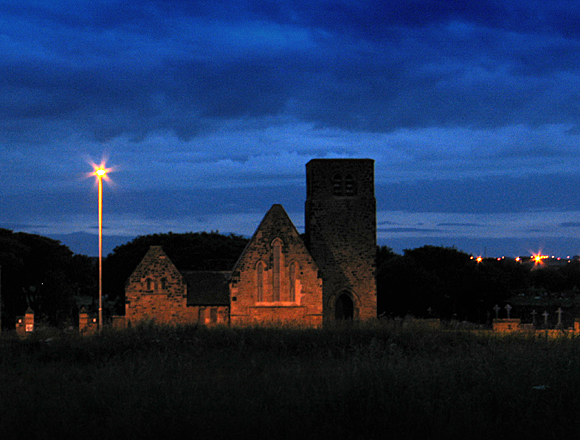
On one of the days between Christmas and New Year Margaret sent me over the Brenda’s to deliver a box of sale slippers. Tristan came to the door.
‘Oh hello, mate,’ he said. ‘Mewwy Chwistmas. Are you coming in?’
‘Merry Christmas, Tristan,’ I replied. ‘Yeah, I’ve just got to deliver this box for Brenda. Is she around?’
‘She’s in with a client at the minute, but should be fwee soon.’
‘What’s she doing, a bit of post-Christmas life coaching for one of Santa’s little elves?’
‘Not quite,’ Tristan laughed. ‘But it’s not far off. She’s got Mrs Bywo in with her. This lady is about as tall as a painted teapot and dwesses like a demented wagamuffin. Bwenda knows her from her poetwy group. I tell you she has twied just about evewy thewapy Bwenda knows, for evewything fwom colour blindness to celebwityphilia. She’s come in today for some urgent acupuncture because of stwange tingles in her feet, which she thinks she got from being too close to a starfish while she was talking to the mermaids on the wocks at Cullercoats on Chwistmas Eve.’
‘I didn’t know acupuncture worked for that,’ I said.
‘Imaginawy tweatments often work well for imaginawy complaints,’ Tristan replied.
‘Hmm, good point,’ I said. ‘Any way, how are you? Did you have a good Christmas? Was Santa good to you?’
Tristan grimaced and shrugged, in the way that Trostskyists do. ‘It could have been better,’ he said.
‘Don’t tell me Santa didn’t come,’ I said.
‘Oh, I did okay that way,’ he said. ‘The usual chocolates and aftershave and what have you, and Bwenda got me an electwic scwewdwiver, which will come in vewy handy if business ever picks up again. Oh, and thanks for the socks, by the way, which I thought were weally wadical for me. No, the pwoblem is that I’ve been a bit in the doghouse with Bwenda since she opened her pwesents fwom me.’
‘Oh bloody hell, mate,’ I said. ‘You didn’t cut corners, did you?’
‘No, I shelled out an arm and a leg. But it seems I got the wong bwands for her. You know, Bwenda, she’s got expensive taste, and I thought the stuff I got her was wight up her stweet. I got her a Louis Vuitton handbag, a Cartier watch and a Burbewwy twench coat. When she unwapped them I thought she’d be cockahoop, but she wasn’t. She looked a bit down in the mouth. “Are they fakes?” she says to me. “Fakes?!” says I. “Of course they’re not fakes. You’ve no idea what that little lot cost me.” “Are you sure?” she says, looking at me thwough her hair as if I might be pulling a fast one here. “Absolutely sure,” I says. “Do you want to see the weceipts?” Eventually she came awound to accepting that they were all the weal thing, but she still wasn’t happy – because, she says, evewyone knows you can easily get fakes of these bwands. “Even Chavs wear them,” she says. “Yes,” I says, “but yours aren’t fakes, are they? Not like theirs.” “Yes, but how will anyone know that?” she says. “They don’t look any diffewent.” I tell you mate at that point I was wishing I had bought bloody knock-offs and saved myself a lot of money. “So what do you want me to do, Bwenda?” I says. “Pin a These Are Not Fakes label on them to tell the world they’re weal?!”‘
‘It’s a strange world we live in, isn’t it?’ I said. ‘Someone wearing a fake imagines the world thinks it’s the real thing, and someone wearing the real thing imagines the world thinks it’s a fake! Maybe we should all go back to going around naked, eh?”
‘Anyhow,’ Tristan went on, ‘she eventually came awound, but not before I said I’d make it up to her by taking her for a short bweak in Pwague for Valentine’s Day. Not that I can afford it, of course. Work’s all but dwied up. You can’t get moved for bloody plumbers now that house building’s stopped.’
At that point I heard the door of Brenda’s consulting room open. Mrs Byro came out and shuffled down the hall to the front door. I could see what Tristan meant. At first glance Mrs Byro appears to be to haute couture what Hugo is to horticultural design and you’d assume that her wardrobe must be a junkyard, a random accretion of disparate garments. She is no bigger than a hobbit and has long hippy dippy hair of a curiously neutral colour. She struck me as the kind of woman you’d imagine must always choose her outfit for the day before she puts the light on. She has that sort of ostensibly accidental charity shop eclecticism that you never actually see among the poor (who are for the most part running around in fake Levi’s carrying fake Louis Vuitton handbags, of course). But I suspect it would be a mistake to think that the Mrs Byros and the Brendas of this world are at opposite ends of the spectrum in terms of their wardrobe strategies. They are in fact sisters.
‘Hi, Brenda,’ I said. ‘Merry Christmas.’
‘And a very merry Christmas to you too,’ she replied, giving me a big hug and a kiss on each cheek. ‘Did Tristan tell you about Prague? Oh, I’m so excited!’
‘Yes, he did,’ I said. ‘It sounds fab. Hey, and thanks for the Christmas present. It’s really interesting and, er, you know, unusual.’
‘Yes, I thought you might like it,’ she said. ‘I thought it would look good on your desk at work.’
‘Hey, I’d never thought of that. Yeah, I see what you mean, though. It’d be really good to be able to just turn it on whenever things become a bit too stressful. I must remember to get some batteries for it on my way home.’
I gave Brenda the box of sale slippers and drove back up the coast, listening to Lucinda William’s latest album. She’s made better, but it’s good. It hardly matters what she sings though, her blistered paint and rusty broken nails voice says it all.
When I got back Margaret was peeling some carrots. I asked her what Brenda had got her for Christmas. ‘Did she get you a fountain too,’ I asked.
‘No,’ Margaret replied. ‘She got me a Strength Rune silver necklace, a collection of Nam Champa soaps, a Green Man candle holder and some candles. Oh, and a black beret. It’s all very good quality stuff, of course.’
‘Yes, it all sounds very Brenda to me,’ I said. ‘But it doesn’t sound especially you. When did you last wear a beret?’
Margaret continued peeling carrots. She said nothing. I picked up The Guardian and wandered through to the conservatory. De Kooning joined me.
‘If you had a friend who was a goldfish,’ I said, ‘and she had bought you a Christmas present, what would you have liked her to have got you?’
De Kooning looked up at me for a moment. He licked his paw and began to clean his face.
‘Okay’ I said, ‘if the choice was between a wrecked pirate ship aquarium ornament and a catnip-filled fluffy toy mouse, which one would you go for?’
De Kooning stopped cleaning himself for a moment and looked at me as if I was daft.
‘Okay, okay, it’s a no-brainer, you’re right. Unless the goldfish was called Brenda. If Brenda was your goldfish friend you would have got the pirate ship.’
Sunday was bright and frosty. I drove up to Lordenshaw. I walked over to Spylaw and from there contoured across the moors around the southern slopes of Simonside before climbing up to the crag on the path that passes Croppy’s Hole. There was a fair amount of ice here and there and the peat on top was frozen rock solid. But it was dry and sunny and it was easy walking over the top on the newly laid stone slabs. To the north there was snow on Cheviot and Hedgehope Hill, shining like a bride in the winter sun. It was a beautiful day. It was 2009. As I walked east off Dove Crag I began to think about Basil Bunting.
When I got home Hugo was on his drive. He was working on the Alligator with what appeared to be an angle grinder. He gave me a wave as I went up my path. I went out into the back garden and looked over the fence into Hugo’s garden, which I hadn’t seen for a while. It was much the same as before, except that there was a straggle of silvery tinsel on the moose’s antlers. The waterfall was turned off and the pond was frozen. The ducks and the otter were in there usual places. The grey heron gazed at the ice and never blinked, not even once. It was late afternoon. The last rays of the sun were glinting on the still naked girders of the Citadel.
.
 yammering